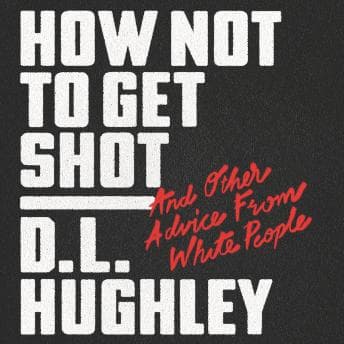

I finished this entire audiobook while waiting for a delayed flight in the Delta SkyClub at O'Hare. At my standard 2.0x speed, D.L. Hughley's voice clocks in at just under two hours. Efficiency is usually my love language, but here, the brevity feels less like succinctness and more like a stretched-out stand-up set trying to pass as a manifesto.
Compliance Training for Existence
The premise is dark, cynical, and—from a risk management perspective—brilliant. Hughley frames the Black American experience as a series of standard operating procedures to avoid "termination." He offers advice like "How to make cops feel more comfortable while they're handcuffing you." It's basically customer service training for people with a gun in their face.
Growing up in Koreatown, my parents had their own survival rules for dealing with authority, mostly involving silence and bowing. Hughley's approach is louder, angrier, and wrapped in the rhythm of a comedy club headliner. Because he narrates it himself, you get the cadence exactly as intended. The sarcasm drips. When he talks about "The right way to wear a hoodie," he's not reading text; he's working a room. You can practically hear him pacing the stage, holding the mic stand.
The ROI on Tragedy
Here's where the "comedy" tag gets complicated. The satire works until it hits the brick wall of actual case studies. When Hughley pivots from jokes about "white food" (lobster rolls, really?) to the deaths of Tamir Rice or Philando Castile, the tonal shift is jarring. It's not funny anymore. It's just angry. And honestly? That's the most valuable part of the book.
There's a moment where he discusses the "compliance" argument—the idea that if you just follow instructions, you're safe. He dismantles this with the efficiency of a forensic accountant finding fraud in the books. Lists victims who complied and died anyway. It's a sobering data set that ruins the mood but justifies the purchase price.
The same gut-punch of hard truths delivered through an unexpected vessel is what made Breathe: A Life in Flow stick with me too—different subject entirely, but that same quality of earned anger underneath a deceptively smooth surface.The Efficiency Audit
At 3 hours and 43 minutes, this is barely a book. It's a long podcast episode with a cover price. Some chapters, like the ones on suburban white people, feel like filler material he was testing out for a Netflix special.
Who should listen: If you want a sharp, angry, funny monologue to get you through a morning commute or a cardio session, this delivers. Who should skip: Anyone expecting a deep sociological text—look elsewhere. This isn't trying to change the world. It's documenting the glitches in the system.