
"She was a writing medium."
That opening line hit me somewhere around minute two, and I realized I'd been holding my breath. I was grading sophomore essays on The Great Gatsby—yes, at 11 PM, yes again—and I'd put this on expecting a quick Doyle palette cleanser before bed. Eight minutes. What could possibly happen in eight minutes?
Everything, apparently.
The Ghost of Brevity Past
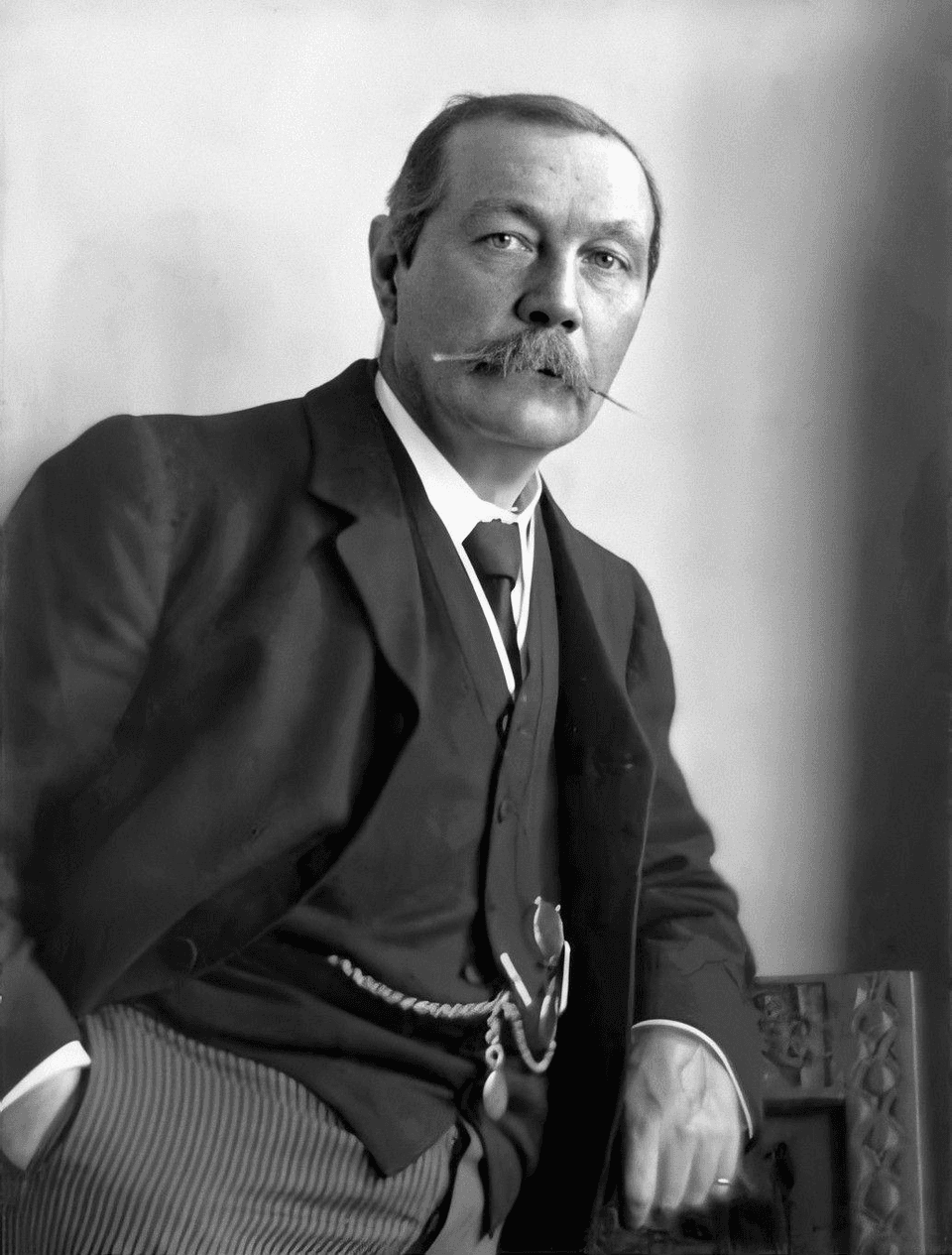
Here's what my students don't understand about Doyle: everyone remembers Holmes, but the man could write *anything*. This isn't detective fiction. This is a supernatural tale told with the economy of a telegram and the punch of a heavyweight. The narrator recounts a fatal automobile accident—brake failure, careening down a hill, the desperate mathematics of speed versus control—and then delivers a twist that genuinely made me set down my red pen.
I won't spoil it. But if you've ever wondered what Doyle could do with the supernatural when freed from the constraints of Baker Street, this is your answer. The story originally appeared in 1913, when automobiles were still novel enough to be genuinely terrifying, and that period-specific dread translates beautifully. The prose deserves to be savored, even at eight minutes. *Especially* at eight minutes.
Compared to Doyle's Holmes stories, this feels almost confessional. There's no detective standing at arm's length, analyzing clues. This is first-person immediacy, a man telling you exactly how he died. It reminds me of what Hemingway said about the iceberg theory—the dignity of movement comes from what's beneath the surface. Doyle gives you the crash, but the horror lives in what comes after.
Margarite's Measured Approach
Gregg Margarite reads this with appropriate restraint. He doesn't oversell the supernatural elements, which is exactly right. The story's power comes from its matter-of-fact tone—the narrator describes his own death the way you might describe a particularly bad commute. Margarite gets that. His pacing allows the final revelation to land without melodrama.
I can't tell you much about his range here—there aren't multiple characters demanding distinct voices—but what he does well is *not* get in the way. For a piece this short, that's the job. The performance serves the text rather than competing with it. No dramatic pauses where they don't belong, no hammy Victorian affectation. Just clean, clear delivery that trusts Doyle's words to do the work.
The production is simple. No sound effects, no music. Just a man reading a story the way it might have been read aloud in an Edwardian parlor. For this particular piece, that feels appropriate.
Who Should Press Play (And Who Should Keep Scrolling)
This is for the Doyle completists who want to see what else the man could do. It's for anyone who thinks short fiction can't pack a wallop. It's for the teacher who needs something—anything—that isn't another essay about how the green light represents hope.
But let me be honest about what this isn't: it's not a commitment. Eight minutes is shorter than my morning coffee. You're not investing in a relationship with these characters. You're experiencing a single, perfectly constructed moment of dread. If you need epic world-building or character development that unfolds over hours, look elsewhere.
My students would hate this. Too short, they'd say. Nothing happens. (Something happens. They'd just miss it.) I love it.
Worth Pausing the Faculty Meeting For
At eight minutes, this barely qualifies as an audiobook. It's more like an audio amuse-bouche—a single perfect bite before the main course. The question isn't whether it's good (it is) but whether it's worth your time to seek out.
Here's my answer: if you're already subscribed to a service that includes it, absolutely. If you'd have to pay full credit for eight minutes of content, that math doesn't work no matter how good the writing is. Stream it. Listen during a single commercial break. Experience what Doyle could do when he wasn't solving mysteries but creating them.
The ending has stayed with me longer than books ten times its length. There's something to be said for that kind of efficiency. Denise asked me why I was staring at my phone instead of finishing the Gatsby essays, and I couldn't quite explain it. Some stories don't need explanation. They just need eight minutes and a willingness to be surprised. That same willingness to surrender to a story's momentum is what makes Light We Lost work so well—different genre entirely, but both understand that emotional impact doesn't require length.
This is why we still read the classics. Even the ones we've never heard of.