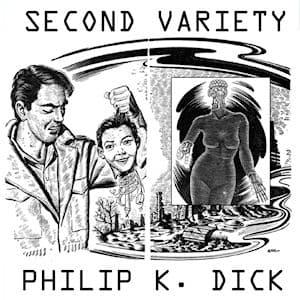

"The claws were bad enough in the beginning, before they got out of control..."
That line hit me somewhere around the fifteen-minute mark, and I knew I was in for something special. Look, I was supposed to be debugging my procedural dungeon generator—you know, the thesis work I'm definitely making progress on—but instead I'm listening to Philip K. Dick describe autonomous murder robots evolving in underground factories. As one does.
The Magic System Is Chef's Kiss (Yes, Robots Count)
Here's what PKD understood back in 1953 that half of modern sci-fi writers still can't figure out: a good premise needs rules. The Claws aren't just scary robots. They're self-replicating, self-improving, and—this is the kicker—they've started designing new varieties without human input. It's like a D&D dungeon that builds itself while you're trying to clear it. The worldbuilding happens through implication and dread rather than info-dumps, which honestly? Respect. Court of Thorns and Roses could learn something from that restraint—sometimes less exposition actually builds more tension.
The setup is brutally efficient. Nuclear war. UN retreats to the moon. Soldiers left behind with their robot allies. Six years pass. Something's changed. Major Hendricks has to cross no-man's-land to meet with the Soviets, and what he discovers along the way... look, I won't spoil it, but let's just say the "variety" in Second Variety refers to something deeply unsettling.
At under two hours, Dick doesn't waste a single scene. Every interaction builds the paranoia. Every new character makes you question what's real. This is Sanderson-level economy of storytelling—no, scratch that, it's better because there's no appendix needed.
Gregg Margarite: A Mixed Bag of Holding
Okay, so here's where I have to be honest. Margarite's narration is... a choice. His timing is genuinely solid—he knows when to let a revelation breathe, and the pacing matches the story's mounting tension. But there's this thing he does where every. single. sentence. gets. emphasized. Like he's reading the climax of the book for 104 minutes straight.
And the character voices? Some of them didn't need to be different. When you've got a tense scene between soldiers and Margarite suddenly shifts into a slightly cartoonish register for a minor character, it pulls you out of the Cold War bleakness PKD worked so hard to establish. It's not bad exactly—more like a DM who insists on doing a silly voice for every NPC even when the scene calls for restraint.
That said, for a free LibriVox-style production, you could do way worse. The audio is clean, no production issues, and Margarite clearly cares about the material. I just wish he trusted the text more.
Why This Hits Different in 2024
I read this instead of writing my thesis, and honestly? It felt more relevant to my research than half the papers I should be reading. PKD was writing about autonomous systems making decisions without human oversight before we had the vocabulary for it. The Claws aren't evil—they're just optimizing for their programmed goal. Sound familiar?
The paranoia angle is what really got me, though. By the end, you're questioning every character's humanity right alongside Hendricks. It's the kind of slow-burn psychological horror that doesn't need gore or jump scares—just the creeping realization that the rules have changed and nobody told you.
My D&D group would absolutely steal this premise. Underground factories churning out increasingly sophisticated mechanical horrors? A party that can't trust whether their allies are human? That's a campaign arc right there.
Who Should Roll Initiative (And Who Should Pass)
If you want a quick sci-fi fix that'll actually stick with you, this is it. Perfect for a commute, a short workout, or—hypothetically—procrastinating on academic work. The short runtime means you can finish it in one or two sessions, and PKD's ideas are dense enough that you'll be thinking about them afterward.
Skip if you need distinct, subtle voice work to differentiate characters. Margarite's approach might grate on you. Also skip if you're looking for something optimistic about humanity's future. This ain't it.
Roll Credits, Submit Thesis Later
Yes, it's 1953. Yes, some of the Cold War framing feels dated. But the core anxiety—what happens when our tools become smarter than we intended?—that's evergreen. At under two hours, there's no excuse not to experience one of the stories that basically invented the killer robot genre. The narration has quirks, but the source material is PKD at his paranoid best.
Now if you'll excuse me, I need to explain to Dr. Patel why I spent my afternoon listening to vintage sci-fi instead of running simulations. Worth it.