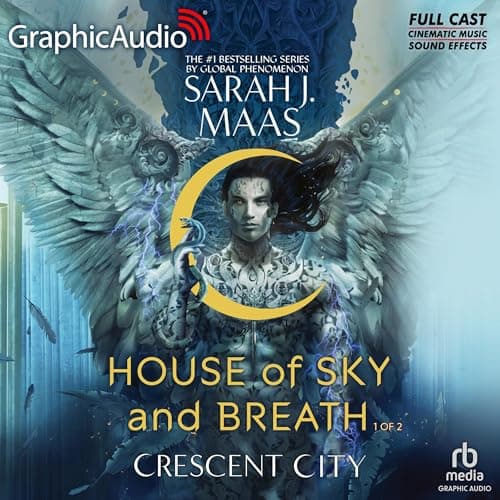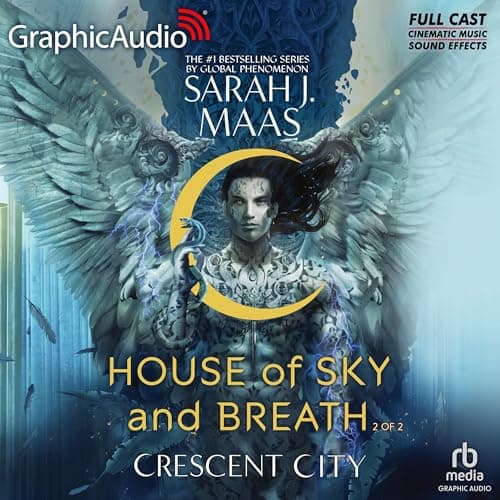

Can we talk about the audacity of splitting a book into two parts and then having the nerve to end Part 2 on what might be the most soul-destroying cliffhanger Sarah J. Maas has ever written? Because I need to vent about that before I can say anything constructive.
Look, I knew what I was getting into. House of Sky and Breath is the second Crescent City novel, and this dramatized adaptation is the back half of that story. So yes, you need Part 1 first, and yes, you need the next book after this. Maas doesn't do neat little bows, and GraphicAudio apparently doesn't either. But knowing that intellectually didn't stop me from sitting in my parked car, engine off, staring at my steering wheel like it personally betrayed me when the credits rolled.
Now that I've processed my grief, let me tell you what makes this production worth the emotional damage. The full cast here isn't just "multiple people reading lines" — it's a genuine dramatized experience with sound design that pulls you into Crescent City like you're walking its streets. That opening ballet scene? You can hear the crowd murmuring, the orchestra swelling, the ambient hum of a world that feels lived-in. When action sequences hit, the cinematic score and sound effects transform this from an audiobook into something closer to a radio play with Hollywood production values.
The cast is massive — we're talking 40+ actors — and most of them absolutely nail their roles. Kit Swann and the core ensemble bring real emotional weight to the key relationships, and when the stakes ramp up in the back half (which they do, violently), you can hear it in their performances. The voice acting during the emotional gut-punch moments landed hard for me. There's genuine chemistry between the leads, and the ensemble scenes where multiple characters are strategizing, arguing, or falling apart feel dynamic rather than chaotic.
That said, I'll be honest about what tripped me up. With this many new characters entering the story — and this being Part 2, where threads from the broader rebellion plot start converging — there were stretches where I genuinely lost track of who was speaking. The dramatized format helps because each character has their own actor, but when you're juggling rebel factions, Asteri politics, and multiple romantic subplots, even distinct voices can blur together if you're not giving this your full attention. This is not a "fold laundry and half-listen" audiobook. I tried that once and had to rewind twenty minutes.
A couple of production quirks worth flagging: some listeners have noticed that the breathing sounds — characters taking audible breaths before lines — can be distractingly prominent. It didn't bother me much, but once someone pointed it out, I couldn't unhear it in certain quiet scenes. More importantly, there are reports that the dramatized adaptation trims some content from the original novel, potentially cutting material near the ending. If you're a completist who needs every single page represented, that might sting.
The pacing issue is real too. Maas wrote a book that takes its time in the first half — lots of relationship building, world-building, political maneuvering — before detonating everything in the final act. Since this is Part 2, you're getting the payoff section, but even here there are stretches that feel like setup for setup. The romantic content runs hot (content warning: this gets steamy), though some of those scenes prioritize heat over emotional substance. Your mileage will vary depending on what you want from the spice.
But when this production hits its stride? It's electric. The lore building in the Crescent City series is some of Maas's most ambitious work, blending urban fantasy with epic fantasy in ways that kept surprising me. That collision of fantasy registers — intimate and epic at the same time — is something Lady of the Lake pulls off with similar ambition, though in a much older, stranger key. The rebel plotline gives real weight to questions about power, complicity, and what you're willing to sacrifice. The ensemble cast makes those themes feel personal rather than abstract — you hear the fear in voices, the resolve, the heartbreak.
Compared to the dramatized adaptation of something like Red Rising, this feels more polished in its sound design but slightly less tight in its narrative focus. The trade-off is a richer, more immersive world at the cost of some momentum.
Who should listen: If you've already invested in Part 1 and the broader Crescent City series, this production rewards that commitment with a genuinely cinematic experience — right up until it rips the rug out from under you with that ending. Who should skip: If you haven't read or listened to Part 1, do not start here — you'll be rolling a perception check with disadvantage the entire time. And if you need your audiobooks as background noise, this one demands your full attention or it'll punish you for it.
I'm still not over it. But I'm already queuing up the next one.