
"I want Nick's life to be not only a tender memory for us, but a gift to others."
That line hit me somewhere around hour two, and I had to pause Illustrator because my hands were shaking. Not from the words themselves — Danielle Steel has written prettier sentences — but from the raw, stripped-down mother-grief behind them. I was working on a logo redesign for a wellness brand (irony not lost on me), and Diego was asleep on my keyboard, and I just sat there staring at the screen with tears dripping onto my Wacom tablet like some kind of sad art school cliché. The wellness brand thing still gets me — I'd spent the previous week reading Body Book for a client mood board, all clean lines and self-optimization, and then this landed in my ears like a reminder that the body can break in ways no law of hunger or science of strength can reach.
This book wrecked me. Four crying sessions. Tied with Beach Read but for entirely different reasons.
A Mother Writing With Her Hands Still Bleeding
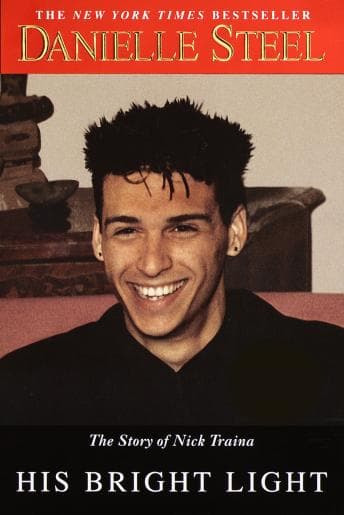
Let me be honest about something: I have never been a Danielle Steel person. My abuela devoured her novels the way she devoured telenovelas — with full commitment and zero apology — but I always thought of Steel as airport paperbacks and glossy covers. This book is none of that. This is a woman who lost her nineteen-year-old son to bipolar disorder and suicide, and she wrote about it while the wound was still open.
And you can feel it. Steel's writing here is sometimes circular — she'll describe the same hospital visit or the same desperate phone call from slightly different angles, almost like she's trying to process it in real time. Some listeners might find that repetitive. I found it heartbreakingly honest. That's what grief does. You replay the moments. You circle back. You think if you tell it one more time, from one more angle, maybe it'll finally make sense.
Nick's journal entries are the spine of this book, and they're something else entirely. This kid was brilliant and funny and absolutely drowning. He writes about his band (he was the frontman of a punk group called Link 80, which — as someone who grew up on that San Antonio punk scene adjacent energy — I deeply respect), and then two pages later he's writing about wanting to disappear. The whiplash between his manic highs and crushing lows is not explained to you in clinical terms. You just live it, entry by entry. Steel doesn't soften his words or translate them into mother-approved language. She lets him be messy and angry and profane and desperate.
Abuela would have loved this one. Not because it's easy — God, it's not easy — but because she believed in witnessing. She'd watch the most devastating telenovela episode and say "hay que sentirlo" — you have to feel it. This book demands that.
Traci Godfrey Knew Exactly Where to Be Quiet
Here's the thing about narrating a memoir like this: there's a massive temptation to perform the grief. To lean into every emotional beat with a quaver in the voice, to make the listener cry through sheer vocal force. Traci Godfrey doesn't do that. She plays it restrained in the places where Steel's writing is already screaming, and she lets emotion creep in during the quieter passages — the descriptions of Nick as a toddler, the moments of normalcy between crises.
When she reads Nick's journal entries, her voice shifts to something younger, rawer, less polished. It's not a character voice exactly — she's not doing a teenage boy impression — but there's a quality change that makes you feel the difference between mother and son on the page. One listener nailed it when they said Godfrey "brings credibility to Nick's side of the story through her heartfelt readings of his journal," and yeah. That's exactly right.
The only thing I'll say is that some of Steel's more repetitive passages — where she's circling the same events again — don't always land as well in audio as they might on the page. Reading, you can skim. Listening, you sit with it. At 1.0x speed across nine-plus hours, there were stretches in the middle where I felt the weight of the repetition more as a structural issue than an emotional one. But Godfrey's delivery kept me from ever fully checking out.
Who This Is For (and Who Should Brace Themselves)
If you love someone with bipolar disorder — or any serious mental illness — this book will feel like someone finally said the quiet parts out loud. The guilt, the exhaustion, the fury at a system that doesn't have answers, the love that never stops even when it can't fix anything. Steel doesn't pretend she did everything right. She's honest about the failures.
If you're in a fragile place with your own mental health, please be careful. This book doesn't romanticize suicide, but it doesn't look away from it either. Content warnings for bipolar disorder, hospitalization, substance use, and the death of a young person.
If you're looking for a clinical guide to manic depression, this isn't that. It's a mother's account, messy and subjective and full of love that couldn't save her son.
The Light Stays
I finished this at 1 AM with both cats on my lap and mascara somewhere around my chin. And I thought about my abuela, who never met a story too sad to tell, who believed that sharing pain was how you honored it. This book is Danielle Steel doing exactly that — not as a bestselling author, but as a grieving mother who wanted her son's nineteen years to mean something beyond the diagnosis that stole them.
My heart. MY HEART.
It's not a perfect book. But it's a profoundly honest one, and sometimes that matters more.