
I was grading sophomore essays on symbolism in The Great Gatsby - the fourteenth paper claiming the green light represents money, as if Fitzgerald needed their help - when I decided I needed something to cleanse my palate. Something pure. Something that remembered what stories were for before we all got so clever about them.
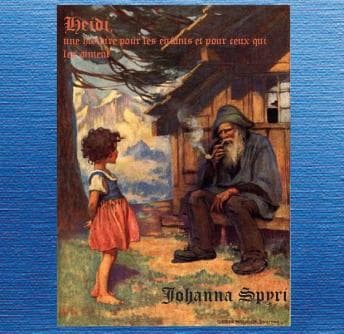
Heidi. In the original French translation, no less.
Denise found me at midnight, red pen abandoned, eyes closed, listening to a Swiss orphan learn to love goats. She didn't say anything. Just brought me tea. Twenty years of marriage teaches you when a man needs to hear about Alpine meadows without interruption.
Why We Still Assign This Book (And Why We Shouldn't Have To)
Here's what Spyri understood that half my contemporary fiction shelf doesn't: happiness is not naive. The grandfather's transformation from village pariah to gentle protector isn't saccharine - it's earned through Heidi's stubborn refusal to see him as the monster everyone warned her about. That's not childish optimism. That's radical grace.
The structure is deceptively simple. Girl goes to mountain. Girl loves mountain. Girl is taken from mountain. Girl suffers. Girl returns. But within that framework, Spyri accomplishes something remarkable - she makes the reader feel the Alpe as a living presence. The white bread Heidi hoards for Peter's blind grandmother. The way she describes the fir trees' evening sounds to Clara. These aren't just details. They're sensory anchors that make Heidi's homesickness in Frankfurt physically painful to witness.
My students would hate this. They'd call it slow. They'd ask where the conflict is. And I'd have to explain that not every story needs a villain - sometimes the antagonist is simply being separated from the place where your soul learned to breathe.
Caroline Sophie et la Voix de l'Enfance
Listening in French adds a particular texture. There's something about the formality of the original translation - "une histoire pour les enfants et pour ceux qui les aiment" - that Caroline Sophie honors without making it feel stiff. Her Heidi is curious without being precocious. Her grandfather is gruff without being frightening.
I'll be honest: the research didn't give me much on Sophie's specific technique. This is a LibriVox recording, volunteer-produced, and the production values reflect that reality. No full cast, no sound effects of cowbells echoing across valleys. Just one woman, reading steadily, letting Spyri's words do the heavy lifting.
And mostly? That's enough. The pacing suits bedtime listening. Sophie doesn't rush the descriptive passages - the sunset over the Alpe, the goats returning home - and at just under six hours, it's a manageable commitment. Worth pausing the faculty meeting for. (Sorry again, Principal Martinez.)
But I won't pretend it's a prestige production. The audio is clean, the reading is competent, but this isn't the kind of narrator performance that makes you forget you're listening to an audiobook. It's functional. Respectful. Perhaps a bit too even-keeled when Frankfurt's oppression should feel more suffocating.
The Frankfurt Chapters Hit Different Now
What struck me this time - and I've read Heidi maybe four times since grad school - is how modern the Frankfurt section feels. Clara's household isn't cruel. Fräulein Rottenmeier is strict but not abusive. The servants are kind. Clara herself adores Heidi.
And still, Heidi withers.
This is what Hemingway meant when he talked about the thing that isn't said. Spyri never uses the word "depression." She shows us a child who stops eating, who sleepwalks, who can no longer remember what the Alpe looked like at sunset. The doctor's diagnosis - homesickness so severe it threatens her life - would probably be coded as adjustment disorder today. But Spyri knew, in 1881, that some people are so connected to place that separation is a kind of slow death.
I teach in Chicago. I've watched students from rural downstate, from small towns in Indiana, from Puerto Rico and the Philippines, go through their own Frankfurt chapters. The specifics change. The ache doesn't.
Pour Qui Sonne le Cor des Alpes
This is for listeners who want to remember why children's literature used to be taken seriously. If you loved The Secret Garden, if Anne of Green Gables made you cry, if you've ever missed a place so badly your chest hurt - this is for you.
Still Life scratched a similar itch for me - that same ache of place and belonging rendered in prose that earns every quiet moment.Skip it if you need plot velocity, if six hours feels too long for something "simple," or if LibriVox production quality frustrates you. Fair enough. Not every classic translates to audio.
But if you're a parent looking for something to share with kids learning French, or an adult who needs to believe that kindness can transform people, or just someone grading papers at 11 PM who needs to remember that stories can be good without being cynical - well.
Spyri's prose deserves to be savored. Even in translation. Even through earbuds. Even when you should really be finishing those Gatsby essays.
Mr. Williams's Marginalia
Heidi endures because Spyri told the truth about joy and grief and belonging. Caroline Sophie's reading won't win any awards, but it delivers the story with quiet dignity. For a free LibriVox production, that's more than enough. For a classic that shaped how we think about childhood and nature and home - it's a worthy vessel.
My mom will probably fall asleep during this review too. But I think she'd understand.