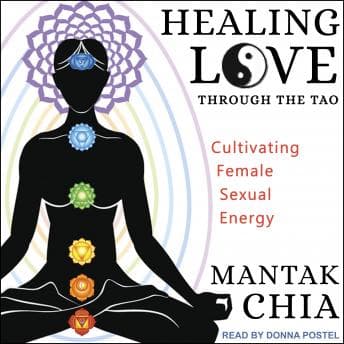

Look, I have a complaint. I'm a psychologist, not a Taoist master, and I spent eight hours listening to detailed descriptions of ovarian breathing techniques while trying to make dal makhani from scratch. My kitchen now smells like cumin and existential confusion. But here's the thing - I found myself genuinely fascinated, and slightly annoyed at myself for being fascinated, because Mantak Chia's Healing Love through the Tao sits at this weird intersection of ancient esoteric practice, embodied psychology, and claims that made my academic training twitch.
When Your Research Brain Won't Stop Flagging Things
Let me be upfront about what this book is. It's an instructional manual - arguably the first widely available Western text on Taoist female sexual energy cultivation - that treats jing (sexual/creative energy) as a literal substance you can circulate through your body via meditation, muscle contractions, and breathing exercises. The protagonist here, if we're going to use my framework, is the female body itself, and Chia treats it like a case study in untapped energetic potential.
Psychologically, some of this tracks more than you'd expect. The emphasis on body awareness, pelvic floor engagement, and breath work maps onto what we now understand about somatic experiencing and interoception in psychology. The research actually shows that practices involving conscious attention to internal body states can reduce stress and improve emotional regulation. So when Chia describes the Microcosmic Orbit - circulating energy up the spine and down the front channel - I can see the parallels to mindfulness-based body scanning, even if the language is completely different.
But then he'll make claims about reducing menstrual bleeding through energy circulation, or describe orgasmic energy reaching the pineal gland, and my inner researcher starts scribbling question marks in the margins. The book presents everything with the same confident authority whether it's discussing anatomical realities or metaphysical energy channels, and that lack of differentiation bothered me. I found myself asking: why does Chia treat the demonstrable and the esoteric as equally self-evident? Is it the tradition itself that doesn't distinguish, or a rhetorical choice?
Donna Postel and the Challenge of Narrating... This
Here's where I want to give real credit. Donna Postel (Earphones Award winner, and I get why) had an genuinely difficult job. This is an eight-hour instructional text about sexual energy practices, complete with detailed anatomical descriptions and step-by-step meditation exercises. That's not exactly a page-turner in the traditional sense. Postel delivers it with this steady, clear, almost clinical warmth - she doesn't oversell the mystical aspects or undercook the practical ones. Her pacing is measured, which matters because you're essentially being taught exercises you might want to follow along with.
That said, the audiobook format creates an inherent limitation that I can't ignore. This is a book that originally included diagrams - anatomical illustrations, energy channel maps, exercise position guides. You don't get those in audio. When Postel reads descriptions of specific muscle engagement sequences or the path of energy through named meridian points, you're constructing spatial relationships entirely from verbal instructions. For someone new to this material, that's going to be genuinely difficult. It's like trying to learn yoga poses from a podcast. Not impossible, but you're working harder than you should have to.
The production is clean - single narrator, no sound effects, no background music, which is the right call for instructional content. Tantor Audio kept it simple.
The Psychology of Why This Book Still Sells
What interests me most - and this is the narrative psychologist in me, sorry - is the framing. Chia opens with the secrecy angle: these practices were taught only to royalty, sworn to silence, hidden for thousands of years. This is a fascinating case study in how origin stories create perceived value. The "secret knowledge now revealed" structure does real psychological work on the reader. It creates a sense of being chosen, of accessing something forbidden. My therapist would have thoughts about why that particular framing is so effective on Western audiences encountering Eastern practices. The psychology of why we crave permission to prioritize ourselves - from ancient masters, from lineage, from anyone - is something Codependent No More excavates from a completely different angle, and I kept thinking about those two books in conversation with each other.
The book does something else interesting: it centers female pleasure and health in a tradition that, historically, often prioritized male cultivation practices. Whether Chia's interpretation is faithful to the original Taoist texts or adapted for his audience is a question I'm not qualified to answer, but the emphasis on women's autonomy over their own sexual energy - in a text rooted in ancient Chinese tradition - creates a genuinely unusual reading experience.
Who Should Actually Press Play (And Who Shouldn't)
If you're already practicing Taoist meditation, qi gong, or tantric techniques, this is useful supplementary material - Postel's narration makes it accessible for review and reinforcement. If you're a curious skeptic like me who wants to understand what these practices actually involve, it's worth the listen, but pair it with the physical book for the diagrams. You'll need them.
If you need peer-reviewed evidence before you'll engage with a practice? This will frustrate you. Chia doesn't cite studies. He cites tradition, lineage, and his own teaching experience. That's either sufficient for you or it isn't.
My Prescription
I'm giving this a cautious recommendation with caveats. It's a genuinely unique text made listenable by a skilled narrator, but the audiobook format fights against the instructional content, and the claims range from plausible to "I'm going to need to see your data." I learned something. I questioned a lot. Pretty much exactly how my Tuesday nights go anyway.