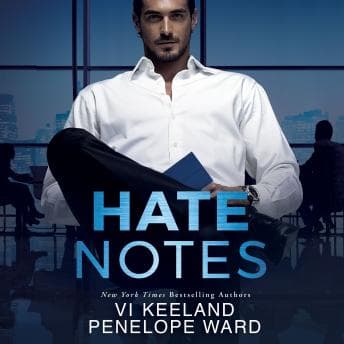

"Thank you for making all of my dreams come true."
I found myself thinking about that line for days after finishing this one. Not because it's particularly profound - it's not Hemingway, my students would be quick to remind me - but because of what it represents. A love letter sewn into a wedding wedding dress. The kind of romantic gesture that belongs in a different era, when people wrote things down on paper and meant them.
Look, I'll be honest. Contemporary romance isn't my usual territory. I spend most of my listening hours with dead authors and narrators who understand that a semicolon deserves its own breath. But Denise has been on a Vi Keeland kick, and she kept leaving her earbuds on the kitchen counter with this one queued up. After the third "accidental" discovery, I took the hint.
The Blue Note That Started Everything
The premise hooked me immediately - and I say this as someone who teaches The Great Gatsby and thinks most modern romance lacks narrative architecture. Charlotte finds a love letter hidden in a vintage wedding dress, tracks down its author, and discovers he's now her boss. It's contrived in the way all good rom-coms are contrived. The difference is in the execution.
Keeland and Ward understand pacing. They really do. The slow burn between Charlotte and Reed unfolds with the kind of deliberate tension that kept me grading papers well past midnight. (Principal Martinez, if you're reading this, those sophomore essays on symbolism in Lord of the Flies were absolutely my priority. They weren't.)
What surprised me was the emotional weight. Reed's backstory - the reason that love letter exists, the reason he's become this cynical, demanding version of himself - actually landed. There's grief here, real grief, underneath all the banter and workplace tension. My students would hate this comparison, but it reminded me of what Jane Austen did with Mr. Darcy. The surface arrogance masking something more complicated underneath.
Lynn Barrington Made Me Feel Things
Here's where I have to give credit where it's due. Lynn Barrington's narration had me genuinely emotional during the back half of this book. I was walking the lakefront, probably looking like a complete fool, because she poured so much into Charlotte's voice that I forgot I was listening to a performance.
She gets the humor right - Charlotte's internal monologue is genuinely funny, which is harder to pull off in audio than people realize. But it's the vulnerable moments where Barrington shines. There's a scene toward the end (I won't spoil it) where Charlotte finally understands what happened to Reed's first love, and Barrington's delivery... look, I teach literature for a living. I know when a performer understands subtext. She understood it.
Sebastian York handles Reed with exactly the right balance of stoic and raw. Some listeners apparently find his voice too gruff - I've seen the complaints - but for this character? It works. Reed is supposed to be guarded. York gives him edges that soften at precisely the right moments. The chemistry between the two narrators translates surprisingly well, which isn't always the case with dual narration.
What My Students Would Say
They'd roll their eyes at the romantic tropes. The boss-employee dynamic. The "I hate you but actually I'm falling for you" structure. The love scenes that are... well, let's just say this isn't what I assign for summer reading.
But here's what I'd tell them, if they ever asked (they won't): genre conventions exist because they work. The question isn't whether a book follows familiar patterns - it's whether it does something interesting within those patterns. Hate Notes does. The mystery of Reed's past gives the romance actual stakes. Charlotte isn't just falling for a handsome face; she's choosing to love someone whose capacity for love was broken by loss. Homegoing explores that same idea - how grief and loss reshape our ability to connect - though across generations instead of just one relationship.
That's not nothing.
Who's Getting an A, Who's Getting a Pass
If you love slow-burn workplace romance with genuine emotional stakes and dual narration that actually works, this one's for you. Skip it if you need literary fiction to feel like you're spending your time wisely, or if boss-employee dynamics make you uncomfortable regardless of execution.
Class Dismissed
I've got a Middlemarch reread calling my name, and my podcast listeners (all 47 of them) are expecting an episode on unreliable narrators in Victorian fiction. But I'm glad I listened once. Denise was right. She usually is.
If you're looking for something that'll keep you company during a commute or a long walk, something with genuine emotional payoff and narrators who understand their craft, this delivers. It's not going to change your life. It's not trying to. But it's honest about what it is - a well-crafted love story about second chances - and it executes that vision with more skill than I expected.
The prose deserves to be savored. Even when it's not Faulkner.