
Look, I'm going to be honest about how I ended up here. It was 3AM on a Wednesday, I'd just been paged for a cascading failure in one of our storage layers, fixed it by 4AM, and then lay in bed with my brain still replaying error logs like a greatest hits album. I couldn't sleep. Kevin was snoring. So I thought, fine, let's try one of those guided meditation audiobooks people keep recommending in the team Slack wellness channel.
TL;DR: Worth your bedtime. Not your commute.
This Is Basically a Sleep Timer With Extra Steps
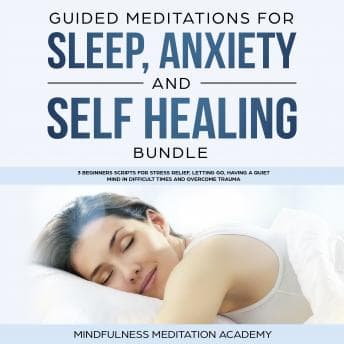
Let me set expectations correctly. This is a 3-hour bundle of three guided meditation scripts — one for sleep, one for anxiety, one for "self healing" (their words, not mine). Each runs about an hour. Jane Lee narrates in a calm, even tone that's clearly designed to make you unconscious. And you know what? It kind of works. That 3AM night, I made it maybe 15 minutes into the sleep meditation before I was out.
But here's the thing — and this is where my engineer brain kicks in — there's almost zero substance here. The scripts are generic. Like, really generic. "Imagine you're in a peaceful place. Feel the warmth of the sun." If you've ever used Headspace or Calm for even a week, you've heard all of this before. There's no unique framework, no interesting neuroscience backing, no progressive technique that builds across the three sessions. Each one is basically a standalone relaxation script you could find on YouTube for free.
The ROI on this audiobook is... questionable, if you're looking for actual meditation education. If you're looking for a voice to knock you out, it's fine.
Jane Lee vs. The Meditation App Industrial Complex
Here's where I have to compare honestly. I've used Calm (Andy Puddicombe era), Headspace, and even some of the free Insight Timer stuff. Jane Lee's voice is pleasant — soft, unhurried, no jarring pitch changes that snap you awake. She doesn't have the warmth or personality of someone like Tara Brach, and she doesn't have the almost hypnotic cadence of the better sleep story narrators on Calm. She's... functional. Like a well-configured load balancer — she distributes your attention evenly and doesn't crash, but she's not doing anything creative.
What I noticed: there's no background music or ambient sound design. Just Jane talking. For some people that's a plus — no weird rain sounds or singing bowls competing for your attention. For me, it felt a little bare. At 3AM when you're wired from incident response, pure voice with long pauses actually gave my brain room to wander back to those error logs. A little ambient padding would've helped keep me anchored.
Also — and this is a nitpick but it bugged me — the title promises help with "overcome Trauma" which is... a bold claim for a 3-hour audiobook from an entity called "Mindfulness Meditation Academy." The anxiety section is basic breathing exercises and body scans. Perfectly fine for garden-variety stress. But if someone's dealing with actual trauma, this isn't it. That framing felt irresponsible. On the flip side, Same Soul, Many Bodies at least commits to its therapeutic framework — I didn't agree with all of it, but it didn't pretend a one-hour script could handle trauma.
Who This Is Actually For (And Who Should Skip)
Perfect for: bedtime, specifically if you've never tried guided meditation and want something low-commitment before downloading an app. Also decent for naps — I used the sleep section during a Saturday afternoon crash and it worked.
Skip for: commute (you will miss your stop or, worse, you'll fall asleep standing up on Caltrain and wake up in San Jose), deep work, literally any situation where consciousness is required.
Skip also if: you already have a meditation app subscription, you want to actually learn meditation techniques, or you're looking for something with production value. At 3 hours and 10 minutes, this is shorter than some podcast episodes I listen to, and it doesn't give you much you can't get elsewhere for free.
I listened at 1x speed — and honestly that's the only speed that makes sense here. Speeding up a meditation guide defeats the purpose. It's like optimizing a sleep function for latency. Why.
The Debug Report
This isn't a bad product. It does exactly one thing: provides a calm voice saying calm things to help you relax. It does that adequately. But in a world where Calm, Headspace, and Insight Timer exist with thousands of sessions, better production, and actual meditation curricula, spending a credit on this feels like paying for a static HTML page when React apps are free.
Kevin saw me listening to this and said "wait, you're meditating now?" No, Kevin. I'm benchmarking relaxation tools. There's a difference.
If you find it on a streaming service or your library app, sure, queue it up for a rough night. But don't spend a credit.