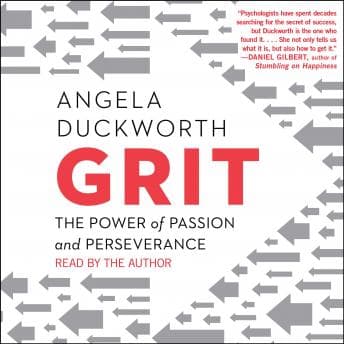

The "Genius" Trap (and why I listened to this while sweating)
Mile three of my morning run along the Charles River—the mile where my lungs usually file a formal grievance against my legs—and Angela Duckworth told me that effort counts twice.
Literally. That's the math. Talent x Effort = Skill. Skill x Effort = Achievement.
I almost stopped running to argue with my headphones. (My therapist says I need to stop debating inanimate objects, but old habits die hard.)
Here's the thing: I picked up *Grit* because I see this pattern in my students every semester. The brilliant ones who crumble the first time they get a B-minus, and the ones who just… keep… showing… up. As a psychologist, I know the data supports Duckworth. But I wanted to see if the *audiobook* supported the hype.
Spoiler: It mostly does. But it's not perfect.
The Voice of Authority (Literally)
Duckworth narrates this herself.
Usually, I'm skeptical of author-narrated audiobooks. Just because you wrote the words doesn't mean you know how to perform them. Actors exist for a reason, people. But here? It works. This isn't a story; it's a thesis defense that morphed into a TED Talk.
Her voice is clear, slightly academic, but warm. She sounds like that one professor you actually wanted to visit during office hours. You can hear the smile in her voice when she talks about the Spelling Bee kids, and the genuine reverence when she interviews West Point cadets.
If you're looking for a dramatic performance with character voices? Skip it. This is straight-up non-fiction delivery. It's consistent. It's clean. But—being honest here—it can get a little monotonous if you're binge-listening. I found myself zoning out during the middle chapters where the examples started to feel repetitive. (There are only so many ways you can say "don't give up" before it starts sounding like a cat poster.)
There is something undeniably powerful about hearing the researcher explain her own life's work, though. When she talks about her father telling her she wasn't a "genius," you hear a tiny crack of emotion that a professional narrator might've polished away. That vulnerability? That's the good stuff.
The Psychology of "Hard Things"
Look, coming from an Indian household, the "you're not a genius" narrative hits close to home. My mother still thinks my PhD is just a stepping stone to medical school. (It's been ten years, Maa. Let it go.)
Duckworth's breakdown of the "Hard Thing Rule" is fascinating. The idea that you have to pick one difficult thing and stick with it creates a psychological framework for resilience that actually tracks with behavioral conditioning.
What I appreciate is that she doesn't just say "work harder." That's lazy advice. She breaks down *how* to maintain interest over years. She differentiates between "grit" and just blindly banging your head against a wall.
But—and here's my academic critique—she glosses over systemic barriers a bit. It's very "pull yourself up by your bootstraps." Psychologically, yes, internal locus of control is vital. But sometimes, the wall you're banging your head against is structural, not mental. I would've loved a chapter addressing that nuance.
Who Should (and Shouldn't) Listen
If you're the type of person who starts a new hobby every January 1st and quits by January 15th: **Yes.**
If you're an educator or parent trying to figure out why praise isn't working: **Double Yes.**
If you want narrative drama or a quick dopamine hit? This isn't it. It's a lecture series on how to stop quitting—effective, but not exactly thrilling.
The audio format is perfect for this because it feels like coaching. I found myself running a little faster during the chapter on the Seahawks (even though I know nothing about football). Year of Yes has that same coaching energy—less research-heavy, more personal manifesto, but equally effective at making you want to actually do the thing.
And honestly? It's pretty convincing. I finished my run. So, data point of one: it works.