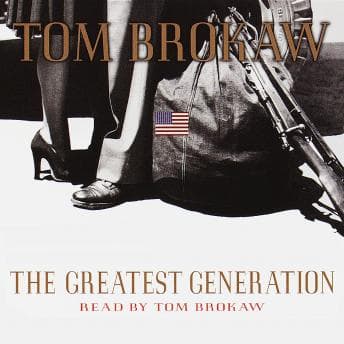
Every man and woman in that book earned something I spent 25 years chasing - the right to say they did their duty and then some.
I was up late cleaning my carry gun at the kitchen table, Ranger asleep on my feet, when I put this one on. Three hours and forty-three minutes later, the Sig was reassembled, the oil was put away, and I was sitting there in the dark thinking about my grandfather. He never talked about the war. None of them did. Brokaw gets that silence exactly right - he doesn't try to fill it with drama. He lets the stories do the work.
These People Actually Existed, and That's the Point
Let me cut to the chase: this isn't a military history book. If you're looking for detailed accounts of Normandy or Iwo Jima, go pick up Ambrose or Sledge. What Brokaw does is profile the people - Daniel Inouye losing his arm in Italy and then fighting racial prejudice back home in Hawaii, Martha Settle Putney as one of the first Black women in the WACs, Charles Van Gorder setting up what was basically a MASH unit under fire and then going home to run a small-town clinic. The common thread isn't combat. It's what they did after. They came home, shut their mouths about what they'd seen, and built the country we're living in. The gap between what a man carries inside and what the world sees on the outside is something The Short and Tragic Life of Robert Peace wrestles with in a completely different context, but with the same gut-punch weight.
I've seen this scenario play out in real life - guys coming back from Fallujah, from Kandahar, trying to figure out what "normal" looks like. The difference Brokaw identifies is that the Greatest Generation didn't have a choice about whether to process their trauma publicly. They just... got on with it. Whether that's admirable or tragic depends on your perspective. Probably both.
The Bush story hit me sideways. Young Navy pilot George H.W. Bush, assigned to read the enlisted men's mail. He said it taught him about life. I had a similar duty early in my career - censoring outgoing mail during a deployment. You learn more about your soldiers reading their letters home than you ever will in an AAR. Brokaw understood that detail mattered, and the author clearly did their homework on the small, unglamorous moments that actually define service.
Brokaw Behind the Mic - The Good and the Honest Truth
Here's where I have to be straight with you. Brokaw's voice is perfect for this material. That deep, authoritative baritone - the same one that told America the Berlin Wall was coming down - carries genuine weight when he's describing sacrifice and loss. You can hear the emotion in his delivery without it ever tipping into melodrama. When he talks about standing on Omaha Beach for the 50th anniversary of D-Day, there's a catch in his voice that no hired narrator could replicate. The man was there. He met these people. That authenticity is worth a lot.
But - and I wouldn't be doing my job if I didn't mention this - Brokaw has a noticeable issue with the letter L. It's a speech impediment he's had his whole career, and on the nightly news it was barely a blip. In a three-plus-hour audiobook, though, it accumulates. Certain words pulled me out of the moment. Not enough to quit, but enough that I noticed it a dozen times. If that kind of thing drives you nuts, fair warning.
There's no character voice work here. No dramatic shifts in tone for different people. It's Brokaw reading Brokaw, straight through. And honestly? For this kind of book, that's fine. It's not a thriller. It's a eulogy dressed up as journalism.
Who This Is For (and the Duration Problem)
Worth your time? Here's the debrief. At under four hours, this is practically a pamphlet. You could knock it out on a single Austin-to-Dallas round trip. The brevity is both a strength and a weakness - you get the emotional hit without the drag, but some profiles feel like they deserved more room to breathe. Brokaw introduces you to someone extraordinary, gives you just enough to care deeply, and then moves on. It left me wanting longer conversations with people who are mostly gone now.
If you served, this book will hit you in places you forgot were soft. If you didn't serve, it'll give you a window into why veterans get quiet at certain moments. Either way, Ranger approved this one - he lifted his head twice during the Inouye section, which is high praise from a dog who's heard hundreds of books and sleeps through most of them.
The short runtime makes this hard to justify at full credit price. But it's the kind of book you'll think about for weeks after it ends. I listened to it at my usual 1.25x, and even at that speed, some of those stories slowed me down internally. The kind of slow where you stop what you're doing and just... sit with it.
Mission accomplished, Mr. Brokaw. These people deserved to be remembered, and you did right by them.





![Steve Jobs [unabridged audiobook] audiobook cover](/_next/image?url=https%3A%2F%2Fcovers.audiobooks.com%2Fimages%2Fcovers%2Ffull%2F9788499923406.jpg&w=1920&q=75)