
"I will hold myself to a standard of grace, not perfection."
I was whisking béchamel sauce at 9 PM on a Tuesday—alone, obviously, because that's when I do my best thinking—when this line landed. And I actually stopped stirring. Which, if you know anything about béchamel, is a commitment.
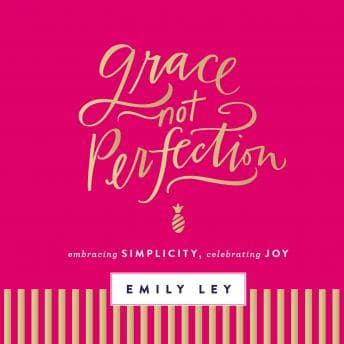
Here's the thing about self-help books that center on giving yourself permission to be imperfect: they're either genuinely liberating or they're just... permission slips for mediocrity dressed up in pretty fonts. Emily Ley's *Grace, Not Perfection* falls somewhere interesting in between, and I found myself asking: why does this message work for some women and feel hollow for others?
The Psychology of the Permission Slip
Ley's central thesis is solid—psychologically speaking, perfectionism is strongly correlated with anxiety, depression, and burnout. The research actually shows that self-compassion (which is essentially what Ley is advocating for, wrapped in faith-based language) leads to better outcomes than self-criticism. So she's not wrong. I've seen that same gentle encouragement work beautifully in Nick and Charlie, where self-acceptance becomes the quiet foundation for growth.
What makes her approach compelling is that she's not speaking from a therapist's chair. She's speaking as someone who built a business on organization—the Simplified Planner—and then had to confront the irony that her pursuit of simplicity had become its own form of complexity. That's a fascinating case study in how our coping mechanisms can become our prisons.
But here's where my academic brain started itching. The book assumes a very specific listener: married, probably with kids, likely Christian, definitely overwhelmed by domestic and professional obligations. If that's you, this will feel like a warm hug from a friend who gets it. If that's not you—if you're single, childless, or not particularly faith-oriented—you might feel like you're eavesdropping on someone else's conversation.
Haley Cresswell's Steady Hand
The narration is... competent. I don't mean that as a backhanded compliment. Cresswell has a clear, engaging tone that matches Ley's accessible writing style. She sounds like the friend Ley is trying to be—warm without being saccharine, encouraging without being preachy.
At 4 hours and 37 minutes, there's not a lot of vocal range required here. This isn't a book with multiple characters or dramatic tension. It's essentially a long, heartfelt conversation, and Cresswell delivers it like one. Normal speed works fine; I actually wouldn't recommend speeding it up because the content is meant to be absorbed slowly. (My therapist would have thoughts about my instinct to rush through a book about slowing down.)
The Repetition Problem
I need to be honest: by hour three, I was noticing patterns. The same core message—simplify your space, your time, your mind—gets restated in slightly different ways. It's not that the advice is bad. It's that once you've heard "give yourself grace" for the fifteenth time, you start wondering if the book could've been a podcast episode.
This is a common issue with books that started as a brand philosophy. The Simplified Planner has a clear, marketable message, and *Grace, Not Perfection* sometimes reads like an extended brand manifesto rather than a deep exploration of its ideas. Ley's personality shines through—she's genuinely likable and self-deprecating in ways that feel authentic—but personality can only carry content so far. Winter Walk had a similar issue—charming voice, but I kept waiting for the narrative to push past the surface warmth into something more substantial.
Who Will Love This (And Who Won't)
If you're a busy mom or wife feeling crushed by impossible standards, and you want permission from someone who's been there? This is your book. Ley's practical tips—her List Making 101 approach, her strategies for centering your day around slower rhythms—are genuinely useful for that demographic. Skip it if you're looking for a rigorous examination of perfectionism's psychological roots, or if faith-based messaging isn't your thing.
I'm somewhere in between. I appreciated Ley's vulnerability about her own struggles with overcommitment. I found her framework for simplification sensible, if not revolutionary. But I also caught myself wishing she'd push deeper—past the permission-giving into the harder question of *why* so many women have internalized impossible standards in the first place.
What the Dissertation Committee Would Ask
My sauce turned out fine, by the way. And I finished the book feeling... lighter, maybe? Not transformed, but reminded of something I already knew and had been ignoring. Sometimes that's what self-help does best—not teach you something new, but make you pay attention to what you've been avoiding.
Ley's mantra is worth adopting, even if her book occasionally feels like it's padding out a truth that could fit on a Post-it note. Grace over perfection. Simple enough to remember. Hard enough to practice. And maybe that's the point.