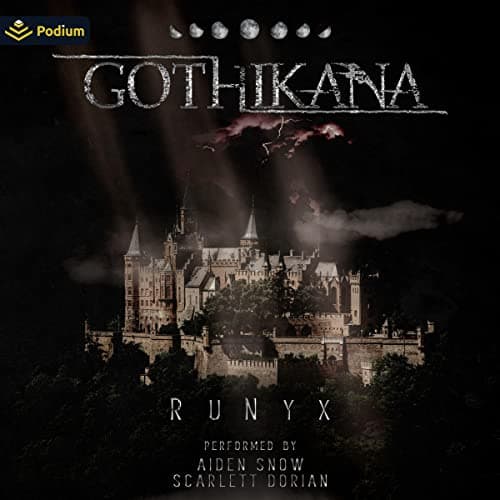

Corvina Clemm accepts an invitation to Verenmore after losing her mother—and the place offering her a future is a secluded mountain castle with a century-long disappearance problem. That’s the moment in the premise that got me. I had Gothikana queued at my kitchen table in Seattle, setting my hearing aids in their charger after a day of accessibility consultations. An institution offering belonging while withholding essential information? My professional suspicion arrived before the romantic intrigue.
Verenmore’s welcome letter is the first red flag
The strongest thing about Gothikana’s setup is that Corvina has a reason to accept an invitation most of us would investigate very aggressively. Her mother has died. She has spent her life outside the circle. Verenmore offers somewhere to go, which makes its isolation more than gothic decoration: the refuge and the potential trap occupy the same building.
That’s the emotional entry point I find persuasive. Not simply a strange university, but a strange university arriving when refusing it might feel like refusing your next life.
Then there’s Vad Deverell. He’s a part-time professor working on his thesis, not merely a brooding fellow student with excellent access to black clothing. His position matters. So does his knowledge of the university’s dangers. The attraction is built around unequal access to information as well as an institutional power imbalance; calling it forbidden romance shouldn’t erase either ingredient.
For me, that makes the central question less “Will they get together?” and more “What does Corvina actually know when she chooses him?” Much sharper. Also potentially frustrating if you need your romantic leads operating on equal footing.
The disappearances supply the other hook: people vanish every five years, and have for more than a hundred years. That regularity invites pattern-hunting. It promises something different from miscellaneous ominous noises in a castle corridor. I’d approach the book wanting the attraction and the investigation to put pressure on each other—not expecting a procedural with occasional kissing breaks.
Two names on the cover aren’t an access audit
Listener response leans positive: the listener average sits at 4.15 out of five across 2,737 ratings, with gothic atmosphere, the mystery, and an unexpected twist among the frequently praised features. Snow and Scarlett Dorian also receive direct praise in the available review coverage.
Encouraging. Not specific enough to tell you how intelligible their quieter passages are.
There’s no verified detail here about accent choices, character differentiation, music, effects, or recording defects. Aiden Snow also narrates Surrender, though that credit alone tells me nothing about how this particular recording handles silence. Even the presence of two narrators doesn’t establish whether this is alternating narration or a duet in which each performer retains particular dialogue roles. Those formats create different listening experiences. I’m not going to label this a duet because two names look nice together on a listing.
For my hearing profile, the useful sample test would be a passage where intimacy and information overlap: can I follow the language without losing the emotional intention? With Vad positioned as both a romantic interest and someone withholding knowledge, vocal restraint needs to remain intelligible. Mystery shouldn’t depend on my failing to catch a consonant. (The castle can keep secrets. The recording shouldn’t.)
Text pairing would be my preferred access option here, particularly for tracking the disappearance pattern. Check whether your edition supports Whispersync text pairing before starting. I also wouldn’t prescribe a faster playback speed without hearing how these performances handle pauses.
Take the castle invitation, but check its terms
The clearest buying distinction is genre priority. Choose Gothikana if you want explicit dark romance inside a death-haunted university, and you’re comfortable with the professor/student dynamic being part of the attraction. Approach more cautiously if the horror label has you expecting fear to take precedence over the relationship. The same-genre label makes Shadow Game a sensible separate look, but it is not evidence that its balance of fear and romance matches this one.
There is a dissenting signal worth keeping: one reviewer found the book slow to get through and didn’t connect with its characters or plot. That isn’t evidence of sluggish narration. It does suggest that Verenmore’s atmosphere won’t compensate for every listener who remains unmoved by Corvina and Vad.
Content preparation matters, too. The available warnings flag sexual content, discussion of schizophrenia and hearing voices, and disturbing material without a comprehensive breakdown. Those references alone don’t establish whether the representation is careful or harmful. If that distinction affects your access or enjoyment, consult fuller warnings before starting.
At 10 hours 37 minutes, this is a substantial but manageable commitment. My recommendation is to wait for a sale and audition the sample first. The specific draw is Corvina seeking belonging in the very institution she needs to distrust. Buy for that collision—and the dangerous attraction—not on an unsupported promise that the audio will suit every ear.