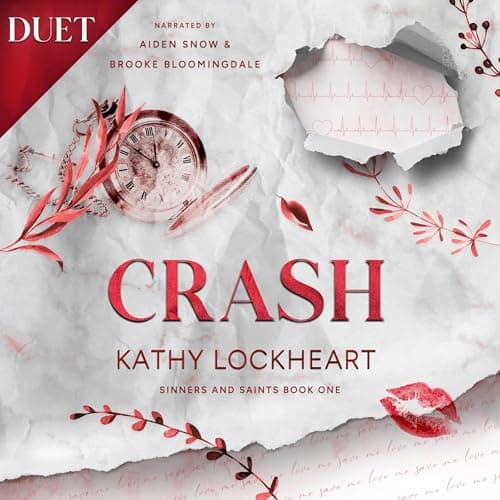

Aiden Snow's baritone is dangerous.
I mean this literally. I was chopping onions for a dal that required my full attention, and somewhere around hour two, I nearly took off a fingertip because his voice had lulled me into some kind of hypnotic state where knife safety became secondary to finding out whether Taryn would finally tell Jake the truth.
This is a fascinating case study in identity concealment—both protagonists are hiding who they really are, which creates this delicious psychological tension where every intimate moment carries an undercurrent of "but do you actually know me?" Taryn Malone doesn't exist. She's running from something (or someone), broke and stranded outside an Irish pub in the rain. Jake Callaghan, former Navy SEAL turned bartender, does what his training demands: he rescues her. The research actually shows that people with military backgrounds often struggle to separate professional instincts from personal attraction. Jake's internal conflict—is he helping her because it's right, or because he wants her?—rings psychologically true.
The Dual Deception Problem
What makes this character dynamic compelling is that neither party holds moral high ground. They're both liars. Taryn's secrets are survival-based; Jake's are... well, more complicated. She exhibits classic avoidant attachment patterns—pushing away precisely when connection becomes possible. And Jake? He's got that protector complex that often masks a deeper need to be needed. My therapist would have thoughts about both of these characters, honestly.
The eight-hour runtime gives these reveals room to breathe. Zanders doesn't rush the unmasking—she lets the tension simmer. I found myself asking: why does Taryn really stay? The surface answer is practical (she needs money, shelter, safety). But the psychological truth is that she's exhausted from running, and Jake represents something she hasn't allowed herself to want.
Snow's Solo Act
Some listeners prefer dual narration for romance—a male voice for his POV, female for hers. I get it. But Aiden Snow handles Taryn's internal monologue with this subtle shift that never veers into falsetto territory. He doesn't try to "do" a woman's voice; he modulates tone and pacing to signal perspective changes. It's a choice that keeps the listening experience cohesive rather than jarring.
That said, the solo male narration does create a slight distance from Taryn's emotional reality—we're experiencing her through Jake's vocal lens, even during her POV chapters. Not a dealbreaker, but worth knowing if you're particular about immersion.
The romantic suspense tone is where Snow really earns his AudioFile Earphones Award. During the tenser moments—and there are several; content warnings for violence and abuse are warranted—his pacing tightens just enough to raise your pulse without becoming melodramatic.
Who Should Listen (and Who Should Skip)
If you need your thrillers to be pure puzzle boxes with no emotional entanglement, skip this. The mystery elements serve the romance, not the other way around. For a darker exploration of secrets and psychological damage, Secrets in the Cellar examines the extreme end of concealment and trauma—though it's true crime, not fiction. But if you want to understand why two damaged people might risk everything for connection despite knowing the cost? This is your book.
Zanders has written over 65 romance novels, and you can feel that experience in how she structures the reveals. She knows when to withhold, when to deliver. No cliffhanger ending—she's apparently known for that, and she delivers here too.
I finished the dal eventually. It was overcooked because I kept pausing to stir and then forgetting to actually stir. Worth it.
Closing the Case File
This is a solid romantic suspense that understands its characters better than most. The secrets feel earned rather than manufactured for drama. Snow's narration elevates material that could have been formulaic into something genuinely engaging. Not groundbreaking psychology, but authentic enough that I believed these two broken people might actually find their way to each other.
At just under eight hours, it's a focused listen—no bloat, no unnecessary subplots. Good for a weekend of cooking, cleaning, or any activity where you want to be absorbed but not overwhelmed. Just maybe put down the knife during the intense parts.