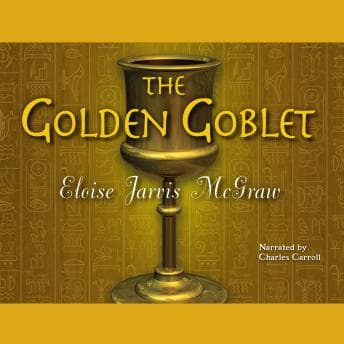

Can we talk about how unfair it is that I never got assigned books this good in middle school? Because I would've been way more into reading if someone had handed me The Golden Goblet instead of whatever forgettable thing we actually read. Ancient Egypt! Tomb robbers! A kid trying to escape his genuinely terrible half-brother! This is basically a D&D backstory waiting to happen.
I picked this up because I've been on a historical fiction kick lately (read: avoiding my thesis by exploring every era except the one I'm supposed to be researching), and honestly? Seven and a half hours flew by. I was doing laundry, coding some procedural dungeon generation stuff that definitely counts as thesis work, and suddenly I'm emotionally invested in whether this kid Ranofer is going to become a goldsmith or not.
The Ancient Egypt World-Building Hits Different
Look, I'm a sucker for detailed world-building. You know this. And McGraw does something really clever here—she doesn't info-dump ancient Egyptian culture at you. She just... lives in it. Ranofer's world is full of specific details about goldsmithing techniques, the layout of Thebes, how people actually lived and worked. It's the kind of immersive setting where you forget you're learning anything because you're too busy following the story. Dream Thieves does something similar with its setting—grounding fantastical elements in such specific, lived-in details that the world feels real even when it's impossible.
The magic system here is, uh, reality? But the craftsmanship descriptions are almost Sanderson-level in how they ground you in the physical world. When Ranofer talks about working with gold, you can tell McGraw did her research. There's a reason this won a Newbery Honor—the historical accuracy is solid without ever feeling like a textbook.
My D&D group would absolutely steal elements from this for a campaign. The cutthroat streets of ancient Thebes? The underground tomb-robbing subplot? The evil half-brother who's basically a low-level villain NPC? Chef's kiss.
Charles Carroll Finds the Sweet Spot
Here's the thing about narrating kids' historical fiction—you can go way too theatrical and make it campy, or you can be so understated it gets boring. Carroll finds this sweet spot where he's clear and crisp without overdramatizing everything. His pacing adds genuine suspense to the tomb-robbing sequences without making it feel rushed.
Is he Steven Pacey? No. (But who is, really.) He's not doing wildly distinct character voices that'll live rent-free in your head forever. What he IS doing is serving the story well. The narration made me forget I was listening to something written for middle-graders—it just felt like a solid adventure story.
One reviewer said the audiobook was "too absorbing to listen to at bedtime," and honestly, same. I kept telling myself I'd stop after one more chapter and then suddenly it's 1 AM and I'm invested in ancient Egyptian goldsmithing guilds. This is not thesis-conducive behavior.
Roll for Initiative (Or Don't)
So here's my honest take: this is technically a kids' book, but it doesn't read like one. The themes are heavy—Gebu is genuinely abusive, and Ranofer's situation is pretty dark for a while. It's not gratuitous, but it's real. If you're looking for something to listen to with younger kids, maybe preview it first.
But if you're an adult who likes historical fiction and doesn't mind that this was written for a younger audience? It's great. The pacing is tight (no 40-hour epic here, just a focused 7.5-hour story), the setting is vivid, and the emotional beats land.
Best for:
- Anyone who loved The Egypt Game growing up
- History nerds who want accessible ancient world content
- Parents looking for something to listen to with older kids (10+)
- Commuters who want something engaging but not overwhelming
Skip if:
- You need theatrical, full-cast productions to stay engaged
- Themes of child abuse are triggering (it's handled appropriately for the age group, but it's there)
Campaign Notes: Would Run Again
Probably not an immediate re-listen—it's a straightforward story that doesn't demand repeat runs. But I'm definitely recommending it to my friend who homeschools her kids and is always looking for historical fiction that isn't boring. This is the opposite of boring.
Also, I'm adding "ancient Egyptian goldsmith" to my list of potential NPC backgrounds. Ranofer's whole journey from oppressed apprentice to... well, I won't spoil it... is basically a character arc template. Holes pulls off a similar trick—a kid in a terrible situation who has to navigate corrupt authority figures while uncovering a larger mystery. Thanks, 1961 children's literature. You've contributed to my procrastination in ways you never imagined.