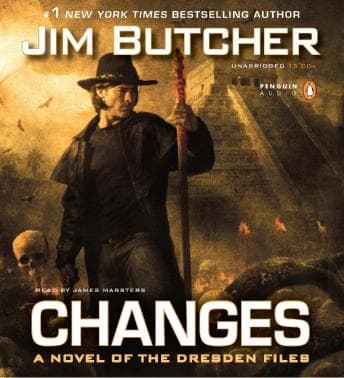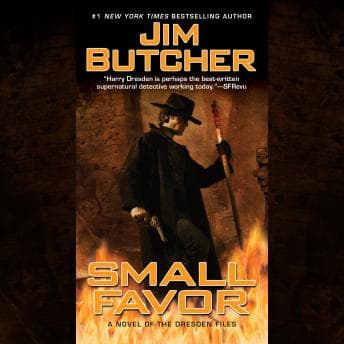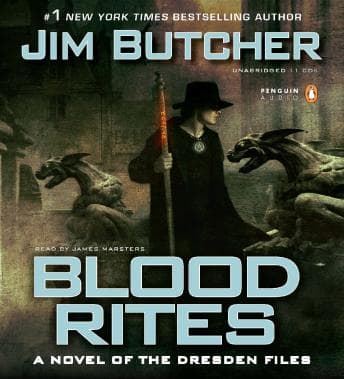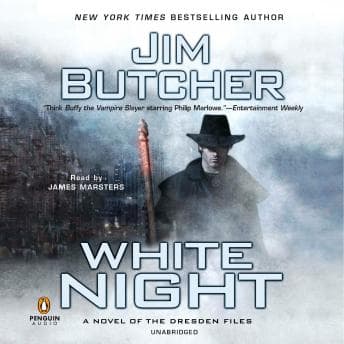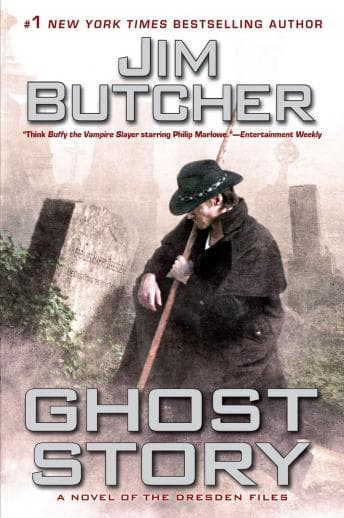

Okay, so here's the thing about Ghost Story - I started this on a Monday morning commute, still half-asleep, coffee barely kicking in, and within the first ten minutes I was wide awake. Because Harry Dresden is dead. Like, actually dead. Shot through the chest, dumped in Lake Michigan, the whole dramatic exit. And now he's a ghost trying to solve his own murder while watching his friends fall apart without him.
Bottom Line: Worth your commute. This is basically a detective noir but for the afterlife, and James Marsters absolutely crushes it.
Dresden Running on Hard Mode
Look, I've been listening to this series for years now. It's my comfort food - wizard detective fights monsters in Chicago, snappy one-liners, things explode. But Ghost Story hits different. Harry has no body, no magic, no ability to just blast his way through problems. It's basically Dresden running on hard mode, and watching him figure out how to be useful when he can't even pick up a phone is genuinely compelling.
The pacing is slower than other books in the series - I'll be honest about that. There's some filler material, some flashback sequences that felt like they could've been tightened up. But here's the thing: the emotional payoff is worth it. Harry watching his friends grieve him, seeing the consequences of his choices, confronting some seriously dark stuff from his past - it adds depth to a character I thought I already knew inside and out.
I finished this in about 4 commutes, which for a 17+ hour audiobook means I was sneaking in extra listening time during lunch. That's the ROI on this one.
Why Marsters IS Dresden
I need to talk about James Marsters. (And yes, I know he's Spike from Buffy. Yes, I had a crush on him in high school. Moving on.)
There's a reason the Dresden Files fandom basically revolted when they originally released this book with a different narrator. John Glover is a fine actor, but he wasn't Harry. When Marsters came back and re-recorded the whole thing, it was like the audiobook universe course-corrected itself.
Marsters doesn't just read Dresden - he inhabits him. The sarcasm, the weariness, the moments where Harry's voice cracks because he's watching the people he loves suffer and can't do anything about it. There's this scene where Harry sees Murphy for the first time as a ghost, and the way Marsters delivers those lines... ugh. I was on a packed train and had to pretend I wasn't getting emotional.
His character voices are still rock solid after 13 books. Molly sounds different from Murphy sounds different from Butters sounds different from the various supernatural entities Harry encounters. And the flashback sequences - which could've been jarring - have this slightly different quality to his delivery that makes them feel appropriately dreamlike.
The Ghost Mechanics Actually Hold Up
As someone who spends her days debugging distributed systems, I appreciate when fantasy books have internal logic that makes sense. Butcher clearly thought through how ghost-Harry would work - what he can and can't do, how he interacts with the physical world, the rules of the afterlife. It's not just hand-wavy magic. There's a system, and Harry has to learn it.
I appreciated similar world-building rigor in Before They Are Hanged, where the magic system has real costs and consequences.
The supernatural threats in this one are genuinely creepy too. The wraiths and lemurs (not the cute Madagascar kind - the scary Roman ghost kind) create this atmosphere of dread that Marsters leans into hard. His delivery gets quieter, more tense, during those sequences. Really effective.
Who's This For (And Who Should Bail)
This is ideal for extended listening sessions where you can really sink into the story. The slower pacing means you won't miss crucial plot points if you zone out for thirty seconds, but the emotional beats hit hard enough to keep you engaged.
Skip if: You haven't read the previous Dresden books. Seriously. This is book 13. The emotional impact depends entirely on knowing these characters, their histories, their relationships. Space Prison works better as a standalone if you need something you can jump into without backstory. Starting here would be like walking into the last episode of a TV series and wondering why everyone's crying. Also skip if you're sensitive to violence and dark themes - this one gets heavy. Harry's in a bad place (literally and figuratively), and the book doesn't shy away from that.
Queuing This Up Again?
Honestly? Probably. Not immediately - I need some time to recover from the emotional gut-punches - but this is one of those books that rewards re-listening. There are layers I'm sure I missed, foreshadowing I didn't catch, character moments that'll hit differently now that I know where things are going.
Marsters rocked this like a diamond boss (not my phrase, but accurate). If you're already invested in the Dresden Files, this is essential listening. If you're not... well, start at book one and work your way here. The journey is worth it.