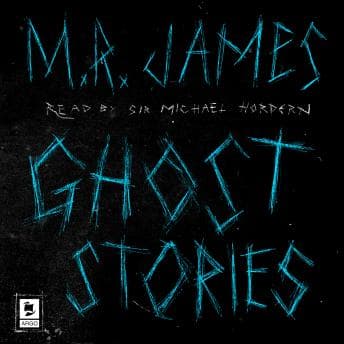

What makes a ghost story actually scary? Not gore, not jump scares—but that creeping certainty that something is deeply, fundamentally wrong. That same slow-building dread powers Court of Mist and Fury, though it trades Victorian ghosts for faerie politics. I was listening to this at 11 PM after a particularly brutal on-call shift, too wired to sleep but too fried to do anything productive. Bad idea? Maybe. But M.R. James at midnight with Sir Michael Hordern's voice in your ears hits different.
Quick Verdict: Worth your commute—but maybe not your bedtime.
The Vinyl Crackle of Victorian Dread
Here's the thing about this collection: it's abridged, remastered from old vinyl records, and clocks in at just over two hours. That's barely a round-trip commute for me. And yet? The ROI on this audiobook is surprisingly high. These aren't the bloated, over-explained horror stories we get now. James wrote in the early 1900s, and his ghost stories operate on implication. The horror lives in what's almost-seen, almost-understood. "The Haunted Doll's House" doesn't need to explain why a miniature house containing tiny figures that move on their own is terrifying—it just is.
The abridgment actually works here. These stories were meant to be told aloud at Christmas gatherings, so the trimmed format feels authentic rather than butchered. You're getting the essential dread without the Victorian throat-clearing.
Hordern vs. The Competition
I've listened to other M.R. James narrators—Derek Jacobi, David Suchet, the usual prestige roster. They're all technically excellent. But Hordern? He sounds like the stories are happening to him. There's this donnish fussiness to his delivery, like an Oxford professor recounting something deeply unsettling that happened during his sabbatical and trying very hard to remain composed about it. The variability is subtle—his voice doesn't dramatically shift between characters, but there's this delicate modulation when something supernatural enters the scene. You feel the temperature drop.
This is basically audiobook archaeology. The original recordings have that analog warmth (and occasional vinyl artifacts) that digital productions can't replicate. Whether that's a feature or a bug depends on your tolerance for vintage audio. For me, it added to the atmosphere. Like finding an old radio drama in your grandparents' attic.
The "Scholarly Horror" Vibe
James's protagonists are almost always academics or antiquarians who stumble onto something they shouldn't have. As someone who spends her days debugging distributed systems, there's something deeply relatable about the horror of "I found something weird, I investigated it, and now I deeply regret my curiosity." The Ash Tree features a bed with... issues. I won't spoil it, but I spent the rest of my commute the next morning thinking about it.
The pacing is deliberate—this isn't fast-paced horror. It's slow-burn in the truest sense. Perfect for focused listening, terrible for 6 AM zombie mode on a packed Caltrain. I had to rewind a few sections I'd zoned out during. At 1.5x speed it's manageable, but I wouldn't push it faster. Hordern's cadence is part of the effect.
Who Gets a Ticket, Who Gets Left at the Platform
Perfect for: Dark winter nights, solo listening sessions, anyone who thinks modern horror relies too much on shock value. If you're the type who finds academic settings inherently creepy (libraries with restricted sections, ancient manuscripts, that one colleague who knows too much about medieval curses), this is your jam.
Skip if: You need background listening, gym fuel, or explicit scares to feel scared. The slow pacing will lose you at 6 AM on a packed train.
The short runtime makes it ideal for a single dedicated listen rather than spreading it across multiple commutes. I finished this in one round-trip plus about twenty minutes of pretending to work while the last story wrapped up.
The Debug Report
At two hours, this is a curated experience rather than a comprehensive collection. You're not getting all of James's work—just the highlights, expertly delivered. The remastering is clean but not sterile. Hordern's performance has been called the definitive M.R. James interpretation, and after comparing it to other versions, I get why. There's an authenticity here that newer productions, however polished, can't quite match.
Is it worth a credit? For the runtime, probably not at full price—this is more of a "catch it on sale or stream it" situation. But for the experience? If you've never heard Hordern do James, you're missing something special. The man sounds like he's genuinely unsettled by what he's reading, and that sells the horror better than any amount of production value.
I'm keeping this one for October. And maybe next time I'll listen during daylight hours. Maybe.