
Bottom Line: Solid relationship therapy content hampered by a critical hardware dependency—you need the physical workbook to run this program. The authors narrating their own work adds authenticity but lacks production polish. Best deployed as a structured couples' exercise, not passive listening.
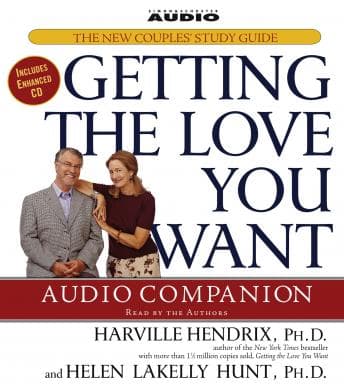
This audiobook is essentially a software update that requires legacy hardware to function. Harville Hendrix and Helen LaKelly Hunt created Imago Relationship Therapy, and hearing them explain their own framework carries the kind of authenticity you can't fake. But here's the bug report: the twelve-week course they've designed assumes you're sitting with the physical book open, ready to complete worksheets and partner exercises. Try running this during your commute and you'll hit dependency errors constantly.
I tested this theory myself. Loaded it up for a morning drive, figured I'd absorb some relationship wisdom passively. Within twenty minutes I was hearing instructions for written reflections I couldn't complete and prompts for exercises requiring materials I didn't have. The audio kept referencing visual components that simply don't exist in an audio-only format. It's like trying to pair-program with someone who keeps pointing at a screen you can't see.
The core content, though? That's where the value lives. Hendrix and Hunt break down why we're unconsciously drawn to specific partners—what they call the "Imago," an internal template shaped by our childhood caregivers. They map out the power struggle phase most couples hit after initial romantic chemistry fades, then provide a structured path through it. The research backing is solid, and the concepts translate well even if you're not currently coupled up. Understanding your own relationship patterns is useful debugging for anyone.
Compared to The Seven Principles for Making Marriage Work, this feels more like a guided workshop than a book you absorb. Gottman gives you research and principles you can internalize through listening alone. Hendrix and Hunt give you a twelve-week program that demands active participation. Neither approach is wrong—they're just different use cases. Know which one you're signing up for.
The narration splits listeners hard. Hendrix and Hunt are therapists with decades of clinical experience, not voice actors with studio training. Their delivery is clear and educational, but it lacks the dynamic range that keeps you engaged over two and a half hours. Some listeners find this grounding—you're hearing the actual experts explain their actual work. Others describe the performances as actively interfering with excellent material. One reviewer got so frustrated they bought the hardcover just to access the content without the narration. That's a significant UX failure.
I landed somewhere in the middle. The lack of vocal variety made longer sessions feel repetitive, especially in the back half where concepts get reinforced multiple times. But there's something valuable about hearing relationship advice from people who've clearly spent their careers living this work. It's the difference between reading documentation and having the original developer walk you through the codebase.
Production quality is clean—no technical glitches or audio artifacts. The limitation is purely in the format design and delivery style. If you're a couple ready to commit to the full program—sitting down together regularly, workbook open, treating this as the structured course it's meant to be—the audio companion adds a useful dimension. Hearing the authors guide you through exercises has genuine value.
But if you want a pure listening experience, grab the main Getting the Love You Want audiobook instead. Save this companion for when you're ready to engage with it as the active workbook program it actually is. The content deserves better than frustrated half-listening while you're stuck in traffic.
Install Requirements
Queue this up if: You're a couple ready to commit to twelve weeks of structured work, workbook in hand, treating this as the active program it's designed to be. Also useful for mental health professionals wanting an accessible entry point to Imago Therapy concepts.
Skip if: You want passive listening during commutes or workouts. Grab the main Getting the Love You Want audiobook instead—this companion will just frustrate you without the physical materials.