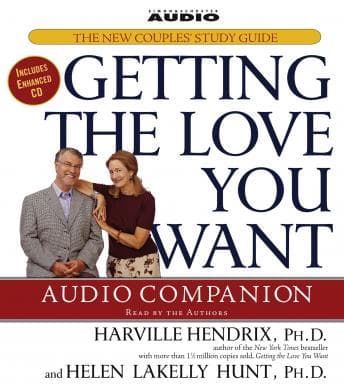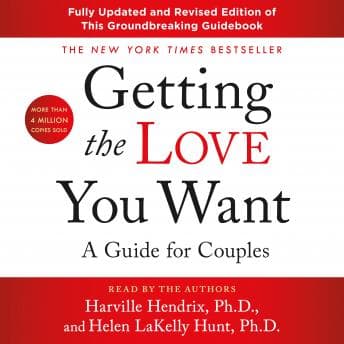

Look, I need to rant about something before we get into the substance of this book, because it's been bothering me since about hour two. Harville Hendrix and Helen LaKelly Hunt are married. They co-created Imago Relationship Therapy together. They wrote this book together. And yet — and yet — when they narrate this audiobook, they sound like two strangers reading from different scripts in different rooms on different continents. The irony of a book about deep relational connection being narrated by a couple with zero audible chemistry is... well, my therapist would have thoughts about this.
I was making aloo gobi at 10 PM on a Tuesday (don't judge me, it's meditative), and I kept pausing the audiobook to check if something was wrong with my phone. It wasn't. Helen's narration pace is genuinely, painfully slow — we're talking a full beat between sentences that made me lose the thread of otherwise sharp psychological insights. Meanwhile, Harville sounds engaged, warm, conversational. The mismatch is jarring. I ended up bumping the speed to 1.25x, which made Helen tolerable but turned Harville into a slightly caffeinated auctioneer. There's no winning here.
The Psychology Is Actually Good (Which Makes the Audio Problem Worse)
Here's what frustrates me: the content underneath the narration issues is genuinely solid from a psychological standpoint. Hendrix and Hunt pull from an impressive range of frameworks — behavioral science, depth psychology, Gestalt therapy, interpersonal neuroscience — and synthesize them into something accessible without being dumbed down. Their central thesis, that we unconsciously choose partners who mirror the wounding characteristics of our early caregivers, is not new, but the way they build the case is careful and evidence-informed.
The protagonist here — and yes, I'm treating the reader as a character, because that's what self-help books do — exhibits classic repetition compulsion patterns. You chose your partner because some deep, preverbal part of your brain recognized them as the person most likely to re-create your childhood wounds. Cheerful, right? But the book doesn't stop at diagnosis. The Imago Dialogue technique they outline, where partners take turns mirroring, validating, and empathizing with each other's statements, is grounded in real clinical practice. The research actually shows that structured dialogue like this activates different neural pathways than typical argument patterns. I found myself asking: why does this framework work when so many others don't? And the answer, I think, is that Hendrix understands the difference between hearing and listening — and he builds exercises around that gap.
The third edition adds a new chapter and forward that feel genuinely updated rather than tacked on. Thirty-plus years of clinical work shows. These aren't people theorizing from armchairs; they've sat with thousands of couples and refined their approach.
The Audiobook as an Accidental Case Study in Its Own Material
I can't get past the irony. This is a book about how couples disconnect through mismatched communication styles, narrated by a couple demonstrating exactly that problem. Helen reads with a measured, almost sedated cadence — like she's narrating a meditation app for people who find regular meditation apps too stimulating. Harville brings warmth and clinical authority. Together, they create a listening experience that is, at best, uneven, and at worst, actively difficult to sustain attention through for ten-plus hours.
At 1.25x speed, you get a workable compromise. I'd recommend it. But the fact that you need a speed hack to make a self-help audiobook listenable is a problem. This is a fascinating case study in how medium affects message. The same content in print? Probably a 4-star experience. In audio, narrated by the authors themselves? The authority gains don't outweigh the pacing losses.
Who Gets the Most Out of This (And Who Should Just Buy the Paperback)
If you're in a long-term relationship and you've hit that wall — the one where every conversation about loading the dishwasher somehow becomes about your mother — this book has real utility. The exercises are concrete. The psychology tracks. Couples therapists recommend it constantly, and for good reason.
But here's my honest advice: if you're an audiobook-or-nothing person, crank the speed up and commit to focused listening sessions. Some self-help audiobooks demand that level of attention — I had similar thoughts about The Subtle Art of Not Giving a F*ck, though for entirely different reasons. This is not a background-while-grocery-shopping book. If you have the option, though? Read it in print. You'll absorb the exercises better, you can work through them with a partner at your own pace, and you won't spend three hours wondering why Helen sounds like she's reading underwater.
My Clinical Note
What makes this book compelling is that Hendrix and Hunt treat romantic love not as a feeling but as a developmental process — a chance to finish the psychological work your childhood started. That's a genuinely powerful reframe. Psychologically, this tracks in ways that most relationship self-help doesn't. The content earns a strong recommendation. The audiobook format, unfortunately, undermines it. I kept wanting to love this listen the way I love the ideas. But the delivery kept getting in the way, like a couple that has all the right intentions and none of the rhythm. Which, come to think of it, is exactly the problem the book is trying to solve.