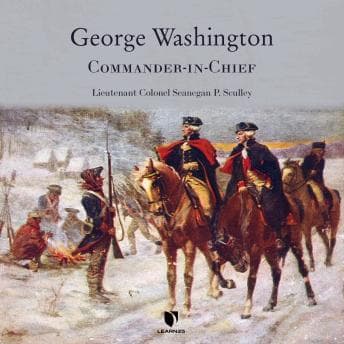

Most audiobooks about the Founding Fathers are a waste of your time. They're either hero worship dressed up as scholarship or academic exercises that make you question why you ever cared about history. Sean Sculley's George Washington: Commander-in-Chief is neither.
Here's the bottom line: if you're in any kind of leadership position—managing a team, running a company, or just trying to understand what separates competent executives from legendary ones—this six-hour investment pays dividends. Washington wasn't born a strategic genius. He was essentially a startup founder who nearly ran his operation into the ground multiple times before figuring out what actually works.
I started listening during a particularly frustrating week of project management, and about forty minutes in, Sculley is describing how young Washington during the French and Indian War made catastrophic errors in judgment that got soldiers killed. He was arrogant, inexperienced, and operating way outside his competence level. Sound familiar? It should. That's every ambitious professional who's ever been promoted too fast.
The Real Value: A Turnaround Case Study
What makes this course valuable isn't the history lesson—it's the case study in organizational turnaround. Sculley, who's both a West Point professor and a professional soldier with actual command experience, breaks down how Washington transformed a disorganized mess of colonial militias with no institutional structure into a force capable of defeating the world's most powerful military. That's not patriotic mythology. That's operational excellence under impossible constraints.
The fifteen-lecture format works brilliantly for busy schedules. Each one runs about twenty-five minutes—perfect for a commute or a workout. You're getting structured analysis, not meandering storytelling. Sculley identifies the problem Washington faced, explains his approach, evaluates the results, and moves on. It's efficient. It respects your time.
Sculley Behind the Mic
The production quality is clean and professional. Sculley narrates his own material, which means you're getting the emphasis and pacing he intended. His delivery is clear without being theatrical—he sounds like a sharp colleague explaining a complex situation rather than a performer trying to keep you entertained. For educational content, that's exactly what you want.
What surprised me most was how much time Sculley spends on the unglamorous stuff: supply chains, personnel management, coalition politics. Washington spent enormous energy keeping his army fed, clothed, and not actively deserting. He had to manage egos, navigate impossible political dynamics with French allies, and maintain organizational cohesion when his people had every reason to quit. Replace "Continental Army" with "early-stage company" and the parallels are obvious.
Strategic Patience as Competitive Advantage
The second half covers Washington's evolution into a genuinely effective commander—learning from failures, building professional systems, delegating appropriately. The analysis of his strategic patience is particularly useful. Washington understood that he didn't need to win every battle; he needed to not lose the war. That's a distinction most people in competitive situations completely miss.
Fair warning: this is a lecture series, not a dramatic production. If you want narrative storytelling or full-cast performances, look elsewhere. The format is academic, the tone is scholarly, and the entertainment value comes entirely from the quality of the ideas rather than production flourishes. Some listeners will find this dry. I found it refreshing—no filler, no padding, just substance.
The final lectures on Washington's presidency and how he handled military issues as a civilian leader add context you won't find in most Revolutionary War content. His management of the Whiskey Rebellion and navigation of standing-army politics in a republic suspicious of military power shows the same adaptive leadership that won the war applied to peacetime governance.
Who Gets Value Here (And Who Doesn't)
For history enthusiasts, this is excellent scholarship delivered accessibly. For anyone interested in leadership principles or military strategy, it's a high-level course disguised as history. If you're drawn to political analysis with that same intellectual rigor, Things That Matter delivers sharp thinking on governance and strategy across three decades. Skip this if you need dramatic narration or entertainment-first production—you'll be bored. But for listeners who want to understand how someone takes over a failing organization and turns it around through relentless adaptation and learning? Required listening.
The Bottom Line on Your Six Hours
The ROI calculation is simple: six hours of focused content that will change how you think about leadership, strategy, and organizational management. That's a trade worth making.






![Steve Jobs [unabridged audiobook] audiobook cover](/_next/image?url=https%3A%2F%2Fcovers.audiobooks.com%2Fimages%2Fcovers%2Ffull%2F9788499923406.jpg&w=1920&q=75)