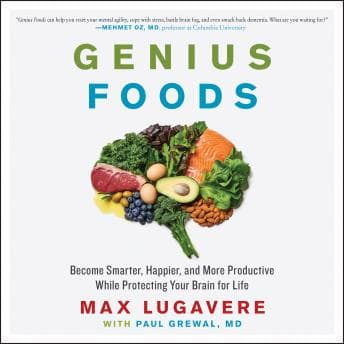

So here's the thing about brain optimization books - they usually fall into two camps. Either they're so dense with citations that you need a PhD to follow along, or they're basically "eat blueberries and do crossword puzzles" stretched into 300 pages. I went into Genius Foods expecting the latter. What I got was something genuinely useful.
Max Lugavere's origin story is what hooked me. His mom got diagnosed with a rare form of dementia, and instead of just accepting it, he essentially became a full-time neuroscience journalist. That personal stake shows. This isn't some wellness influencer regurgitating studies he half-read - the guy spent years interviewing researchers and visiting neurology departments. You can hear it in his voice when he talks about his mother's decline. There's a rawness there that caught me off guard during my 6:47 AM express to Mountain View.
The ROI Actually Computes
At just under 10 hours, this is a serious commitment for a nutrition book. But unlike most self-help that could've been a blog post (or let's be honest, a tweet), the depth here justifies the runtime. Lugavere breaks down the biochemistry of how different foods affect cognition - not just "omega-3s are good for your brain" but the actual mechanisms of why. He explains how insulin resistance in the brain might be linked to Alzheimer's (he calls it "type 3 diabetes"), and the science actually holds up.
The structure works well for commute listening. Each "genius food" gets its own section - eggs, dark chocolate, avocados, wild salmon, etc. - so you can absorb one concept per train ride without losing the thread. I found myself actually remembering the specifics because he ties each food to a concrete cognitive benefit. Choline in eggs for acetylcholine production. The polyphenols in extra virgin olive oil crossing the blood-brain barrier.
Author-Narrated: When It Actually Works
Lugavere narrates his own book, which is usually where I start cringing. Most authors sound like they're reading their tax returns aloud. But his background as a media personality actually pays off here - he's got that podcast host cadence that keeps things moving. Breathe: A Life in Flow has that same conversational expertise—Rickson Gracie knows his material so deeply that the narration feels effortless. Clear, engaging, doesn't stumble over the scientific terminology because he's been saying these words for years.
That said, it's not Ray Porter. There's no real vocal range or dramatic interpretation happening. It's more like listening to a really good health podcast episode that runs for 10 hours. Which is fine! The material doesn't need theatrical performance. You're here for information, and he delivers it cleanly.
The supplemental PDF is actually useful too - has the food lists and protocols summarized. I screenshot'd it and reference it at Whole Foods now like some kind of brain optimization nerd. Kevin thinks I've lost it. He's probably right.
Where It Gets a Little Preachy
Look, I'm an engineer. I appreciate data. But Lugavere occasionally slides into that wellness-guru territory where he's a bit too certain about things that are still being researched. The anti-grain messaging is strong, and while he cites studies, nutrition science is notoriously messy. Some of his claims about industrial seed oils feel more ideological than purely evidence-based.
Also - and this is a minor gripe - the book came out in 2018. Neuroscience moves fast. I'd love an updated edition that incorporates the last six years of research. Some of the recommendations might be even more validated now, or some might need revision. Hard to say without the update.
Who Should Listen (And Who Should Skip)
This is ideal for any situation where you're semi-focused but want to absorb something practical. I listened at 1.5x (my default) and had no issues following along. The concepts are complex enough to keep you engaged but not so dense that you'll lose the plot if someone bumps into you on a crowded train.
Skip if: You want entertainment, not education. This is a textbook dressed up as a narrative. If you're looking for something to zone out to, this ain't it. Also skip if you're already deep into the nutrition optimization world - you probably know most of this already.
The Debug Report
Bottom Line: Worth your commute. Lugavere takes his personal tragedy and channels it into genuinely actionable brain health advice. The science is solid (if occasionally overconfident), the narration is professional, and unlike 90% of health books, you'll actually remember and use what you learn. I've already swapped my cooking oils and started eating more sardines. My boyfriend is thrilled about the sardine thing. (He is not.)
I finished this in about 3 commutes plus one late-night insomnia session. The ROI on this audiobook is high if you care about cognitive longevity. And honestly, after watching my own grandmother's memory fade, I do. More than I expected to.