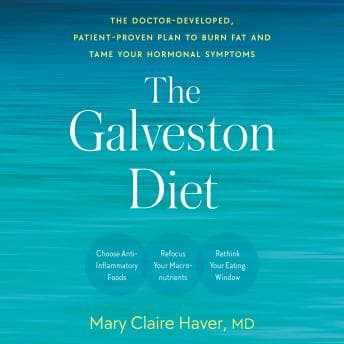

How many diet books does it take before we admit the problem isn't willpower?
I was making bibimbap at 10 PM - Jenny's recipe, not mine, because mine is just "throw stuff in a bowl and hope" - when I queued this up. A diet book isn't my usual lane, but my mom's been dealing with the exact symptoms Dr. Haver describes: the weight creep, the brain fog, the hot flashes she refuses to talk about because Korean moms don't complain, they just work harder. So I listened. And honestly? I'm glad I did.
What My Mom's Doctor Never Told Her
Bottom line: This is a solid, focused health book that does something most diet books don't - it starts with why the standard advice fails before telling you what to do instead. Dr. Haver's central argument is pretty straightforward: women's bodies change fundamentally during perimenopause and menopause, and the "eat less, move more" gospel that every doctor parrots doesn't account for hormonal shifts that literally change how the body stores and accesses fat. She was an OB/GYN who gave that same bad advice for years until she hit the wall herself. That confession in the first hour earned my trust more than any credential could.
The three-pillar framework - Fuel Refocus (specific macro ratios for midlife women), 16:8 intermittent fasting, and anti-inflammatory nutrition - is clear and actionable. None of these concepts are individually revolutionary. Intermittent fasting has its own cottage industry of books. Anti-inflammatory diets have been around forever. But the way Haver connects them specifically to menopausal physiology? That's the value. I went through something similar reading Clean Gut - familiar building blocks, but the framing around root cause is what makes the familiar feel newly urgent. She explains how estrogen decline affects insulin sensitivity, why women start storing visceral fat differently in their 40s and 50s, and why the inflammation piece isn't just wellness woo - it's driving the hot flashes and brain fog too.
This is what my parents did instinctively. Now it has a TED talk. My mom has been eating fermented vegetables, fatty fish, and leafy greens her whole life - classic anti-inflammatory Korean diet. She just didn't know why it worked.
5 Hours and 33 Minutes of Actual Respect for Your Time
Finally, a business book that respects your time. Except this isn't a business book - but the principle holds. At 5 hours 33 minutes, Haver doesn't pad. She moves through the science, gets to the practical application, and includes real patient stories that are brief enough to illustrate without becoming filler. The 40+ recipes and meal plans are in a downloadable PDF, which is the right call. Nobody wants to hear someone read ingredient lists at 2.0x speed. Trust me on that.
Haver narrates this herself, and her voice has that reassuring OB/GYN-in-the-exam-room quality - warm, direct, zero condescension. She sounds like someone who's had this conversation a thousand times and still cares about getting it right. It's not a performance piece. There's no vocal fireworks. But for a prescriptive health book where you need to trust the person talking, author-narration was the right move. You can hear the clinical experience behind her explanations, and you can hear the personal frustration when she talks about how medical schools barely cover menopause.
Where the Prescription Gets a Little Thin
My consultant brain wants more data. Haver references studies and patient outcomes, but the book leans heavily on anecdotal success stories and her own clinical observations. The "nearly 100,000 women" figure gets mentioned but not unpacked with the rigor I'd want. How was that measured? Self-reported weight loss? Sustained over what timeline? I've seen this kind of stat in pitch decks, and it always triggers my "says who?" reflex.
Also - and Jenny would say I'm being harsh, Jenny is right - the intermittent fasting component gets presented as more settled science than it actually is, especially for women specifically. There's emerging research suggesting IF affects female hormones differently, and while Haver addresses some contraindications, a bit more nuance on the "this might not work for everyone" front would've strengthened the book's credibility.
The key takeaway is worth the listen. The other 7 hours? Not so much. Except there aren't 7 extra hours here - it's tight enough that the ratio of insight to runtime is genuinely good.
Who Gets the Most ROI
Women in their late 30s through menopause who've been told to "just eat less" and felt gaslit by their own doctors. Buy it, listen, download the PDF, share it with your mom. Also: husbands, sons, and anyone who loves a woman going through this and wants to understand what's actually happening physiologically instead of just saying "have you tried yoga?"
Skip it if you want peer-reviewed meta-analyses or if you're already deep in the IF/anti-inflammatory space. You'll recognize most of the nutritional advice.
The Consulting Fee Was Worth It
I'm sending this to my mom. She won't listen to it - she'll say she doesn't have time, she has shirts to press - but I'm sending it anyway. A book that makes you want to share it with the specific person it was written for? That's the real metric. Not every book passes that test.