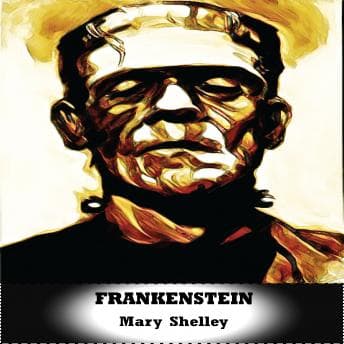

Denise and I were doing our Saturday lakefront walk — early November, the kind of gray Chicago morning where the wind off the lake feels personal — and somewhere around the Oak Street curve, Victor Frankenstein started describing the night he brought his creature to life. I stopped walking. Just stood there on the path like an idiot while joggers swerved around me. Denise had to pull me by the elbow. That scene. After twenty years of teaching this novel, after marking up three different editions with marginalia until the pages looked like ransom notes, I heard that scene like it was brand new.
This is why we still read the classics. And why, sometimes, hearing them lands different.
The Monster You Think You Know (You Don't)
Here's what kills me about Frankenstein. Every year I assign it. Every year my students come in expecting Boris Karloff — bolts in the neck, grunting, villagers with torches. And every year I get to watch their faces when they realize the creature is articulate, philosophical, heartbroken. He reads Milton, for God's sake. He reads Paradise Lost and identifies with Satan, and if that isn't the most devastating thing a character has ever done in English literature, I don't know what is.
Listening to it rather than reading it strips away the cultural baggage even more. You can't skim. You can't flip ahead. You sit inside Victor's narcissism and the creature's loneliness in real time, and the weight of it is different. Shelley wrote this at eighteen — eighteen! — and the psychological architecture she built holds up better than half the literary fiction published this year. The nested narrative structure (Walton writing letters, framing Victor's story, framing the creature's story) is the kind of thing I spend three class periods explaining on the whiteboard. In audio, it just works. You feel the layers rather than diagramming them.
And let's talk about what the author is really saying. This isn't a horror novel. Not really. It's a novel about abandonment. Victor creates life and then runs away from it — literally runs out of the room — and every terrible thing that follows grows from that single act of cowardice. I've been a teacher long enough to know what happens to kids who feel abandoned. Shelley knew it at eighteen. The prose deserves to be savored, and at seven hours and change, this is exactly the right commitment for a weekend.
Thibault Gray and the Problem of Victor's Self-Pity
I'll be honest — I went into this with limited expectations because I hadn't encountered Thibault Gray before, and the research I did turned up almost nothing about this specific performance. So I'm working purely from what I heard.
Gray reads clean. His pacing respects Shelley's sentences, which tend toward the long and Romantic (capital R) — lots of semicolons, lots of subordinate clauses stacking on top of each other like geological layers. He doesn't rush those. Good. I listen at 1.0x because the author chose those words, and Gray seems to agree with that philosophy.
But here's where I wanted more: Victor Frankenstein is one of the great unreliable narrators in literature, and the performance needs to let you feel that unreliability without telegraphing it. There are moments — particularly Victor's speeches about his own suffering, where he's essentially whining about consequences he caused — where I wanted Gray to let a little more self-delusion creep into the voice. The creature's passages come across better; there's a formality to how Gray handles them that mirrors the creature's learned, secondhand eloquence. The creature taught himself to speak by eavesdropping on a family, and you can hear that careful, slightly-too-precise quality in the delivery.
The narrator understands that pause is punctuation — mostly. The Walton frame sections feel a bit flat compared to the interior stories, but that's a common issue with this novel's structure. It's solid work. Not the kind of performance that makes you forget you're listening to an audiobook, but the kind that stays out of the way and lets Shelley do her thing.
Who This Is Actually For
If you read Frankenstein in high school and remember it as a monster story, listen to this. You were wrong. (I say this with love. My students are wrong every September.) If you loved the moral complexity of something like Kazuo Ishiguro's Never Let Me Go — that quiet horror of what it means to create life and deny it personhood — this is its spiritual successor. Or, I guess, its spiritual ancestor. The Beekeeper of Aleppo sits in that same territory for me — that particular ache of watching someone try to hold onto their humanity when the world has given them every reason not to.
My students would hate this. I love it. The pacing is deliberate, the language is 200 years old, and nothing explodes. But if you're the kind of listener who wants to sit with a book and actually think about what it's doing — about creation and responsibility and the cost of playing God — this is seven hours well spent.
Skip it if you need action. Skip it if 19th-century prose makes your eyes (or ears) glaze over. But if you've got a cold lakefront walk and a willingness to stand still on the path while joggers judge you, this'll do it.
Worth Pausing the Faculty Meeting For
Mary Shelley wrote the blueprint for science fiction, the modern horror novel, and every "what have I created" story that followed — and she did it before she turned twenty. Thibault Gray gives it a clean, respectful reading that won't blow your mind but won't get in the way either. For a public domain classic with dozens of available versions, this one earns its place. Not the definitive Frankenstein audiobook, but a good one. And the novel itself? Still devastating. Still relevant. Still better than your students think it is.