
Okay, I need to complain about something first. This book made me cry at school pickup. Not like a single dignified tear rolling down my cheek. I'm talking full-on ugly crying in the carpool lane while other moms pretended not to notice. My seven-year-old asked if I was okay and I had to blame allergies. In February.
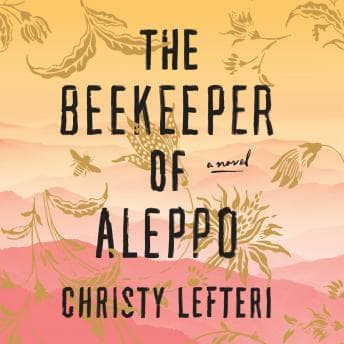
So yeah. The Beekeeper of Aleppo wrecked me.
The Listening Situation (Because Context Matters)
I finished this in about a week and a half, which for me is practically speedrunning. Morning drop-offs, nap times when Sophie actually cooperated, and way too many sessions sitting in my car in the garage. My husband definitely thinks I've lost it at this point. "Why are you just... sitting in the car?" Because Art Malik is telling me about bees and grief and I need five more minutes of not being touched by small humans, that's why.
The book follows Nuri, a beekeeper from Aleppo, and his wife Afra, an artist who's lost her sight after - well, after everything falls apart. They're trying to make it to England where Nuri's cousin has started an apiary. Sounds straightforward, right? It is absolutely not straightforward. The journey is brutal and beautiful and I kept having to pause because my chest hurt.
Art Malik Is Doing Something Special Here
I don't know much about Art Malik beyond this audiobook, but I'm pretty sure he was emotionally invested in this story. You can hear it. His voice has this warmth that somehow makes the devastating parts more bearable - like a friend telling you something terrible but holding your hand while they do it.
The way he handles Nuri's grief is what got me. There's this quiet madness underneath everything, this sense that Nuri is barely holding it together, and Malik captures that without ever going over the top. He's not performing trauma, he's just... living in it. The pacing is perfect for distracted mom listening too. Slow enough that I could tune back in after telling Lucas to stop poking his sister, but engaging enough that I actually wanted to.
At 8 hours and 44 minutes, it's not too long. I could actually finish it before forgetting what happened at the beginning. High praise from me.
When the Story Punches You in the Gut
Here's the thing about this book - it's not plot-driven in the traditional sense. It's more like... waves. Memories crash into the present. Nuri keeps seeing things that may or may not be real. Afra is there but also not there, lost in her own darkness. And slowly, slowly, you start to understand what they've lost.
I won't spoil it. But there's a reason Afra can't see anymore, and it's not just physical. And when that reason becomes clear - yeah, that's when I lost it in the carpool lane.
Christy Lefteri worked with refugees in Athens, and you can feel that authenticity. These aren't abstract "refugee characters." They're people who had normal lives - morning routines, weekend markets, inside jokes - until they didn't. There There does something similar with showing how ordinary lives get shattered by forces beyond anyone's control. That's what makes it hit so hard. It could be anyone. It could be me, packing my kids into a boat with nothing.
The Mom Perspective (Because That's What I've Got)
I kept thinking about my kids while listening. What would I do? How do you keep moving when everything that made your life yours is gone? Into the Forest wrestles with that same question about holding onto who you are when your entire world collapses. The book doesn't give easy answers, which I appreciate. It's not inspirational in a cheesy way. It's just honest about how hard survival is - not just physical survival but staying yourself, staying connected to the people you love.
Afra's journey particularly stuck with me. She's not just dealing with blindness. She's dealing with not wanting to see anymore. And watching her and Nuri try to find their way back to each other while carrying all this weight - it's devastating but also somehow hopeful?
I don't know. It's complicated. The best books usually are.
Would I Recommend It?
Absolutely. But with caveats.
This is not a light listen. There's war, there's loss (including the loss of a child, just so you know), there's trauma that seeps into everything. If you're in a fragile headspace, maybe save it for later. I listened during a relatively stable week emotionally and still needed recovery time.
But if you want something that will make you feel things - really feel them - and remind you that humans can be both incredibly cruel and incredibly resilient, this is it. Art Malik's narration elevates everything. The production is clean and professional. It won a bunch of awards for good reason.
Just maybe don't finish it right before you have to interact with other humans. Learn from my mistakes.
My book club would love this. If I ever have time for book club again.