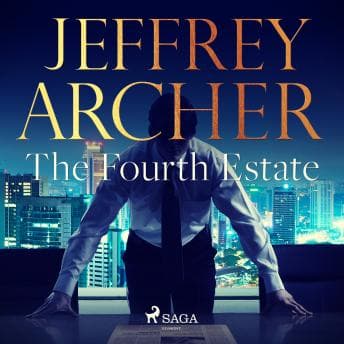

I'd heard this was Archer's answer to Kane and Abel but with media moguls instead of banking dynasties. What I didn't expect was to spend the first six hours wanting to throw my phone out the car window.
Let me explain. I'm coming off a brutal stretch of nights - we had a multi-vehicle trauma that turned into a twelve-hour marathon, and I needed something to keep my brain occupied on the drive home without requiring actual emotional investment. Fourth Estate seemed perfect. Nearly twenty hours of British publishing drama? Sign me up.
The Slow Code That Eventually Stabilizes
Here's the thing everyone warns you about but nobody properly explains: this book takes forever to get going. And I mean forever. We're talking about two completely separate origin stories - Lubji Hoch escaping the Nazis and reinventing himself as Richard Armitage, and Keith Townsend being born into Australian newspaper royalty. For hours, you're ping-ponging between continents with no clear connection except that both men really, really want to own newspapers.
I almost gave up around hour four. Carlos texted asking why I was still sitting in the driveway and I genuinely couldn't explain what I was waiting for.
But then - and this is the part that kept me going - the second half absolutely delivers. Once both men are established and their empires start colliding, Archer does what he does best: pure, unrelenting ambition clashing with pure, unrelenting ambition. The deals, the betrayals, the newspaper wars that feel almost quaint now but were genuinely world-shaping at the time. This is not how hospitals work, but it IS how power works. The ruthlessness felt familiar in a way I can't quite articulate without HR getting involved.
Jonathan Aris Does What He Can
Aris has a voice made for British drama - there's a reason he's in everything from Sherlock to Good Omens. His pacing is solid, which matters when you're dealing with nearly twenty hours of material. He handles the multiple accents reasonably well - the Australian Townsend sounds appropriately different from the Eastern European-turned-British Armitage.
But. Some of the secondary character voices? Not great. There's a flatness to certain supporting players that makes it hard to track who's speaking during the business negotiations. When you're already struggling to follow which newspaper is being acquired by which shell company, having characters blur together doesn't help.
The production is clean - no weird audio glitches, no background noise. Single narrator, no sound effects, no music. Just Aris and Archer's words for nineteen and a half hours.
The Maxwell and Murdoch of It All
Look, if you know anything about Robert Maxwell and Rupert Murdoch, you'll spend half this book going "oh, THAT'S what that's based on." The parallels are barely disguised. Maxwell's mysterious death, Murdoch's relentless expansion, the way both men viewed newspapers as tools for power rather than journalism - it's all here, thinly fictionalized.
As someone who's actually worked a code on patients who made headlines, I find the behind-the-scenes power stuff fascinating. How do people become the kind of ruthless that makes them willing to destroy everything for one more acquisition? Heart of Darkness explores that same moral descent, though Conrad's colonizers and Archer's media moguls operate in very different jungles. Archer doesn't quite answer that question, but he sure does illustrate it.
The corruption and deceit themes are heavy but not gratuitous. There's violence - we're dealing with WWII in the early sections - but nothing graphic enough to make me flinch, and I've seen actual trauma.
Who Should Listen (And Who Should Run)
If you loved Kane and Abel, you'll probably like this, though it's not quite as tight. If you're interested in media history, newspaper dynasties, or just watching ambitious men destroy themselves and everyone around them, this delivers.
Skip it if you need things to happen quickly, or if business dealings and corporate maneuvering make your eyes glaze over. And if you're looking for something to half-listen to while charting? The first half is too confusing for that - you need to actually pay attention to track the timeline jumps. This is a dedicated listening experience. Full attention required, especially early on.
Night Shift Prescription
I'm giving this a qualified recommendation. The slow start nearly killed it for me, and some of the narration choices are questionable. But the payoff in the second half - watching these two titans finally collide - made the investment worth it. Carlos asked why I was crying in the car during the final chapters. I blamed allergies. It wasn't allergies.
At nearly twenty hours, this is a commitment. Wait for a sale or use your Audible Plus catalog if it's there. Worth experiencing, but maybe not worth a full credit when you could get something tighter for the same price.