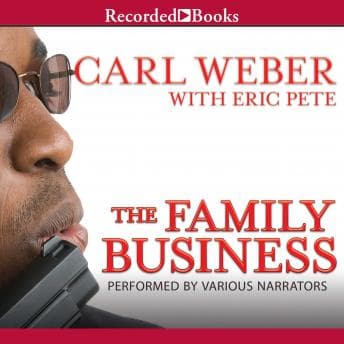

This isn't the kind of book I'd normally pick up. Let me just say that upfront. Urban fiction isn't my wheelhouse—I'm the guy who assigns Dickens and argues about whether Hemingway's minimalism was genius or laziness. But here's the thing: my students keep talking about Carl Weber, and after twenty years of teaching, I've learned that dismissing what teenagers read is a fast track to irrelevance.
So I listened. And honestly? I get it now.
Six Voices, One Family
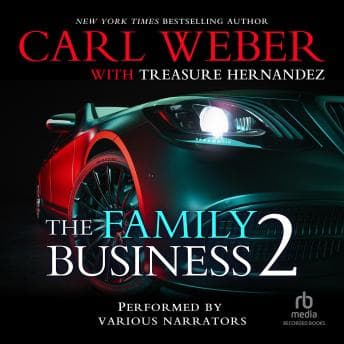
The multi-narrator approach here is ambitious. We're talking six different voice actors—Adam Alexander, Carra Patterson, Corey Allen, Ezra Knight, Michael Early, and Patricia R. Floyd—each handling different characters or perspectives. This is the kind of production choice that either elevates a story or turns it into audio chaos.
For the most part, it works. The distinct voices help you track the Duncan family's various members and their tangled loyalties. Patricia R. Floyd brings warmth to her sections, and Michael Early has this dramatic punch that keeps you locked in during tense moments. The emotional delivery across the board is solid—these aren't narrators phoning it in.
But—and this is where I have to be honest—the transitions between narrators can feel jarring. It's like switching radio stations mid-song. Some listeners in reviews called the narration "horrible," which feels harsh, but I understand the frustration. When you're deep in one character's headspace and suddenly the voice changes, it pulls you out. Not everyone handles that well.
The Duncan Family Drama Machine
Carl Weber and Eric Pete know exactly what they're doing. This is a family saga with all the ingredients: loyalty tested, secrets weaponized, love tangled up with ambition. The Duncans run a luxury car dealership that may or may not be a front for... other activities. (My students would say I'm being too careful here. They'd be right.)
What surprised me was how invested I got in the family dynamics. I teach literature about families—the Compsons, the Karamazovs, the Joads—and while I'm not putting the Duncans in that company, Weber and Pete understand something fundamental: family drama works because the stakes are personal. Betrayal hits different when it's your brother.
That same focus on family betrayal drives Big Little Lies, though the Duncans and the Monterey moms operate in very different worlds.
The pacing is deliberate. Character development takes time, which some listeners found frustrating. I didn't mind it—I'm the guy who listens at 1.0x because "the author chose those words"—but if you're looking for a thriller that sprints from page one, this might test your patience.
Grading Papers, Meeting the Duncans
I finished most of this during late-night grading sessions. Papers on The Great Gatsby stacked on my left, red pen in hand, earbuds in. There's something almost funny about grading essays on American dreams and class while listening to a story about a Black family navigating wealth, legacy, and the systems that want to tear them down.
The Duncans aren't Gatsby, but they're wrestling with similar questions. What does success cost? Who gets to define legitimate? My students would probably write better essays if I assigned this alongside Fitzgerald. (Don't tell my department chair I said that.)
The Honest Assessment
Look, I can't pretend this book converted me into an urban fiction devotee. The genre conventions are there—the dramatic reveals, the relationship complications, the cliffhangers that set up the rest of the trilogy. Some of it felt predictable to me, but I'm also not the target audience.
What I can say is this: the storytelling is effective. Weber and Pete know how to keep you listening. The production is clean—no weird audio glitches, no background noise issues. And if you're already a fan of their work, this apparently delivers exactly what you're looking for. The positive reviews are enthusiastic in a way that suggests genuine connection, not just politeness.
The narration inconsistency is real, though. If you need a single voice guiding you through a story, this format might not work for you. But if you can roll with multiple perspectives—literally—there's a lot here to enjoy.
Who's This For?
Urban fiction fans and Carl Weber readers will find exactly what they came for. Skip it if multi-narrator audiobooks pull you out of the story, or if you need your plots to sprint rather than build.
Class Dismissed
Would I recommend it to my students? Already did. Would I listen to the next one in the trilogy? I'm thinking about it. And for a guy who spent his graduate years on Faulkner, that's saying something.