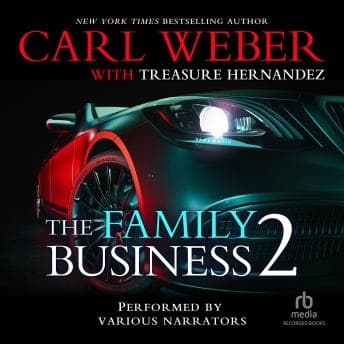

Look, I teach high school English. I've spent two decades convincing teenagers that the classics matter, that Fitzgerald understood something essential about the American Dream, that Faulkner's sentences reward patience. And here I am, grading papers at 11 PM on a Tuesday, listening to a book about drug dealers and baby mama drama. Hemingway would probably respect the directness.
The thing is—and I'm admitting this freely—Carl Weber does something the literary establishment pretends doesn't exist: he writes page-turners for people who actually read. Or listen, in this case. My students would devour this. They'd finish it, which is more than I can say for most of what's on the curriculum.
When Shakespeare Meets the Streets
Here's what struck me about Family Business 2: it's essentially a family saga in the tradition of... well, every great family saga. The Duncans run a car dealership by day and the East Coast drug trade by night, and if you strip away the modern setting, you've got the bones of Greek tragedy. Warring factions. Succession drama. A mother who might be the most dangerous player on the board. Orlando Duncan trying to take the family legitimate while his mother draws battle lines? That's King Lear energy, just with better cars and worse morals.
The paternity uncertainty hanging over the Duncan sisters' babies adds this layer of tension that reminded me—stay with me here—of the succession anxieties in Middlemarch. Who belongs? Who inherits? Whose blood matters? These are old questions dressed in new clothes. Wuthering Heights wrestles with the same obsessions—lineage, legitimacy, who gets to claim the family name—just with moors instead of car dealerships.
Seven Narrators, Zero Confusion
This is where the audiobook earns its keep. Seven narrators: Adam Alexander, Diana Luke, Ezra Knight, Jennifer Kidwell, Jules Williamson, Lisa Smith, Patricia R. Floyd—they're essentially a repertory company performing this thing. And it works. When you've got a cast this large and a family tree this complicated, having distinct voices isn't a luxury. It's survival.
I'll confess I was skeptical. Multiple narrators can feel gimmicky, like the production is compensating for something. But here, the transitions feel natural. You know immediately who's speaking, whose perspective you're in. The women in particular—there's a sharpness to how they deliver lines that makes the "momma drama" feel genuinely threatening rather than melodramatic.
One listener called it "wonderfully narrated," and I don't disagree, but let me be specific: the narrators understand that this is pulp with purpose. They commit fully without camping it up. That's harder than it sounds.
The Pacing Problem (That Isn't Really a Problem)
At exactly 10 hours, this thing moves. Weber and Hernandez don't linger. Scenes end when they should end. Revelations drop and the story keeps pushing forward. For someone used to 19th-century novels where a dinner party takes forty pages, the efficiency is almost jarring.
But—and I'm genuinely wrestling with this—is efficiency always a virtue? Some of the family dynamics feel sketched rather than painted. Orlando's conflict with his mother should be the emotional center, and it is, but I wanted more time in those confrontations. More silence. More of what the narrators could do with pauses.
My students would call me old for wanting a book to slow down. They're not wrong.
Who Should Clear Their Queue (And Who Shouldn't)
If you're already invested in the Duncan family from book one, this is essential. The callbacks reward loyalty. If you love urban fiction with actual stakes—not just violence for shock value, but violence that means something for these characters—you'll find it here. If you want something that demands attention (this is not background listening; the plot moves too fast), clear a weekend.
Skip this if you need your fiction to come with literary credentials. Same goes if you can't handle content warnings for violence, language, and sexual content. And honestly? Don't start the series here—you'll be lost.
Better Than That PowerPoint on "Synergistic Learning Outcomes"
I finished this during what was allegedly a professional development session. Principal Martinez, if you're reading this, I learned more about narrative structure from Carl Weber than from those slides.
Family Business 2 isn't trying to be literature with a capital L. It's trying to be a damn good story, and it succeeds. The full cast elevates material that could feel trashy into something genuinely engaging. The drama is operatic in the best sense. And somewhere in there, between the drug deals and the paternity tests, there's something real about family loyalty and what it costs.
My students would love this. I loved this. Sometimes that's the same thing.