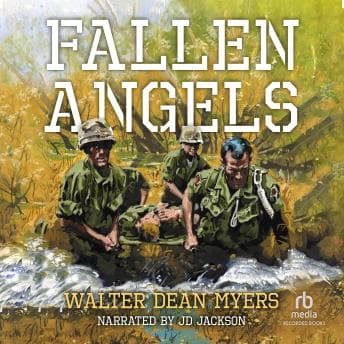

So I'm sitting in my car in the garage - yes, that garage, my sanctuary - and I'm ugly crying. Like, mascara-everywhere, can't-go-inside-yet crying. Over a young adult book about the Vietnam War. This was NOT what I expected from my 45 minutes of peace.
Here's the thing. I picked up Fallen Angels because my 7-year-old Emma is starting to ask questions about war (thanks, school), and I wanted to preview something she might read in a few years. Walter Dean Myers wrote this for young adults, right? It'll be fine, I thought. Educational. Maybe a little heavy but manageable.
Reader, it wrecked me.
Why This Hit Different Than Other War Stories
I've listened to plenty of historical fiction. Some of it blends together after a while - brave soldiers, terrible conditions, lessons learned. Most war stories keep you at arm's length, but so did My Brilliant Friend with its own kind of battlefield - the brutal honesty of growing up poor hit me the same way. But Fallen Angels does something I wasn't prepared for. It puts you inside the head of Perry, this Harlem teenager who joins up because college didn't work out, and suddenly you're not watching war from a distance. You're IN it. You're confused when he's confused. You're scared when he's scared.
Myers doesn't glorify anything. He doesn't make it neat. Perry and his platoon are just kids - and I kept thinking about my own kids, which, okay, they're way too young for that comparison but mom brain doesn't care about logic. These soldiers are cracking jokes one minute and watching their friends die the next. The whiplash is intentional and it's brutal.
What really got me was the questions Perry asks about why Black soldiers get the most dangerous assignments. This book came out in 1988 but those questions still land hard today. Myers doesn't preach about it. He just shows you. And somehow that's worse.
J.D. Jackson Brought the Jungle Into My Minivan
Okay, the narration. J.D. Jackson is one of those narrators where you forget you're listening to someone read. He just becomes Perry. The voice is young enough to be believable but carries this weight that builds as the story goes on.
The character voices are distinct without being cartoonish - you can tell who's talking even when you've paused seventeen times because someone needs a juice box or can't find their left shoe. (High praise from me, honestly.) Jackson captures the way these soldiers talk to each other, the dark humor, the bravado that's covering up terror. There's this one guy, Peewee, who's hilarious and heartbreaking and Jackson nails every single line.
I did notice maybe one or two weird audio moments - like a slight hiccup in production - but honestly? I was so deep in the story I barely registered them. If you're the type who notices every little thing, you might catch them. I was too busy trying not to sob.
The Real Talk: Is This Actually for Kids?
So here's where I get honest. This is marketed as young adult, and yes, Myers wrote it for that audience. But there's violence. Real violence. People die badly. There's strong language (which, fair, soldiers in war aren't exactly watching their mouths). And there's emotional content that might be a lot for sensitive kids.
My verdict? It depends on your kid. Emma at 7? Absolutely not. Emma at 12 or 13? Maybe. With conversations. This isn't a book you hand off and walk away from - it's a book you process together.
For me as an adult listener? It was incredible. Devastating but incredible. The kind of book that makes you sit in your car for an extra ten minutes just... thinking.
Would I Listen Again?
Honestly? Not anytime soon. Not because it wasn't good - it was exceptional - but because I need some emotional recovery time. This is the audiobook equivalent of running a marathon. You're glad you did it. You're proud you finished. You're not signing up again next week.
But I'm keeping it saved for when my kids are older. Walter Dean Myers won about a million awards for this book and every single one was deserved. It's raw and real and it treats young readers like they can handle hard truths. Which, eventually, they can.
Who Should Listen (And Who Should Skip)
Listen if you want war fiction that doesn't flinch, or if you're previewing for a mature teen. Skip if you need something light for your commute - this one requires emotional bandwidth and probably tissues.
Just maybe warn them about the crying. And keep tissues in the car.