
Look, I need to rant for a second. I have spent an embarrassing amount of money on nutrition apps, macro tracking subscriptions, and that one meal prep service that sent me sad little containers of steamed chicken for three months. My boyfriend Kevin has watched me weigh almonds on a food scale at 7AM before catching the Caltrain. ALMONDS. Like they were going to betray me if I ate 12 instead of 10.
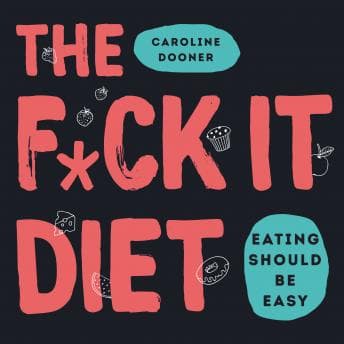
So when Caroline Dooner opens this audiobook by basically saying "everything you've been doing is not only pointless but actively working against your biology," I felt simultaneously attacked and vindicated. Which is honestly the perfect emotional cocktail for a self-help book.
The Science Actually Holds Up (And I Checked)
Bottom Line: This isn't just feelings-based advice wrapped in f-bombs. Dooner gets into the actual research on metabolic adaptation, the Minnesota Starvation Experiment, and why your body interprets chronic dieting as a famine situation and responds accordingly. As someone who debugs systems for a living, I appreciated that she explains the mechanism—your body isn't broken, it's doing exactly what evolution designed it to do when food seems scarce.
The basic premise: dieting triggers survival mode. Survival mode makes you obsessed with food, lowers your metabolism, and increases hunger hormones. You eventually "fail" the diet. You blame yourself. Rinse, repeat for decades. The solution? Stop triggering survival mode. Eat. Let your body recalibrate.
Is this terrifying to hear? Absolutely. Did I pause the audiobook multiple times on my commute to stare out the window and process? Also yes.
Dooner Behind the Mic: Comedian Energy, Real Emotion
Dooner reads her own book, and honestly? It works. She's a comedian, and you can tell—her timing on the sarcastic asides lands in a way that a professional narrator might have smoothed over. There's this one section where she's describing the mental gymnastics of "I'll just have a LITTLE bit of cake" that had me snort-laughing on a packed train car.
The delivery gets genuinely emotional in places too. When she talks about the years she lost to food obsession, the exhaustion of constant vigilance—you can hear that she lived it. It's not polished in the Ray Porter sense (my usual gold standard), but the rawness serves the material.
At 7 hours 39 minutes, this is a solid 4-5 commute commitment. I bumped it to 1.5x during some of the more repetitive sections in the middle—she drives certain points home pretty hard, which I get (the target audience has been brainwashed by diet culture for years and needs the repetition), but if you're already on board with the premise, you can speed through.
The Part That'll Make Some People Mad
Here's where I think this book will lose people: Dooner is pretty absolutist about the "just eat" approach, at least initially. She's not interested in "intuitive eating but also maybe count your macros sometimes." It's a full permission slip to eat whatever, whenever, as much as you want—with the promise that eventually your body will regulate itself.
For someone with a history of restriction, this is probably necessary medicine. For someone looking for a moderate "eat healthier" guide, this is going to feel extreme. Know which category you're in before you spend a credit.
I also wish she'd addressed the intersection of this approach with actual medical conditions more thoroughly. There's a brief acknowledgment that some people have health situations requiring dietary modifications, but it felt like a disclaimer rather than a substantive discussion.
Who Should Queue This Up (And Who Shouldn't)
Perfect for: Anyone who's been on more than three diets, anyone who thinks about food more than they think about their actual job, anyone who's ever called themselves "bad" for eating bread. Also surprisingly good for partners of chronic dieters—Kevin listened to chunks of it with me and now understands why I used to get weird about restaurant menus.
Skip if: You're looking for a structured nutrition plan, you get annoyed by swearing (it's in the title, you've been warned), or you're in active eating disorder recovery and haven't cleared this approach with your treatment team.
The ROI Calculation
Here's the thing: I've spent probably $2000+ on diet-related stuff over the past decade. Apps, programs, special foods, that one nutritionist who told me to eat like a caveman. That caveman thing was basically Plant Paradox territory—another restrictive approach that had me eliminating entire food groups based on fear. This audiobook cost one credit and might actually save me money by getting me off the diet hamster wheel.
The ideas aren't revolutionary if you've been in anti-diet spaces online, but having them compiled, explained with the scientific backing, and delivered by someone who's clearly been through it? That combination of lived experience plus rigorous framework is what made Mastery so effective too—Greene doesn't just theorize, he shows you the actual mechanism behind skill development. That has value.
I finished it two weeks ago and I've already stopped weighing my almonds. Small victories.