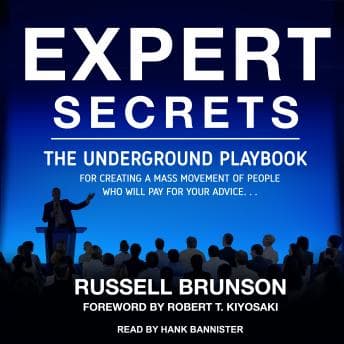

I was stuck in LAX traffic—the 405 doing its usual impression of a parking lot—when Russell Brunson started telling me I was an "expert" who needed to build a "mass movement." And look, I've spent enough time in conference rooms with founders who think they're the next Steve Jobs to be deeply skeptical of that framing.
But here's the thing. By the time I pulled into my driveway two hours later, I'd already texted three clients about specific tactics from this book. That doesn't happen often.
The Funnel Guy Has a Point (Annoyingly)
Brunson built ClickFunnels into a hundred-million-dollar company, so when he talks about monetizing expertise, he's not theorizing from a WeWork hot desk. He's done it. Multiple times. And Expert Secrets is basically his playbook for turning knowledge into a business—not through vague "build your brand" advice, but through genuinely specific frameworks.
The core premise: you don't need credentials. You need a message and a movement. Now, I've watched enough "gurus" crash and burn to know this can go sideways fast. But Brunson's not selling snake oil here. He's laying out the actual mechanics—how to craft an origin story, how to position yourself against an enemy (not a competitor, an enemy), how to create what he calls "The Epiphany Bridge" to move people from skepticism to belief.
My parents never read a marketing book in their lives. But you know what? They instinctively understood community. Their dry cleaning shop was a hub for the neighborhood. People came back not just for pressed shirts but because my mom remembered their kids' names. Brunson's basically reverse-engineering that into a system. Whether that's brilliant or depressing depends on your worldview.
Where the Frameworks Actually Deliver
Skip to the sections on story structure. Seriously. The "Epiphany Bridge" framework alone is worth the six-hour listen. Brunson breaks down exactly how to structure a narrative that moves people from "who is this guy?" to "take my money." I've seen versions of this fail at three different companies because they couldn't articulate why anyone should care. This gives you the template.
The stuff on creating "attractive characters" and building a following is solid too, though it veers into territory that'll make some people uncomfortable. He's essentially teaching you to be a cult leader. (His words, not mine—he leans into the comparison.) The difference, he argues, is that you're leading people toward genuine transformation rather than Kool-Aid. That accountability piece—the difference between manipulation and leadership—is something QBQ! explores through a completely different lens. I'm... mostly convinced.
What I appreciate: Brunson doesn't pretend this is easy. He's honest that most people won't execute. Most people will read this, nod along, and do absolutely nothing. That tracks with every startup I've ever consulted for.
Hank Bannister Does the Heavy Lifting
I couldn't find much about Bannister online, but based on this performance? The guy knows how to deliver business content without making you want to drive into oncoming traffic. His pacing is clean, conversational enough that it doesn't feel like a textbook, and he handles Brunson's tendency toward enthusiasm without going full infomercial.
At 2.0x, this clocked in at just over three hours. Totally digestible. The production's professional—no weird audio artifacts or jarring transitions. For a business book, that's all I ask.
Who Gets ROI Here (And Who Doesn't)
If you're a consultant, coach, or anyone selling expertise? Genuinely useful. The frameworks are actionable. I've already adapted two of them for a client's launch strategy.
But if you're looking for deep business theory or something that'll impress your MBA cohort? This ain't it. Brunson's not an academic. He's a practitioner who figured out what works through trial and error, and he's teaching you his system. Take it or leave it.
Jenny would say I'm being harsh. Jenny is right. But she'd also say I'm being fair, and that's the balance I'm going for.
The Replayability Factor
Probably not cover-to-cover—but I've already bookmarked three sections to revisit before my next strategy session. For a business book, that's a win. Most of them give me 45 minutes of insight padded into 8 hours. This one respects your time while actually delivering tactics you can use.
Bottom line: if you're trying to monetize what you know and you're tired of generic "build your personal brand" advice, Expert Secrets delivers the mechanics. It's not revolutionary—my parents were building community before Brunson was born—but it's practical, specific, and mercifully efficient. At six hours, Brunson says what he needs to say and gets out. I respect that.