
Who listens to a Victorian knitting manual as an audiobook? Apparently, me. At 6 AM. On a treadmill in Cambridge. And honestly? I have questions about my own decision-making process here.
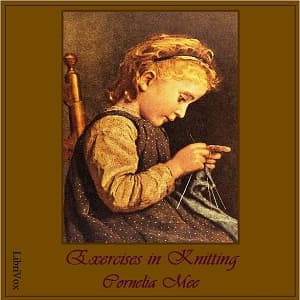
Look, I picked up Exercises in Knitting by Cornelia Mee because I'm fascinated by the psychology of historical self-help texts. What did people in 1850 think they needed to improve? How did they conceptualize skill acquisition? And here's where Mee's little book becomes genuinely interesting—this isn't just a craft manual. It's a case study in how communities organized around practical knowledge during crisis. Mee's patterns were literally used by charitable societies to clothe unemployed mill workers during the American Civil War cotton embargo. There's something almost therapeutic about that: knitting as collective action, as coping mechanism, as structured response to chaos.
When Instructions Become Meditation
What makes this audiobook a strange listen is that it was never meant to be heard. Instructional texts from this era assumed you'd be reading while doing—pausing, re-reading, squinting at diagrams. Strip away the visual component and you're left with something that feels almost like a meditation on process. "Cast on forty stitches. Knit two, purl two." It's rhythmic. Hypnotic, even. My therapist would have thoughts about why I found this calming.
But here's the thing—the LibriVox volunteers read this exactly as written, which means you're getting Victorian terminology delivered in a clear, neutral tone. No drama. No vocal flourishes. Just "receipts" (their word for patterns) read aloud like someone dictating a grocery list. Is that engaging? Meh. Is it faithful to the source material? Absolutely.
The protagonist here—and yes, I'm treating Cornelia Mee as a character, because that's what I do—exhibits classic patterns of the practical Victorian woman. She's not trying to inspire you. She's trying to get socks on cold feet. There's something almost aggressive about her efficiency. No preamble, no "you can do this!" cheerleading. Just: here's the pattern, figure it out.
The Audiobook Problem
I found myself asking: why does anyone choose to listen to this rather than read it? Psychologically, this doesn't track as a listening experience for most people. You can't follow along with needles in your hands while jogging (I tried to imagine it—don't). You can't visualize "slip one, knit one, pass slipped stitch over" without seeing it. Several listeners mentioned this exact frustration: great historical content, impossible to actually use as instruction.
The narration is clean, consistent, and—let's be real—pretty monotone. But I'm not sure what else you'd want here? Should someone perform knitting instructions with theatrical flair? (Actually, now I want that. Someone make a dramatic reading of sock patterns. I'd listen.)
What makes this worth your time is purely the historical window it opens. Mee ran a yarn and needlework import business in Bath with her family. She died young—only 31—but left behind these practical texts that got repurposed for social good decades later. She understood human nature in a specific way: people want to help, but they need structure. Give them a pattern, and they'll clothe strangers.
Who This Is (and Isn't) For
This is a fascinating case study in how instructional content ages. Modern self-help tells you to believe in yourself. Victorian self-help tells you to cast on forty stitches and stop complaining. That no-nonsense approach is what I appreciated about Untroubled Mind too—practical strategies over empty affirmations. There's something refreshing about that, honestly.
Best for: fiber arts historians, people researching Victorian domestic life, anyone writing about 19th-century charitable movements, or—apparently—psychology researchers who make questionable audiobook choices during cardio. If you're expecting a cozy craft listen with tips you can actually use? Skip it. The antiquated terminology and lack of visuals will just frustrate you.
I can't say I'll listen again, but I'm glad I did once. Sometimes the most interesting audiobooks are the ones that were never meant to be audiobooks at all.