
Everyone keeps telling me Gundry is either a genius or a snake oil salesman. I went in expecting to have a strong opinion either way. Instead, I landed somewhere frustratingly in the middle — which, for a guy who prides himself on binary verdicts, is annoying.
I was up at 5:30 AM last Tuesday, prepping for a call with a Series B founder who wanted to restructure his leadership team. Coffee number two, eggs scrambling on the stove, and Gundry in my ears explaining why my mitochondria are basically staging a labor strike. Felt appropriate.
Your Gut Is Running a Deficit and Nobody Told the CFO
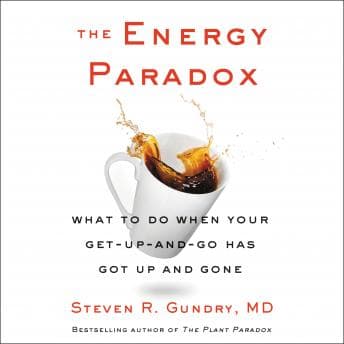
The core thesis here: chronic fatigue isn't laziness or burnout or too many late nights. It's your immune system burning through energy reserves fighting a war inside your gut that you didn't even know was happening. Leaky gut triggers inflammation, inflammation hijacks your mitochondria, and your mitochondria — the little power plants inside every cell — stop producing energy efficiently. That's the paradox. You eat more, sleep more, drink more caffeine, and still feel like garbage because you're addressing symptoms while the root cause parties on.
Gundry connects the dots between gut permeability, microbiome composition, and mitochondrial function in a way that's genuinely useful if you've never encountered this framework before. The leaky gut → inflammation → energy crash pipeline is laid out clearly enough that even my most numbers-only startup founders would follow it. He introduces concepts like "chrono-consumption" — timing your eating windows to align with your body's circadian rhythm — and makes a surprisingly practical case for time-restricted eating that goes beyond the typical intermittent fasting hype.
But here's the thing. If you've read The Plant Paradox, maybe 40% of this is review. The lectin avoidance stuff, the microbiome basics, the general philosophy — it's the same operating system with a fatigue-specific skin on it. Skip to chapter 5. Thank me later. That's where the energy-specific protocols actually start delivering new material.
When Your Author Is Also Your Narrator (and Your Doctor, and Your Supplement Salesman)
Gundry narrates this himself, and look — the man sounds like what he is: a confident cardiac surgeon who's used to being the smartest person in the OR. His delivery is authoritative, measured, professorial. Not bad. Not exciting either. At 1.0x this would've been a slog. At 2.0x it becomes perfectly listenable lecture material, like a really good medical school podcast you found on a flight.
What bugs me isn't the narration quality. It's the product placement. Gundry has his own supplement line, and every few chapters you get these moments where the science conveniently points toward something that sounds an awful lot like a product he sells. He's not obnoxious about it — he doesn't say "buy my stuff" — but once you notice the pattern, you can't un-notice it. My parents would've called this the "free sample" strategy. Give away the diagnosis, sell the cure. They respected the hustle. I'm more skeptical. That same tension between genuine insight and self-interest shows up in Anxiously Attached, where the author's framework is legitimately useful right up until it starts feeling like a long advertisement for a particular therapeutic worldview.
The supplemental PDF is supposedly helpful for the recipes and food lists, but let's be honest — I'm reviewing the audio experience, and in audio-only mode you're going to want a pen handy or you'll lose the specific food recommendations within minutes. There's a stretch in the back half where he rattles off approved foods, forbidden foods, and supplement stacks that is essentially un-listenable without the visual companion. This is a recurring sin of health audiobooks and I wish publishers would stop pretending it works.
The 14-Hour-Day Test
Here's how I measure every health and productivity book: would this have helped my parents? They ran a dry cleaning business on pure willpower and kimchi. They didn't have time for elimination diets or chrono-consumption windows. They ate when they could and worked until they couldn't.
Some of Gundry's advice — eat less processed food, stop snacking all day, get morning sunlight — is stuff my mom already knew. This is what my parents did instinctively. Now it has a TED talk. But the gut-brain axis material? The connection between chronic low-grade inflammation and the bone-deep fatigue that no amount of coffee fixes? That's legitimately useful science packaged for a general audience. If my dad had understood at 55 why he felt exhausted despite eating "healthy" Korean food loaded with lectins, it might have changed something.
So I can't dismiss it entirely.
Who Gets the ROI
If you're new to Gundry's world and you're the kind of person who's tried everything — more sleep, less caffeine, supplements, meditation — and you still feel like your battery tops out at 60%, this is worth a listen. The framework is clear and the protocols are actionable if you commit.
If you've already read The Plant Paradox, you're paying for about 3-4 hours of genuinely new material wrapped in 5 hours of recap. Jenny would say I'm being harsh. Jenny is right. But also, 8 hours and 50 minutes for what could've been a tight 4-hour audiobook? My 2.0x speed couldn't save this one from feeling padded.
Bottom line: solid B-minus health book that suffers from sequel syndrome and an author who can't quite separate the science from the sales funnel. The key takeaway is worth the listen. The other 7 hours? Not so much.