
I was making dal at 10 PM—comfort food for a rough week—when this audiobook started asking me questions I'd spent years avoiding in my own therapy. The onions were already making me cry. Seemed fitting.
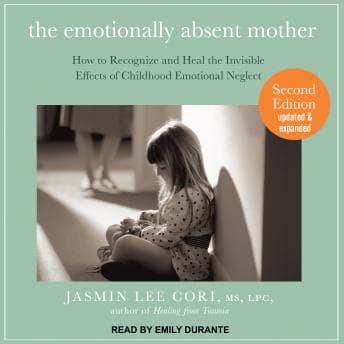
Jasmin Lee Cori's work landed on my radar because I keep seeing it referenced in attachment literature, and as someone who studies how early relationships shape identity, I was curious whether this would be pop-psychology fluff or something with actual clinical backbone. The research shows that emotional neglect is harder to identify than overt abuse precisely because nothing *happened*—it's the absence that wounds. Cori gets this. She really gets this.
The Psychology Here Is Solid (My Therapist Would Approve)
What makes this book compelling is that Cori doesn't just describe the problem—she maps it. The framework she uses to categorize different types of undermothering feels genuinely useful, not reductive. The protagonist of this book (and yes, I'm treating you, the listener, as the protagonist because that's essentially what Cori does) exhibits classic patterns of self-doubt, difficulty with intimacy, and that nagging sense that something's missing without knowing what. If you've ever felt like you're performing "okay" without actually feeling it? This is a fascinating case study in why.
The exercises scattered throughout are practical without being condescending. Cori asks you to locate your "inner child"—I know, I know, the phrase makes me cringe too—but she does it in a way that feels more like guided self-reflection than woo-woo nonsense. She's a practicing psychotherapist, and it shows. There's clinical precision underneath the accessible language.
At nearly nine hours, this isn't a quick listen. You'll want to pause. Probably frequently. I found myself stopping mid-chapter to sit with something uncomfortable, which is exactly what good therapeutic writing should do. Falling Upward did something similar—forcing me to pause and reconsider assumptions I didn't know I was carrying about growth and transformation.
Emily Durante: The Narrator Divide
Here's where things get complicated. Emily Durante's narration is... polarizing. I found myself asking: why does this delivery work for some people and actively repel others?
Durante reads with a steady, measured pace that matches the clinical nature of the content. Her emotional delivery is appropriate—warm enough to feel supportive, professional enough not to feel manipulative. For material this heavy, I appreciated that she didn't oversell the emotional moments. Psychologically, that tracks; you don't want a narrator performing your trauma back at you.
But I understand the complaints. Some listeners found her style "off-putting" or even "horrible," and I think I know why. There's a certain evenness to her delivery that can read as detached if you're hoping for more vocal warmth. It's the difference between a therapist who holds space and one who actively emotes with you. Both are valid approaches. Neither is wrong. But if you need the latter, this audiobook might frustrate you.
My recommendation: listen to the sample before committing. Durante's voice will either feel like a calm presence guiding you through difficult material or like someone reading your pain from a clinical distance. There's no middle ground here.
Who Needs This Book (And Who Should Wait)
This audiobook is for you if: you've done some therapy work already and want to go deeper into attachment wounds; you're the adult child of a mother who was physically present but emotionally unavailable; you've read about attachment theory and want something more personal and applied.
Skip this one if: you're in acute crisis and need stabilization first (seriously, get a therapist before diving into this); you're looking for mother-bashing content (Cori is remarkably compassionate toward mothers who couldn't give what they didn't have); or you can't handle Durante's narration style. That compassionate reframing of limitation—understanding that people can only give what they have—also appears in Game of Life and How to Play It, though from a very different philosophical angle.
One thing the research shows that Cori reinforces: healing from emotional neglect is slow, non-linear work. This book won't fix you in nine hours. But it might give you language for wounds you didn't know how to name.
Case Closed, Processing Ongoing
I finished this audiobook three days ago and I'm still processing. That's not a criticism—it's exactly what material like this should do. Cori writes with the precision of a clinician and the compassion of someone who's sat across from thousands of people carrying this particular kind of invisible grief.
The dal burned, by the way. I got too absorbed in chapter four and forgot to stir. Worth it.
If you're ready to do the work—and I mean really ready, not performatively ready—this is one of the better resources I've encountered for understanding the mother wound. Just know that understanding is only the beginning. Cori understands human nature. More importantly, she understands that understanding isn't the same as healing. That takes longer. That takes practice. That takes, probably, a good therapist and a lot of burned dal.