Okay, I need to talk about this one, because I went in expecting cozy fantasy fluff and came out genuinely unsettled by the faeries. Not the romance. The faeries.
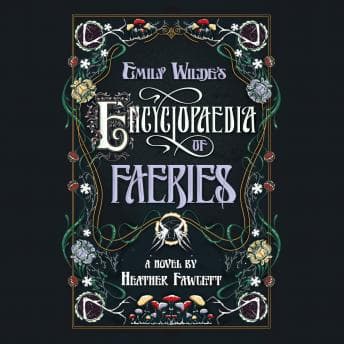
Everyone kept telling me Emily Wilde's Encyclopaedia of Faeries was this charming academic romance with fae window dressing. And sure, that layer exists. But Heather Fawcett does something sneaky here - she writes faeries the way folklore actually depicts them. Capricious. Transactional. Dangerous in ways that have nothing to do with teeth and claws. The brownie scenes alone had me sitting up straighter because there's this undercurrent of wrongness beneath the cozy surface, this sense that every interaction with the Fair Folk operates on rules you don't fully understand, and breaking them costs you something real. Shirley Jackson walked so this author could run - not in terms of pure horror, but in that specific flavor of dread where politeness is a survival mechanism.
This understands that horror isn't about gore - it's about dread. Even in a book that's technically a romance.
Ell Potter Understands the Assignment (Michael Dodds Gets Extra Credit)
Here's where I got surprised. I'd heard mixed things about the dual narrator setup, and honestly? I was bracing for whiplash. What I got instead was two performers who clearly understood their characters down to the marrow. Ell Potter voices Emily as this prickly, obstinate British scholar who speaks about faeries with the clinical precision of someone cataloging specimens - but lets tiny cracks of wonder slip through when Emily forgets to be guarded. It's a specific choice, that restraint, and it makes the moments when Emily actually feels something land harder.
Michael Dodds, though. That first Bambleby chapter? I was reorganizing my horror shelves at midnight (yes, I organize by subgenre, fight me) and I actually stopped what I was doing and laughed out loud. His Wendell is jovial and mischievous in this way that feels like he's performing charm as a deliberate strategy - which, given who Wendell actually is, turns out to be exactly right. The man commits to the bit. That's rare.
The narrator switch did pull me out of the story once or twice early on. Your brain has to recalibrate, and there's a brief moment each time where you're aware you're listening to a different human being. The dual-narrator gamble reminded me of what made Bridgerton: The Duke and I work as an audio experience - when performers commit to distinct voices, that initial disorientation eventually becomes part of the texture. But by hour three? It started feeling like the book was always supposed to work this way - Emily's clinical precision in Potter's voice versus Wendell's theatrical warmth in Dodds's. The class divide between their vocal approaches mirrors the character dynamic perfectly.
The Slow Burn Is the Point (But I Get Why Some People Check Out)
Let me be real: this is a twelve-hour audiobook that takes its time. The pacing matches Emily's research methodology - methodical, occasionally frustrating, building toward revelations that feel earned rather than manufactured. If you need plot to sprint, you'll be checking your phone by hour five.
But I'm a librarian. I understand the pleasure of careful documentation. And Fawcett structures the story like a field journal, which means the slow stretches aren't empty - they're Emily noticing things, cataloging behaviors, building a picture of Hrafnsvik's relationship with its hidden folk that pays off when the darker elements surface. The village itself feels lived-in, windswept and suspicious of outsiders in a way that reminded me of every horror movie set in an isolated Nordic town. Except here the townsfolk aren't wrong to be wary.
I listened to this across three nights - started after my podcast editing sessions, lights low, Shirley (my cat) curled up on the arm of the couch looking unimpressed as usual. And something clicked around hour seven where I realized the romantic tension and the faerie mythology weren't competing threads. They're the same thread. Wendell's mystery IS the romance, and the romance IS the folklore, and Fawcett braided them together in a way that made me genuinely uncertain how things would resolve. That uncertainty? That's good storytelling.
Who Needs This in Their Ears
If you love Jonathan Strange & Mr Norrell's academic approach to magic but wished it had more warmth. If you've ever read a faerie retelling and thought "these fae are too safe." If you want a protagonist who's genuinely bad with people - not quirky-bad, actually-alienates-colleagues bad - and you find that refreshing rather than annoying. This is yours.
Skip if: you want fast-paced fantasy action, you hate slow romantic builds, or dual narrators are a dealbreaker for you. No shame in any of that.
My Podcast Listeners Are Going to Have Opinions
I'm already drafting the episode. Because here's the thing - this book is being marketed as cozy fantasy, and it IS cozy, but there's something darker running underneath that I don't think gets enough attention. The faeries here aren't metaphors. They're forces with their own alien logic, and Emily's attempt to taxonomize them feels like someone trying to organize the ocean. Fawcett respects the genre roots of fae mythology in a way that gave me chills between the charm. Finally, fantasy that respects where these stories actually come from.
I'll be starting book two this weekend. Shirley remains unimpressed. I remain invested.