
Bottom Line: Worth your commute. A vintage sci-fi snack that punches above its 2.5-hour weight class.
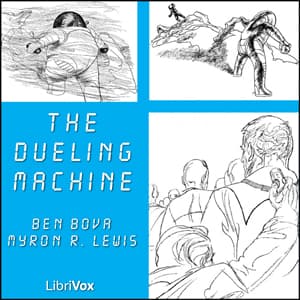
So everyone kept telling me Ben Bova is this titan of hard sci-fi, and I'd somehow never gotten around to him. Started this one at 5:47 AM on a Tuesday, half-conscious, expecting some dated 1960s cheese. Instead I got a surprisingly tight little thriller that felt like Ready Player One's great-grandfather—but with actual stakes and zero nostalgia bait.
The Premise Is Basically VR Combat Before VR Existed
Here's the setup: humanity invented a machine that lets you fight duels in a shared virtual reality. Pick your weapons, pick your environment, fight to the death—except nobody actually dies. It's the ultimate civilized solution to disputes. Elegant, right? Then some warrior from the Kerak Empire figures out how to make the virtual deaths... not so virtual.
Written in 1963. Bova was predicting VR combat arenas and the inevitable hacking thereof before most people had color TVs. The science doesn't entirely hold up by modern standards—the "telepathic projection" handwaving made me raise an eyebrow—but the core concept? Solid. The political implications of a weapon that kills through entertainment technology? Disturbingly relevant.
Gregg Margarite Does Exactly What You Need
At 2.5 hours, you don't need a narrator doing vocal gymnastics. Margarite reads clean and consistent. No weird pronunciation hiccups, no audio artifacts that made me check if my AirPods were dying. He's not Ray Porter (nobody is), but he's competent in that workmanlike way that lets the story breathe.
The character differentiation is... fine? Dr. Leoh sounds appropriately older and more measured than the younger protagonists. The Kerak villains get a slightly harder edge. Nothing that'll blow your mind, but nothing that pulls you out either. For a quick listen, that's honestly all you need.
Where 1963 Shows Its Age
Okay, I have to be honest—the female characters are basically furniture. There's a love interest who exists to be worried about the protagonist and look pretty at diplomatic functions. It's not aggressively bad, just... absent. Par for the course for early-60s magazine sci-fi, but if that's a dealbreaker for you, fair warning.
The pacing also has that old-school serialized structure where you can feel the original magazine installment breaks. Chapters end on mini-cliffhangers that would've worked great when readers waited a month between issues. Listening straight through, it creates this slightly choppy rhythm. Not terrible, just noticeable.
Perfect For: The "I Have 2 Hours To Kill" Scenario
This is basically a single commute book for me—started it one morning, finished it the next. And honestly? That's its superpower. It's complete, self-contained, doesn't require a 40-hour investment to get payoff. The mystery of how the Kerak warrior is killing people through the machine kept me engaged enough that I almost missed my stop. Lost World had that same "one more chapter" grip on me—different flavor of vintage sci-fi, but equally hard to put down.
The ROI on this audiobook is solid if you calibrate expectations correctly. It's not a life-changing epic. It's a clever premise executed competently in a tight package. Sometimes that's exactly what you want.
Queue It or Skip It
Perfect for: classic sci-fi curious folks, short commutes, airport layovers, that weird gap between finishing a series and starting something new. If you've ever wondered what sci-fi was doing before cyberpunk existed, this is a good sampler. Skip if you want deep character development, modern sensibilities about representation, or anything over 4 hours. This is a snack, not a meal.
The Engineer's Assessment
I'm giving this 3.5 stars because it does exactly what it promises without wasting my time. Bova had a cool idea, executed it cleanly, and got out before overstaying his welcome. The narration is reliable if unremarkable. At this price point and time investment, you're getting good value.
Could've been a short story? Probably. But it wasn't padded into a 15-hour slog either, so I'll take the win. Sometimes the best thing a book can do is respect your time. This one does.