
Quick Verdict: Worth your commute if you're actively working Steps Six and Seven. Skip if narrator errors will drive you crazy.
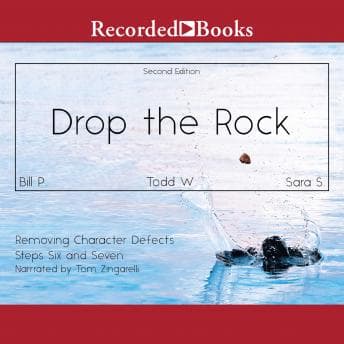
Look, I'm not in a twelve-step program myself, but I've listened to enough recovery and self-help content to recognize when something's genuinely useful versus when it's just recycled platitudes. Drop the Rock falls firmly in the first category—with one pretty significant caveat we need to talk about.
Breaking Down the "Stuck" Steps
Here's the thing about Steps Six and Seven—they're the ones where a lot of people get stuck. You've done the inventory, you've admitted the wrongs, and now you're supposed to... what, exactly? Just decide to be better? Bill P. and the co-authors break down the "character defects" (resentment, fear, self-pity, intolerance, anger) in a way that's concrete rather than abstract. These are your rocks. They will sink your recovery boat. Pretty straightforward metaphor, but it works. Holes uses a similar rock metaphor—though Stanley's literal hole-digging becomes its own kind of character examination.
What I appreciated most was the personal stories woven throughout. This isn't just theory—it's people describing the exact moment they realized their fear was sabotaging their relationships, or how their anger was actually a mask for something else entirely. At 3 hours and 18 minutes, it's the perfect length for a focused listen without overstaying its welcome. I got through it in two commutes, which for a self-help audiobook is honestly ideal. Any longer and these things start to drag.
The ROI here is high if you're the target audience. If you're working the steps and you've been spinning your wheels on Six and Seven, this could be the thing that unsticks you. The insights aren't revolutionary, but they're specific and actionable—way more valuable than revolutionary.
Tom Zingarelli's Voice (And the Elephant in the Room)
Tom Zingarelli has one of those genuinely soothing voices that works perfectly for recovery content. Calm without being sleepy. Warm without being preachy. For material that's asking you to examine some uncomfortable truths about yourself, having a narrator who sounds like he's sitting across from you at a coffee shop rather than lecturing from a podium—that matters.
But. And this is a real but.
There are reading errors. Not constant, but noticeable enough that multiple listeners have flagged them. Misread words, stumbles that didn't get edited out. For some people, this won't matter at all. For others (and I'm kind of in this camp), it's like a tiny pebble in your shoe—not painful, just... there. Distracting.
Here's my honest take: if you're listening for the content and the message, the errors are minor enough to overlook. If you're someone who needs precision—maybe you're following along with a physical copy, or you're the type who notices every typo in a book—you might want to just read this one instead. Several reviewers recommended exactly that, and I don't think they're wrong.
Who This Is (and Isn't) For
Perfect for: Morning commute, especially if you're in a reflective headspace. Also good for walks or light housework—anything where you can let the ideas percolate without needing to take notes.
Skip if: You need polished production values, or you're looking for general self-help without the twelve-step framework. The language and structure assume familiarity with the program, and while it's not inaccessible to outsiders, it's clearly written for people already on the inside.
If you're actively in a twelve-step program and working through Six and Seven, this is basically required listening. Supporting someone else in recovery, or just interested in personal growth from a twelve-step perspective? Still valuable, but maybe not essential.
Sarah's Final Debug
Drop the Rock does what it sets out to do: it makes Steps Six and Seven practical and concrete. The personal stories give it heart, the advice gives it utility, and at just over three hours, it respects your time. Tom Zingarelli's narration is genuinely pleasant to listen to, even if the occasional stumble reminds you that maybe the production budget wasn't huge.
Would I listen again? If I were working the steps, absolutely. As someone on the outside looking in, I got what I needed from one pass. But I can see why people return to this one multiple times—it's the kind of book where different parts hit differently depending on where you are in your own process.