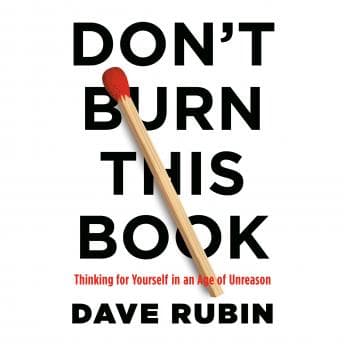

So I'm standing in my kitchen at 8:15 AM after a brutal night shift - twelve hours, three traumas, one code that went sideways - and I'm making pancakes for my kids while listening to Dave Rubin tell me how to think for myself. The irony of a man telling you how to be a free thinker while essentially handing you a script was not lost on me, even on four hours of sleep.
Let me be clear about something upfront: I'm not reviewing the politics here. I'm Filipina-American, eldest daughter, night shift nurse, registered to vote, and I've got opinions that don't fit neatly into anyone's box. What I AM reviewing is whether this audiobook is worth your time and your credit. And that's where it gets complicated.
The "Political Homeless" Thing Hit Different Than Expected
Rubin's central pitch - that classical liberalism has been abandoned by the modern left - isn't new territory. I've heard versions of this from coworkers, from Carlos's family at Thanksgiving, from my own lola who watches too much cable news. But his personal story of leaving the left, particularly the chapter "It's Time to Come Out" where he layers his experience as a gay man coming out politically on top of literally coming out, has genuine emotional weight. That parallel actually works. It's the most honest the book feels.
The problem is that the book can't decide if it wants to be memoir or manifesto. When Rubin sticks to his own story - the backlash he got, the relationships that ended, the professional fallout - I'm listening. I get it. I've watched colleagues get destroyed on social media for saying the wrong thing. That fear is real and he captures it well. But when he pivots to "here's a chapter debunking the wage gap" or "let me explain climate change to you," it reads like a blog post from 2017 that someone stretched into book form. The sourcing feels thin. As someone who works in a field where evidence-based practice is literally life or death, the surface-level treatment of complex topics made me wince.
Author-Narrated: The Blessing and the Curse
Rubin narrates his own book, and honestly? He sounds like your smart friend at a dinner party who's had two glasses of wine and is finally saying what he really thinks. It's personable. Warm, even. His pacing is conversational - not polished radio host, more like podcast energy, which makes sense given his background. At under six hours, it moves. No bloat.
But here's the thing about author-narrated nonfiction: there's no separation between argument and delivery. A professional narrator might give you some critical distance, let you process the ideas on their own. When Rubin reads his own words, every line comes with his emotional investment baked in. The chapters on mob mentality and cancel culture - "Never Surrender to the Mob" and "Think Free or Die" - land harder because you can hear the frustration in his voice. It's genuine. But it also means the weaker arguments get the same passionate delivery as the strong ones, and you don't get a moment to think wait, does that actually track?
Compared to something like Jon Ronson's "So You've Been Publicly Shamed," which covers similar cancel culture territory but with journalism and research behind it, Rubin's book feels more like a pep talk than an investigation. Ronson gives you stories that haunt you. Rubin gives you talking points that might fire you up in the moment but evaporate by the time you pull into your driveway. The obsessive, follow-every-thread investigative energy I wanted from Rubin is exactly what Michelle McNamara delivers in I'll Be Gone in the Dark — a book that shows what it looks like when someone actually does the work of going deeper instead of staying comfortable.
Who This Is Actually For (Honest Answer)
If you already agree with Rubin's worldview, this book will feel like a warm blanket. Encouraging, affirming, validating. I get why people love it for that. If you're genuinely politically homeless and looking for someone to articulate that disorientation, the personal chapters deliver. If you're looking for rigorous argument that would survive a real debate? You'll be yelling at your dashboard, and not in the fun way I yell when Grey's Anatomy botches a chest tube.
My mom would love this, honestly. Not for the politics - she'd argue with half of it - but because it's about a kid who left what was expected of him and built something on his own terms. (She still thinks I should've been a doctor, but she respects the hustle.)
Charting My Assessment
This is a quick listen that works best if you treat it as one man's memoir with political commentary attached, not the other way around. The personal stuff lands. The "myth-busting" chapters needed another draft and a fact-checker. At 5 hours 46 minutes, it doesn't overstay its welcome, and Rubin's delivery keeps it from dragging. But I kept wanting it to go deeper where it stayed shallow, and that's frustrating when someone is asking you to think harder.
Carlos asked why I kept sighing during pancakes. I told him the batter was lumpy. It wasn't the batter.






![Steve Jobs [unabridged audiobook] audiobook cover](/_next/image?url=https%3A%2F%2Fcovers.audiobooks.com%2Fimages%2Fcovers%2Ffull%2F9788499923406.jpg&w=1920&q=75)