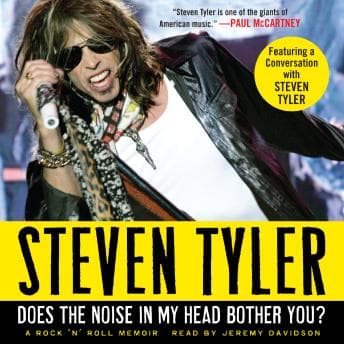

What happens when you try to capture lightning in a bottle—and the lightning is on drugs, has been on drugs, will probably always be on drugs, and also happens to be one of the most electrifying frontmen in rock history?
I was grading sophomore essays on The Great Gatsby at 11 PM, red pen bleeding across papers about the green light (always the green light, never anything else), when I decided I needed something to remind me why I fell in love with words in the first place. Steven Tyler's memoir seemed like an odd choice for an English teacher. But here's the thing—Tyler writes like he performs. Scattered, manic, absolutely convinced of his own brilliance. And somehow? It works. Mostly.
The Voice That Almost Wasn't His
Let's address the elephant in the room: Steven Tyler didn't narrate his own memoir. When I first realized Jeremy Davidson was reading, I'll admit my heart sank a little. This is a man whose voice IS Aerosmith. That scream on "Dream On"? That's not just singing—that's autobiography in a single note.
But Davidson pulls off something genuinely impressive. He doesn't try to BE Tyler—no ridiculous vocal impressions or attempts at that raspy growl. Instead, he captures the energy. The way Tyler's sentences tumble over each other, interrupt themselves, circle back around like a man who's had too many ideas and not enough time to organize them. One listener put it perfectly: "The fellow who read it had me convinced it was Steven Tyler." That's not mimicry. That's interpretation. And as someone who believes great narration is performance art, I can respect what Davidson accomplishes here.
A Mind That Refuses to Walk in a Straight Line
Here's where I have to be honest with you: this book is a mess. A glorious, frustrating, occasionally brilliant mess.
Tyler writes the way he probably talks—mid-story about his Bronx childhood, he'll veer off into discussing his own children, then somehow end up on a tangent about the economics of touring. It's like sitting next to that guy at a bar who has incredible stories but can't finish a single one without starting three others. One section you're deep in the mythology of the Perry-Tyler partnership (and what a partnership—the Toxic Twins dynamic is genuinely fascinating), and the next you're lost in a word salad of Tyler's invented vocabulary.
"I've been mythicized, Mick-icized, eulogized and fooligized," he writes. And yeah, that's clever. But thirteen hours of that? It requires patience. The kind of patience I have for Faulkner's run-on sentences but my students definitely do not have for anything.
What You're Actually Getting (And What You're Not)
If you're coming to this expecting juicy gossip—the real dirt on the Aerosmith feuds, the celebrity hookups, the behind-the-scenes drama—you might be disappointed. Tyler is surprisingly protective of certain stories, generous with others. The substance abuse sections are unflinching. The rise-fall-rise arc of Aerosmith is genuinely compelling rock history. But there are gaps where you expect revelations.
What you DO get is Tyler's philosophy of rock stardom, which is more thoughtful than you'd expect. The man has opinions about music, about performance, about what it means to survive an industry designed to chew you up. When he's focused—and he occasionally is—these sections sing.
The 13-hour runtime feels about right for what's here, though I'd argue some tighter editing would've served the material. This isn't background listening. You need to pay attention or you'll lose the thread entirely. (I learned this the hard way during a particularly boring faculty meeting. Sorry, Principal Martinez. I was definitely not listening to Steven Tyler describe his first acid trip.)
Who Should Ride This Train (And Who Should Stay on the Platform)
Aerosmith fans? Absolutely. You'll love the insider perspective on the music, the band dynamics, the creative process behind songs you've been singing since before you understood the lyrics.
Rock memoir completists? Yes, with caveats. This sits alongside the classics of the genre, but it's messier than, say, Keith Richards' Life. More manic. Less polished.
Casual listeners looking for a coherent narrative? Maybe skip this one. Or at least know what you're getting into. The scattered structure isn't a bug—it's Tyler's brain on the page. You either embrace it or you don't. Spare has that same unfiltered quality—Prince Harry's stream-of-consciousness honesty that some readers love and others find exhausting.
Class Dismissed
Look, I teach teenagers who think anything written before 2010 is ancient history. They don't know Aerosmith from Aeropostale. But Tyler's memoir reminded me of something I try to teach every semester: voice matters. Authentic voice—messy, imperfect, unapologetically itself—is worth more than polished emptiness.
Davidson's narration elevates material that could've been exhausting. Tyler's stories, when they land, genuinely land. Is it the rock memoir to end all rock memoirs, as the marketing claims? No. But it's a genuine artifact from a genuine rock star who lived through an era we'll never see again.
My students would hate this. I kind of loved it.






![Steve Jobs [unabridged audiobook] audiobook cover](/_next/image?url=https%3A%2F%2Fcovers.audiobooks.com%2Fimages%2Fcovers%2Ffull%2F9788499923406.jpg&w=1920&q=75)