
"It's not that autistic people lack sensitivity and empathy—they have an overwhelming excess of it."
That line hit me somewhere around hour two, sitting in my home office at 10 PM, supposedly prepping a deck for a founder meeting the next morning. I'd queued this up as background listening. It didn't stay background for long.
My Mom Had a "Divergent Mind" Before It Had a Name
Let me tell you something about my mother. She ran a dry cleaning business for 25 years in Koreatown. She could tell if a fabric was going to shrink by touching it for two seconds. She memorized every customer's name, their kids' names, their preferred starch level. She also couldn't handle fluorescent lights, would get migraines from the chemical smells that everyone else had gone nose-blind to, and had what my dad called "too much feeling." She wasn't diagnosed with anything—she was just "sensitive." Korean immigrant women in the '90s didn't get sent to neuropsychologists. They got told to pray harder.
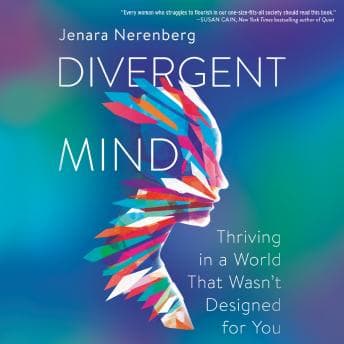
Jenara Nerenberg's Divergent Mind is essentially the book that explains women like my mother. Nerenberg—Harvard and Berkeley-educated, successful journalist, entrepreneur—discovers in her 30s that her lifelong anxiety was actually ADHD and autism presenting the way it does in women: quietly, invisibly, and constantly misread. The book argues that the diagnostic system was built around young boys, and women have been falling through the cracks for decades. Potentially millions of them.
This is what my parents did instinctively—accommodate each other's differences without a clinical framework. Now it has a TED talk.
Where the ROI Actually Lives
Bottom line: there are about 3.5 hours of genuinely valuable content here. The early chapters laying out the neurodiversity framework, the sections on sensory processing disorder, the interviews with women who spent decades thinking something was "wrong" with them—that's where the heat is. Nerenberg is at her best when she's a journalist: collecting stories, connecting dots between research papers, showing how the DSM's male-centric diagnostic criteria created a systematic blind spot.
The section on high sensitivity as a neurological trait rather than a personality flaw? That's worth the listen alone. She cites Elaine Aron's research on highly sensitive persons (HSPs) and connects it to sensory processing in a way I hadn't seen done this cleanly before. And the reframe on autism and empathy—that it's not a deficit of feeling but an overload of it—genuinely shifted how I think about some of the founders I work with.
But. And this is a big but.
The back half of the book drifts into what I'd call "TED Talk territory"—broad societal prescriptions about how we should redesign workplaces and communication styles. It's not wrong. It's just... thin. I've seen companies try to implement neurodiversity initiatives, and the gap between "we should create sensory-friendly spaces" and actually doing it in a 200-person startup burning through Series B cash is enormous. Nerenberg acknowledges systemic barriers but doesn't go deep enough on the practical implementation side to satisfy anyone who's actually trying to make changes.
At 6 hours 39 minutes, it's mercifully not bloated. But I'd still say the signal-to-noise ratio is about 60/40. Skip to chapter 5 if you're already familiar with the basics of neurodiversity. Thank me later.
Tegan Ashton Cohan Does Exactly What This Book Needs
Cohan's narration is measured and clear—almost clinical in the best way. For a book dealing with a lot of personal stories and emotional weight, she doesn't oversell it. No dramatic pauses where none are needed. No vocal quiver during the hard parts. She reads it like a smart friend explaining something important over coffee, which is exactly right for this material. I ran it at 1.75x (rare restraint for me) because the content actually warranted slower absorption in spots.
No music, no sound effects, no production gimmicks. Clean audio. Exactly what a book like this should be.
Who Gets the Most Out of This
If you're a woman who's spent years being told you're "too sensitive" or "anxious" and traditional explanations haven't fit—this book might genuinely change your life. I don't say that often. If you're a manager, founder, or HR leader trying to understand why some of your best people seem to struggle in open-plan offices with constant Slack pings, there's real utility here.
If you're looking for a step-by-step operational playbook for neurodiversity in your organization? This ain't it. You'll get the "why" but not enough of the "how."
Jenny listened to parts of this with me. She said it explained a lot about a friend of hers who got an ADHD diagnosis at 42. I told her it explained a lot about my mother. We sat with that for a minute.
That kind of quiet recognition—seeing someone you love in a framework you didn't have words for—is exactly what Co-Parenting With a Toxic Ex tries to give parents navigating a different kind of invisible struggle.The Billing Rate on This One
Nerenberg did something important here: she gave language to experiences that millions of women have been living without words for. The book's strongest when it's specific—real women, real research, real diagnostic failures. It's weakest when it zooms out to societal prescriptions without enough teeth. Worth your time if you're in the target audience or adjacent to it. For pure business application, you'll need to do your own translation work from framework to execution. But the framework? Solid. My 2.0x speed couldn't save the weaker chapters, but the strong ones made me slow down on purpose. That almost never happens.