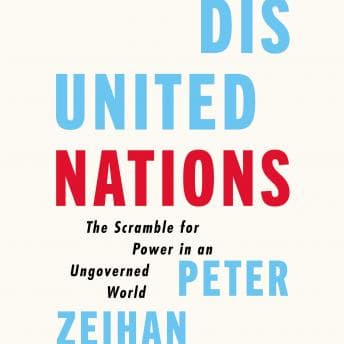

"Every country should prepare for the collapse of China, not North Korea."
That line hit me somewhere around hour three, stuck in traffic on I-35 heading back from a client site in San Antonio. I actually rewound it - which I almost never do - because I wanted to make sure I heard it right. Zeihan doesn't hedge. He doesn't qualify with the usual academic "well, it depends" weasel language. He plants a flag and dares you to pull it out.
Let me cut to the chase: Disunited Nations is the geopolitical briefing I wish I'd gotten before my second deployment. Zeihan's thesis is straightforward - the American-led global order that's kept trade flowing and wars (mostly) contained since 1945 is winding down, and most of the world isn't ready for what comes next. Not because America is collapsing, but because America is choosing to step back. And when the security guarantor leaves the room, everybody starts reaching for their guns.
The Country-by-Country Intel Brief
The structure here is basically a series of national assessments - Germany, France, Japan, China, Russia, Saudi Arabia, Turkey, and others each get their own chapter. Think of it as a strategic intelligence estimate written by someone who actually enjoys explaining why demographics matter more than GDP projections. Zeihan's argument about Germany losing its European dominance to France is built on shipping routes, age demographics, and energy dependency. His China analysis - predicting internal fragmentation rather than continued rise - is built on water scarcity, a demographic cliff from the one-child policy, and the fact that China imports something like 80% of its energy through chokepoints it can't control.
I've seen this scenario play out in real life - not at the geopolitical scale, but the principle that systems held together by external force come apart fast when that force withdraws. Watched it happen in Anbar Province. The speed of unraveling always surprises people.
Now, is Zeihan always right? Hell no. Some of his predictions from The Accidental Superpower haven't aged perfectly, and he can be so confident in his demographic-geography framework that he dismisses wildcards. Technology disruptions, black swan events, leaders making genuinely irrational decisions (and I've met a few who would). His model is clean. Reality is messy. But that's the thing - I'd rather have a clearly stated framework I can argue with than the usual think-tank mush that hedges every prediction into meaninglessness. Hegel had the same uncompromising quality - his Introduction to The Philosophy of History is equally maddening and equally useful for exactly that reason, though I'll warn you it's a rougher listen than Zeihan.
The Narrator Problem Nobody Warned You About
Here's where I need to be straight with you. Peter Zeihan narrates the foreword himself, and it's great - you can hear the guy's enthusiasm, his slightly irreverent delivery, the same energy he brings to his YouTube presentations. Then Roy Worley takes over for the remaining 15-plus hours, and it's... a different experience.
Worley isn't bad, exactly. He's competent. Professional. But he reads Zeihan's punchy, borderline-sarcastic prose like he's narrating a corporate annual report. The book's personality gets flattened. Zeihan writes lines that should land with a smirk, and Worley delivers them straight. By hour six, I'd adjusted, but those first couple hours after the switch were jarring. Like getting briefed by a staff officer who's reading someone else's slides.
The fact that Zeihan only reads the foreword should be made way more clear on the product page. I went in expecting the author throughout - that's what the listing implies with dual narration credit. Felt like a bait-and-switch.
Who Gets the Most Out of This
If you work in any kind of strategic planning - corporate, military, governmental - this is worth your time. Period. Zeihan gives you a mental model for understanding why supply chains break, why alliances shift, and why the next twenty years won't look like the last forty. My security consulting clients ask me about geopolitical risk constantly, and I've been referencing this book's framework in meetings since I finished it.
If you want a balanced, academic treatment where every argument gets equal weight and nothing is provocative - skip this. Zeihan is a polemicist with data. He's more right than wrong, but he's never boring, and he'd rather be interesting than carefully correct.
Also worth noting: this came out in 2020, and some of his predictions about Russia, energy markets, and American retrenchment have already started playing out. That earns credibility points.
Mission Debrief
Worth your time? Here's the debrief: The content is a solid 4 out of 5 - sharp analysis, clear arguments, the kind of strategic thinking that makes you smarter about the world. The audiobook experience gets dinged because the narrator switch genuinely hurts the product. If Zeihan had read the whole thing, or if they'd found a narrator who could match his tone, this would be an easy must-listen. Instead, you're getting excellent intelligence delivered through an adequate but mismatched voice.
Ranger slept through most of it, but he perked up during the Turkey chapter. Make of that what you will.
I'd recommend this over The Accidental Superpower as a starting point, though fans of that first book will find familiar territory here. Just know what you're getting into with the narration, and maybe bump it to 1.25x for Worley's sections - it helps.





![Steve Jobs [unabridged audiobook] audiobook cover](/_next/image?url=https%3A%2F%2Fcovers.audiobooks.com%2Fimages%2Fcovers%2Ffull%2F9788499923406.jpg&w=1920&q=75)