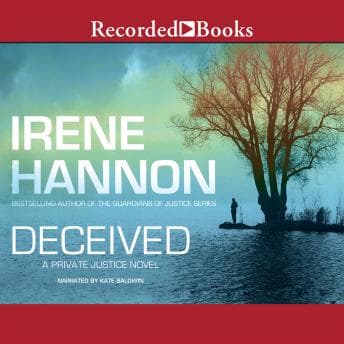

Look, I need to talk about something that's been bothering me for twelve hours straight. Not the suspense. Not the faith elements. The word "short-lived." Kate Baldwin pronounces it wrong. Repeatedly. And once you hear it, you cannot unhear it. It's like a tiny splinter in your brain that throbs every time she says it.
I finished this at 2 AM—not because I was scared (this isn't that kind of thriller), but because Irene Hannon knows how to construct a mystery that won't let you sleep until you know the truth. Shirley was deeply unimpressed by my inability to turn it off. I was deeply unimpressed by my inability to tell characters apart.
The Premise That Hooked Me Anyway
Here's the setup that grabbed me by the throat: a mother spots her dead son on a mall escalator. He's been "dead" for four years. The police think she's losing it. She hires a PI. And suddenly we're in this delicious space between grief-induced delusion and genuine conspiracy.
Hannon's a three-time RITA winner for a reason. She understands that horror isn't always supernatural—sometimes it's the very human terror of losing a child, then being told you're crazy when you think you've found him. The emotional stakes here are devastating in a way that slasher fiction wishes it could achieve. A mother's certainty against everyone's doubt. The gaslight-y feeling of being the only person who knows the truth.
The investigation unfolds with the kind of procedural precision I appreciate. Connor Sullivan, the former Secret Service agent turned PI, brings professional skepticism that slowly crumbles as the evidence mounts. There's a romance subplot woven through—this IS romantic suspense—but it doesn't overshadow the central mystery of what actually happened on that boat four years ago.
When Every Character Sounds Like the Same Person
Okay. Here's where we need to have an honest conversation.
Kate Baldwin's narration is... polarizing. Some listeners call it "top notch." Others—and I'm leaning this direction—found it genuinely challenging. The issue isn't her voice itself. It's that Kate Marshall and Connor Sullivan and every supporting character sound nearly identical. In dialogue-heavy scenes, I found myself rewinding to figure out who just said what.
For a book in a series where previous installments had different narrators, this is jarring. I haven't listened to books one and two, so I came in fresh. But I can imagine the whiplash for series fans who'd grown attached to a different voice.
The thing is—and this is frustrating—Baldwin's actual narrative delivery is solid. When she's describing scenes, building tension, letting Hannon's prose breathe? It works. But the character differentiation problem is real, and in a mystery where you need to track multiple suspects and their motives, losing track of who's speaking is a genuine obstacle.
Faith Without the Sermon
I grew up in a household where horror was forbidden but religious fiction was mandatory. So I have complicated feelings about faith-based thrillers. Too often they sacrifice story for message.
Hannon doesn't do that here. The faith elements are present—this is published by a Christian imprint—but they're woven into character rather than dropped in as lectures. Spiritual Exercises takes a more contemplative approach to faith, but both books treat belief as something lived rather than preached. Kate's grief and her faith collide in ways that feel authentic rather than preachy. Connor's spiritual journey happens alongside the investigation, not instead of it.
If you're allergic to any religious content, this probably isn't for you. But if you can handle characters who pray and attend church as part of their actual lives? The thriller elements stand on their own merit.
The Twist That Worked (And Why I Can't Tell You)
Hannon's known for her endings, and Deceived delivers. The reveal of what actually happened—who took Kate's son and why—lands with genuine surprise. Not the cheap kind where information was withheld unfairly. The kind where the clues were there, but you were looking in the wrong direction.
I won't spoil it. But I will say: the villain's motivation is more human than monstrous, which somehow makes it worse. This book understands that horror isn't about gore—it's about dread. The dread of what ordinary people will do to protect their secrets.
Who Gets Absorbed, Who Gets Frustrated
This is for you if: You love romantic suspense with actual suspense. You want a mystery that plays fair with clues. You can handle faith elements that are present but not overwhelming. You're okay with a narrator who tells a good story but doesn't differentiate characters well.
Skip this if: You need distinct character voices to track dialogue. You're jumping in from earlier books with different narrators and loved those performances. You want pure horror rather than thriller-with-romance.
Dedicated listening is basically required here. The similar character voices mean you can't zone out during conversations or you'll lose the thread entirely. Not a good commute book unless you're comfortable rewinding.
Shirley Jackson Would Appreciate the Gaslight
Decent thriller, flawed audiobook. That's my honest take. Hannon's storytelling deserves better voice differentiation than it gets here. The emotional core—a mother fighting to prove her child is alive while everyone thinks she's delusional—is genuinely affecting. That gaslight-y uncertainty reminded me of Secret House, though that book leaned harder into the psychological horror of not trusting your own perception. The mystery construction is tight. The resolution satisfies.
But I spent too much mental energy figuring out who was speaking. And that "short-lived" pronunciation? It's going to haunt me longer than any ghost story.