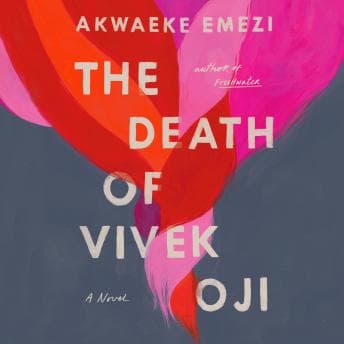

I'll be honest - every time Instagram's algorithm serves me a "books that will destroy you" list, I scroll right past. I have three kids. I clean yogurt off walls. I do not need to be destroyed. But my friend Sarah texted me the Audible link for this one seventeen times, and at 7 hours 38 minutes, I figured I could give it a shot during my headphones-in-bed sessions after the kids went down.
Sarah was right. And also, Sarah, I'm billing you for the tissues.
The First Page Tells You Everything And Nothing
Here's what hooks you immediately: you know Vivek is dead from literally the opening scene. His mother Kavita opens her front door and finds his body wrapped in bright fabric on her doorstep. First page. Gone. So this isn't a whodunit in the traditional sense. The question isn't what happened to Vivek - it's who WAS Vivek? And did anyone in his family, in his community in southeastern Nigeria, actually see him for who he really was?
Emezi structures the story in these fragments that shift between past and present, between family members' perspectives. You're assembling Vivek like a puzzle, except some pieces have been hidden on purpose. His disorienting blackouts. His quiet intensity. The way he gravitates toward the Nigerwives' daughters - these women from other countries who married Nigerian men and formed their own boisterous, protective circle. His relationship with his cousin Osita, which is complicated in ways that took my breath away. It's not a straightforward timeline, and honestly? That's where this book asks more of you than my usual reads.
Iwuji And Badaki Made Me Muffle-Cry Into A Pillow
Chukwudi Iwuji and Yetide Badaki alternate the narration, and I need you to understand - this pairing is everything. Iwuji handles much of Vivek's world with this controlled, almost careful delivery, like he's holding something fragile he knows will break. There's a restraint in how he voices the men in this story - Vivek's distant father, the guarded Osita - that communicates so much about what's NOT being said. Expectations. Silence. The weight of Nigerian masculinity pressed down on boys who don't fit.
And then Badaki comes in with the women's sections and there's this warmth, this fierce protectiveness, especially when she's voicing Kavita. I was listening in bed one night, 11 PM, husband passed out next to me, and Badaki hit a section about a mother's grief so precisely that I had to physically press my face into my pillow so I wouldn't wake anyone. Their Nigerian accents aren't decoration - they root you in this specific southeastern town, this specific community, in a way that makes the setting feel as essential as any character.
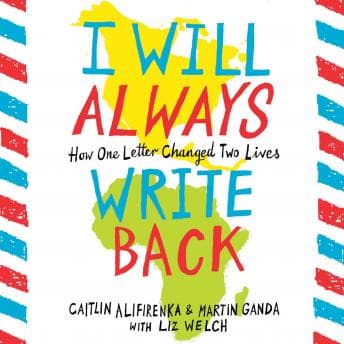
Iwuji's voice stayed with me long after I finished—I had the same reaction to I Will Always Write Back, where he narrates a true story with that same quiet power.Put The Duplos Down For This One
I need to be straight with you: this is not a multitasking book. The non-linear timeline means if you zone out for three minutes because your toddler is feeding goldfish crackers to the dog, you will be lost. I tried listening during nap time once and had to rewind twice in twenty minutes. After that, I saved it strictly for my headphones-in-bed sessions, and I finished it in four nights.
At 7 hours 38 minutes, it's actually perfect for a focused week of listening. But focused is the operative word. Emezi plants small details early - a throwaway line about fabric, a glance between cousins - and detonates them later. The book respects your intelligence, which I appreciate, even if my current intelligence is mostly devoted to remembering which kid has soccer on which day.
And I should tell you - this book deals with transgender identity, with violence, with the particular cruelty of a community that refuses to see someone as they are. It's heavy. The ending doesn't wrap things up with a bow. It sits with you, uncomfortably, like a bruise you keep pressing.
The Book That Followed Me To School Pickup
This is not my usual recommendation. I'm the "satisfying ending, please and thank you" person. I like books that feel like warm blankets, not books that feel like someone pulled the blanket off in the middle of the night and made you look at something you didn't want to see. But I finished Vivek Oji three days ago and I'm still thinking about it. About Osita's guilt. About Kavita kneeling at that front door. About all the ways we fail the people we love by insisting we already know who they are.
Made me cry at school pickup. Worth it though.
Emezi really knows how to gut you. I picked up You Made a Fool of Death with Your Beauty thinking it might be lighter—I was wrong, but in the best way.If you need a comfort read, this isn't it - come back next week for that. But if you've got four quiet nights and you're ready to feel something that lingers, this one earns every minute of your attention. Just maybe keep the tissues on your nightstand.