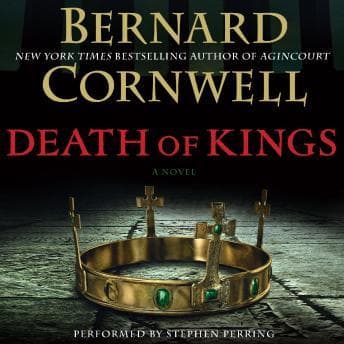

There's a moment early in this book—somewhere around the first hour—where the inevitability of King Alfred's death just settles in your bones. It's heavy. It's the end of an era. And honestly, listening to this on my walk home along Lake Shore Drive, with the Chicago wind whipping off the water, it felt appropriately bleak. Uhtred is older, the King is fading, and everything feels fragile.
The Elephant in the Audio Booth
Let's address the thing everyone is screaming about in the forums. The narrator change.
Look, I get it. We had Jonathan Keeble. We had Matt Bates. We got used to how they said "Eoferwic" and how they growled Uhtred's lines. Then Stephen Perring steps in. Is it jarring? Yes. It's like when the administration swaps your favorite principal for a guy who pronounces "library" weirdly. (Sorry, Principal Martinez, not talking about you. Mostly.)
Perring makes some choices. He changes the pronunciation of names we've spent five books learning. As an English teacher who spends half his life correcting pronunciation, this made my eye twitch. Seriously. It took me a solid two hours to stop correcting him out loud like a crazy person on the sidewalk.
But—and hear me out—once I got over my initial "who is this guy?" tantrum, I realized something. Perring actually understands the sadness of this specific book. This isn't just a hack-and-slash adventure; it's a tragedy about the passing of a torch. His voice has this weary, introspective quality that fits an aging Uhtred perfectly. He might not have the raw, guttural rage of Keeble during the shield walls (he wavers a bit when the shouting starts), but in the quiet moments where Uhtred is contemplating his divided loyalties? He nails it.
The Politics of the Shield Wall
Cornwell is doing something here that I try to teach my seniors every year: the difference between a hero who wants glory and a hero who is stuck with duty. Uhtred doesn't even like Alfred. He hates the piety, the priests, the constant writing down of laws. (I relate to the paperwork hatred, Uhtred. I really do.)
Yet he's bound by his word. The tension in this book isn't just physical—though the battles are visceral—it's spiritual. It's about what happens when the person you swore an oath to is gone. Do the oaths die with the man?
Perring captures this internal wrestling match beautifully. There's a scene involving a sword and an oath—no spoilers—where the hesitation in the narration did more work than the text itself. That's what I mean about performance art. He let the silence hang there.
Who's This For (And Who Should Skip)
If you're the type of listener who throws their phone when a character's name changes mid-series, you might want to switch to the Kindle version for this one. But if you can push past the pronunciation hurdles and you're invested in Uhtred's journey, this is essential listening—the story that bridges old England and new.
The Parking Lot Test
Is this the best narrated book in the series? Probably not. The pronunciation inconsistencies are a hurdle.
But the story is Cornwell at his peak. Despite the narrator swap, I found myself sitting in my car in the school parking lot for an extra ten minutes just to finish a chapter. Three Day Road did that to me too—same parking lot, same inability to turn off the engine during a brutal war scene. That's the only metric that really counts, isn't it?