
"I pretend not to be scared, but I am."
That line hit me somewhere around the thirty-minute mark, and I had to pause grading sophomore essays on The Outsiders because my eyes were doing that thing they do when literature catches you off guard. Beverly Cleary wrote those words for a sixth-grader in 1983, and here I am in 2024, a grown man who teaches teenagers for a living, feeling personally attacked by a children's book.
This is why we still read the classics.
What Hemingway Knew About Sixth-Grade Boys
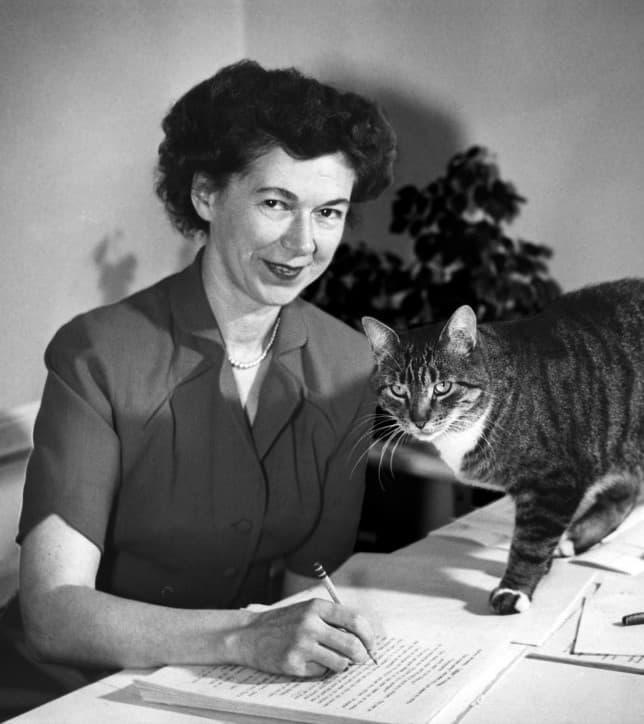
Cleary does something here that most adult novelists can't manage—she writes a child who sounds like an actual child. Leigh Botts isn't precocious or wise beyond his years. He's angry and confused and desperately wants his dad to call. His letters to Mr. Henshaw start as a homework assignment and become something else entirely—a place to put feelings he can't say out loud.
The epistolary format is deceptively simple. Letters, then diary entries. But Cleary understood what Hemingway understood: the iceberg theory. What Leigh doesn't say matters more than what he does. When he writes about someone stealing his lunch—his good lunch, the one his mom packed special—you feel the whole weight of being the new kid, the divorced kid, the kid who doesn't quite fit. The prose deserves to be savored, even at under two hours.
Though if you want to talk about a book that absolutely does not deserve to be savored—one I reviewed mostly out of professional obligation—Fish! is sitting in my podcast backlog as a cautionary tale about what happens when adult self-help tries to manufacture the emotional honesty Cleary makes look effortless.My students would hate this. I love it.
Pedro Pascal Becomes an Eleven-Year-Old (And It Works)
Let's talk about what's happening here with the narration. Pedro Pascal—yes, that Pedro Pascal—reading a Newbery Medal winner about a lonely boy writing letters. It shouldn't work. A 49-year-old actor voicing a sixth-grader? But it does. God help me, it does.
Pascal doesn't try to sound like a child. That would be grotesque. Instead, he captures something harder—the emotional register of being eleven. There's a vulnerability in his delivery that feels almost too exposed. When Leigh writes about pretending his dad's truck is coming around the corner, Pascal's voice gets this quality I can only describe as... tender? Hopeful in a way that hurts?
I've listened to hundreds of audiobooks. I know when a narrator is performing versus when they're inhabiting. Pascal is inhabiting. The research I found called his voice "unbearably cute," which—okay, sure, if you're here for the Pascal of it all. But what struck me was the restraint. He doesn't oversell the sad parts. He trusts Cleary's words to do the work.
The Teacher's Confession
Here's the thing I don't admit to my students: I assign books about difficult topics—divorce, loss, not fitting in—because I remember what it felt like. I was Leigh Botts in 1987, writing letters to nobody, waiting for my own absent father to remember I existed. Cleary got it right. She got it exactly right.
At one hour and forty-four minutes, this isn't a commitment. I finished it during one late-night grading session, red pen in hand, Pascal's voice in my ears while my students' five-paragraph essays blurred together. By the end, I'd stopped grading entirely. I was just... listening.
The audiobook doesn't have sound effects or musical flourishes. It doesn't need them. Single narrator, clean production, Cleary's words. That's enough.
Who Should Press Play (And Who Should Keep Walking)
If you have a kid going through a divorce—or if you were that kid—this is medicine disguised as a school assignment. Parents have mentioned using it to open conversations they didn't know how to start. Teachers (hi, it's me) should absolutely have this in rotation.
If you're looking for action, adventure, or anything resembling a plot twist—keep scrolling. This is a quiet book about quiet pain. The climax is a boy deciding to stop being angry at his dad. If that sounds boring to you, we probably wouldn't get along at faculty meetings anyway.
Pedro Pascal fans coming for the voice? You'll get what you came for. But you might leave with something else—a reminder of what children's literature can do when it respects its audience enough to tell the truth.
Adding This One to the Syllabus
Beverly Cleary won the Newbery for this one, and forty years later, it still holds. Pedro Pascal's narration elevates without overwhelming. At under two hours, it's the perfect length for what it is—a small, true story about a boy learning that some letters are really written to yourself.
I'm adding it to my classroom library recommendation list. Right next to The Outsiders. My sophomores will probably ignore it.
Their loss.