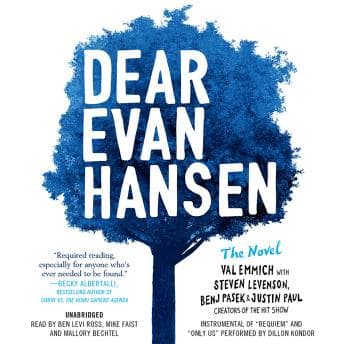

This book wrecked me in a Target parking lot.
I was sitting in the pickup line waiting for Emma, had about twenty minutes to kill, and Evan Hansen was spiraling into the worst decision of his fictional life, and I just... sat there with my hands on the steering wheel, completely unable to press pause. Sophie was babbling in the backseat and I was genuinely tearing up behind my sunglasses like some kind of unhinged carpool mom.
So yeah. Dear Evan Hansen got me.
The Musical Gave You the Songs, This Gives You the Gut Punch
If you've seen the show (or the movie, which - let's be honest - was fine but not the same), the novel does something the stage version physically can't: it puts you inside Evan's head. Like, really inside it. His anxiety spirals aren't just performed, they're narrated in this uncomfortably detailed internal monologue that made me want to reach through my earbuds and hug this kid. The scene where he's crafting fake emails between himself and Connor, and you can feel him rationalizing every single keystroke? That's the stuff the musical could only hint at.
But here's what surprised me - the book also gives Connor chapters. Not a lot, but enough. You get glimpses into who Connor actually was before everything happened, and those sections hit differently than anything in the musical. There's this raw quality to his perspective that made me stop folding laundry (a miracle, honestly) and just listen. The book doesn't try to redeem him or make him a saint. It just makes him a person. Which is somehow worse and better at the same time. Character Building does something similar with its secondary cast - giving the people on the edges of the story just enough interiority to make you ache for them.
Three Narrators, Two of Whom Sound Like the Same Guy
Okay, here's my honest take on the audio production: Ben Levi Ross and Mike Faist are both genuinely good. Their performances are emotional and they clearly know these characters from performing them on Broadway. Ross captures Evan's halting, nervous energy - the way his sentences trip over themselves when he's lying is painfully realistic. And there are these little musical interludes with Mallory Bechtel singing and some guitar accompaniment that feel like a nice nod to the source material without being overkill.
But - and this is a real but - Ross and Faist sound so similar that during my fragmented listening sessions, I'd come back after dealing with a Sophie diaper situation and genuinely not know which character was talking for a solid thirty seconds. When you're listening in seven-minute bursts between snack requests, that's a problem. I eventually figured out a system (Evan's chapters feel more frantic, Connor's are slower and angrier) but it took me a couple days to lock in. If you're someone who listens in longer stretches, this probably won't bother you as much.
Bechtel's Zoe sections are the easiest to distinguish, obviously, and she brings this quiet steadiness that balances out the boys' intensity. The production quality is clean - no weird audio jumps or volume issues that I noticed.
When Your Kid Asks Why Mommy's Crying in the Car
Here's what I wasn't prepared for: this isn't just a teen anxiety story. It's a grief story. And as a parent, the Murphy family sections absolutely destroyed me. The way Connor's mom clings to these fabricated memories of her son's friendship with Evan - the desperate need to believe her kid wasn't as alone as she feared - I had to sit in my garage for an extra ten minutes after that chapter. (My husband came out to check if I was okay. I told him I was on a work call. He doesn't need to know about my car time breakdowns.)
At eight hours, this is a clean one-week listen for my schedule. I finished it in about six days at 1.25x speed, and the pacing felt right - it builds steadily without those saggy middle chapters that make me drift into mental grocery lists. The lie escalates in a way that's genuinely uncomfortable, not in a fun dramatic way but in a "oh no, oh no, this is going to be so bad" way.
The ending doesn't tie everything up in a neat bow, which I actually appreciated even though my comfort-read-loving heart wanted it to. It's hopeful without being dishonest. Evan faces real consequences. People are hurt. But there's this quiet suggestion that maybe, eventually, things can be okay. Not perfect. Just okay.
Made me cry at school pickup. Worth it though.
Who This Is For (and Who Should Know What They're Getting Into)
If you have teens or tweens, this is a genuinely great book to listen to together - it handles mental health, social media pressure, and grief with honesty that doesn't feel preachy. My seven-year-old is too young, but I'm filing this away for Emma in a few years.
If you need a content heads-up: themes of teen suicide, depression, and anxiety are central to the plot. It's not graphic, but it's present and real. If you're in a fragile headspace, maybe save this for a steadier week.
If you've never seen the musical, the book absolutely stands on its own. If you have seen it, this is the version that fills in all the gaps you didn't know you had.
Not groundbreaking, but sometimes you don't need groundbreaking. Sometimes you need a book that makes you feel something real while you're hiding in your minivan. This one delivered.









