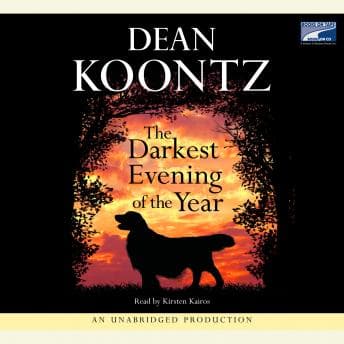

You ever love a book so much that the audiobook version actually makes you mad? Like, personally offended on behalf of the author?
I finished my shift at 3 AM - one of those nights where nobody coded but the tension never broke, you know the kind - and I'm driving home through empty Phoenix streets with this playing. Dean Koontz wrote something genuinely dark here. Amy Redwing runs a golden retriever rescue, and I'm thinking okay, dog lady thriller, cute. But no. This is not that. This is about trauma that follows you, about the monsters that wear human faces, about how saving others can be a way of running from yourself. The content warnings are real - animal abuse, violence, psychological manipulation. Koontz went places.
And then there's the narration.
The Voice That Whispers When It Should Scream
Kirsten Kairos sounds like she's narrating this book in a library. At 4 AM. While trying not to wake anyone. Amy Redwing is supposed to be this fierce, intelligent woman who literally risks her life for animals - and instead she comes across as a Valley girl reading a grocery list. I had to turn my car volume way up just to hear her, and even then the tension Koontz built into these scenes just... evaporated.
The villain in this book is genuinely terrifying on paper. Someone stalking Amy, invading her home, watching her every move. Orchestra of Bandits has that same creeping dread, and thankfully a narrator who knows how to sell it. But when it's delivered in this monotone, almost drowsy cadence? I found myself checking my mirrors more out of habit than because the book had me scared. And that's a shame, because when I read Koontz years ago - actual paper book, remember those? - I couldn't sleep. This should have been that experience.
What Koontz Got Right (That You'll Have to Work For)
Look, the story itself is solid. This is one of Koontz's darker works, and you can tell he cares about these characters. The relationship between Amy and Nickie, this golden retriever she rescues, has this uncanny quality that builds slowly. Fred and Ethel (yes, the other dogs are named Fred and Ethel, I love this man) recognize something different about Nickie immediately. There's genuine emotional weight here - I'll admit I teared up during the build-up to the finale. Carlos asked why I was crying in the car. I blamed allergies. Again.
The mystery of Amy's past, why she can't let Brian McCarthy love her, why she throws herself into rescue work with this almost desperate intensity - it unfolds in layers. And when you finally understand what happened to her, it hits. Hard. The ending felt a bit abrupt to me, like Koontz spent nine hours building this elaborate house and then just... stopped. But the journey there? Worth it.
If you can stay engaged through the narration.
Who Should Suffer Through This (And Who Should Just Read It)
Golden retriever people will feel seen. Dog rescue folks will recognize the specific brand of obsession Koontz captures. Thriller readers who can handle dark content - we're talking psychological manipulation, violence, some genuinely disturbing antagonist behavior - will find meat here.
But here's my honest recommendation: if you have the option, read the physical book. Or find a different audiobook version if one exists. The story deserves better than this delivery. If audiobook is your only option, bump it to 1.25x speed minimum. The slow pacing combined with the whispery narration is a recipe for falling asleep at the wheel, and I mean that literally.
This is not how you do a thriller audiobook. Trust me.
Night Shift Prescription
I wanted to love this. Koontz clearly loves dogs the way I love my patients - with this fierce, protective energy that borders on irrational. And he wrote something genuinely disturbing here, something that explores how trauma echoes through lives and how love - both human and canine - can be redemption. That same exploration of trauma and redemption drives Paris Apartment: A Novel, though without the dogs.
But an audiobook lives or dies by its narrator. And Kairos, bless her, turned a psychological thriller into something I had to fight to stay engaged with. The medical details are accurate. Finally. (There's a scene involving injury that actually made sense, which is more than I can say for most thrillers.) But accurate medicine can't save flat delivery.
Perfect for that post-shift decompression? Only if you're already wired on coffee and need something to focus on. Otherwise, you'll drift. And this story deserves your full attention - it's just fighting its own narrator to get it.