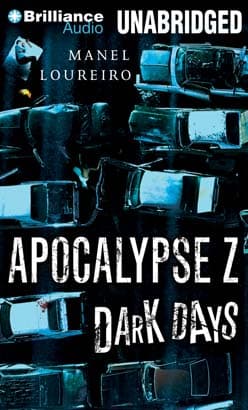

What happens when a zombie apocalypse novel is written by an actual lawyer - and then translated from Spanish? You get something weirdly specific and grounded in a way most American zombie fiction isn't, that's what.
I started Dark Days at 11PM on a Tuesday because a DNS misconfiguration took down half our staging environment and I was too wired to sleep after the fix. Turns out a zombie pandemic across the Canary Islands is exactly the right vibe for post-incident adrenaline dumps.
The Canary Islands Are Doing A Lot of Heavy Lifting Here
So the setup: our unnamed lawyer protagonist (who Loureiro basically modeled after himself, which - same energy as a software engineer writing a novel where the hero debugs the apocalypse) escapes mainland Spain in a stolen helicopter with the most random party composition since my last D&D campaign. You've got Viktor "Prit" Pritchenko, a Ukrainian pilot who's basically the only reason anyone survives anything. There's 17-year-old Lucia, Sister Cecilia the nurse-nun, and - my personal favorite character - Lucullus the Persian cat. Yes, the cat survives book one AND makes it onto the helicopter. Priorities.
The Canary Islands setting is what separates this from your standard Walking Dead clone. Lanzarote as a potential safe haven makes actual geographic sense - volcanic island, limited access points, small population. The book earns its survival logistics. When things inevitably go sideways (because of course humans are the real monsters, the zombie genre's oldest and truest cliché), the political violence subplot with Spanish civil war undertones gives it a flavor you don't get from American zombie fiction. This was originally written in Spanish, published as a blog serial, and that episodic DNA shows - chapters hit like blog posts with cliffhanger endings.
But here's the thing: at 7 hours 43 minutes, this is a lean book. Almost too lean. The pacing rips through setpiece to setpiece without much breathing room for character development beyond the basics. Lucia stays mostly a "beautiful distraction" (the book's words, not mine, and yeah, it's a bit cringe). Sister Cecilia gets the short end of the character stick despite being the most practically useful person in the group. Prit gets the best treatment - his wry survivalist pragmatism carries the buddy dynamic with the narrator.
Nick Podehl Figured Out the Assignment
Here's where the audiobook version earns its keep. If you listened to book one (Apocalypse Z), Podehl has noticeably leveled up his voice differentiation. With a bigger cast this time around, he's juggling more accents and personalities - Prit's Eastern European cadence versus the protagonist's more neutral American delivery creates a natural buddy-comedy rhythm even in tense moments. The suspense pacing is where Podehl really shines though. There's a listener quote floating around that his "gift for giving voice to suspense could keep me glued to the Golf Channel" and... yeah, that tracks. He knows when to drop his voice, when to accelerate, when to let a silence land.
He's not Ray Porter (nobody is, fight me), but Podehl brings solid craft here. No weird pronunciation hiccups despite the Spanish setting and character names, which is actually impressive for a translated work. I bumped this to 1.5x and it held up perfectly - the suspense beats still landed, the action sequences stayed coherent.
Who Should Strap In (And Who Should Eject)
If you liked book one, this is a straight upgrade. Better pacing, bigger scope, improved narration. If you're coming in fresh - don't. This is book two and it assumes you know these people and how the virus works.
Perfect for: train, gym. Skip for: deep work. The episodic structure means you can zone out for a minute at 6AM and pick the thread back up without rewinding. That's high commute-worthiness in my book.
The ROI on this audiobook is decent but not spectacular. At under 8 hours, it's a 4-commute listen, and it delivers consistent zombie survival tension without reinventing the genre. The Spanish political backdrop and island setting give it enough novelty to justify your time. But it's also clearly a middle book - it's moving pieces for book three, and some of those pieces (especially the human antagonists) feel more like plot devices than characters.
Kevin asked me if it was better than The Bobiverse. Kevin, buddy, nothing is better than The Bobiverse, but this scratched a very different itch - the kind where you want competent people making hard choices while surrounded by the undead and you don't want to think too hard about distributed systems for a few hours.
Commute Verdict: Solid Zombie Fuel, Hold the Pretension
This is basically World War Z but for a Spanish lawyer's survival diary. It won't change your life, but it'll make your Caltrain ride disappear. Sometimes that's exactly what you need. Remember When gave me that same brain-off survival tension on a Thursday morning Caltrain run—different genre, same commute-worthiness math.