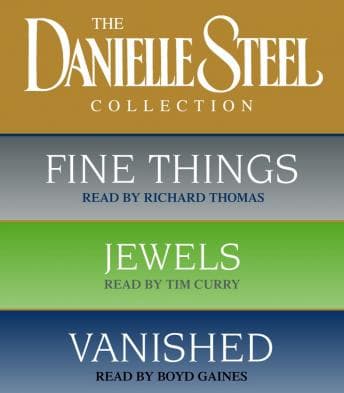

Three novellas. Three narrators. Eight and a half hours. This is either brilliant anthology thinking or audiobook roulette. Having finished, I'm still not entirely sure which.
I started this collection during a particularly brutal stack of sophomore essays on The Great Gatsby. (No, Jayden, the green light does not represent "vibes." We've discussed this.) Danielle Steel felt like the literary equivalent of comfort food after parsing seventeen different interpretations of the American Dream, most of them wrong.
The Abridgment Problem Nobody Warned Me About
Let's address the elephant first. This is abridged. Significantly abridged. Three full novels compressed into under nine hours means you're getting the CliffsNotes version with better production values. If you've read Steel's originals, you'll notice the absence immediately—the slow emotional builds she's known for, the layered family dynamics, the gradual reveals. Gone. What remains is plot skeleton with just enough flesh to keep things moving.
This isn't necessarily a dealbreaker, but it changes what you're getting. Think of it less as "three Danielle Steel novels" and more as "three Danielle Steel stories told at a dinner party by someone who read them last month." The emotional beats land, but they land faster and lighter than they should.
Three Voices, Three Vibes, One Jarring Transition
Boyd Gaines handles Fine Things with the kind of steady, warm delivery that suits Bernie Fine's journey from happiness to tragedy to cautious hope. Nothing flashy, but competent. The grieving father moments hit appropriately hard, even in compressed form.
Then Tim Curry arrives for Jewels, and suddenly you're in a completely different audiobook.
Look, I adore Tim Curry. The man could read a phone book and make it sound like Shakespeare. That same theatrical energy carries Tattooist of Auschwitz, where the narrator's gravitas elevates a historical story that could easily feel heavy-handed. But his distinctly British delivery for a story spanning European aristocracy and American ambition creates this strange cognitive dissonance. Some listeners apparently found it distracting—I found it fascinating, honestly. His voice carries that old-world weight that makes the jewel-house dynasty feel appropriately epic, even when the abridgment rushes past moments that deserve to breathe.
Richard Thomas closes with Vanished, and his performance carries the desperate urgency a child abduction story demands. The contrast between the three narrators is jarring if you're listening straight through, but it does create natural breaks between stories. Silver lining, I suppose.
Who Should Listen (And Who Should Skip)
Here's where I'll be honest, because you deserve that. If you want the full Danielle Steel experience—the emotional investment, the character development, the slow-burn drama—this isn't it. Read the books. Or find unabridged versions if they exist. Skip this if you're a Steel purist or if abridgments make you twitchy.
But if you want something to keep you company during a long grading session, something that moves fast enough to prevent you from falling asleep in the margins of student papers, something that delivers satisfying emotional arcs without demanding your complete attention? This works. It's literary comfort food in travel-size portions. Identicals hits that same comfort-food sweet spot—fast-paced family drama that doesn't demand you take notes.
My students would absolutely hate this. The abridgment alone would send them into fits about "respecting the author's vision" (ironic, given how many of them read SparkNotes). But sometimes you don't want the full seven-course meal. Sometimes you want the tasting menu.
Final Grade
I finished the last story walking along Lake Michigan with Denise, who asked why I kept making faces at my phone. The child abduction plot in Vanished is genuinely tense, even truncated, and Richard Thomas sells the parental anguish convincingly. But the resolution felt rushed—because it was.
This collection is a product of its era, when "value" meant cramming content into shorter packages. It's not bad. It's just... less. Three excellent narrators doing solid work with material that's been edited for time like a movie on basic cable.
Worth your time if you adjust expectations accordingly. Worth a credit? Only if you're specifically in the market for abridged Steel and don't mind the whiplash between narrator styles. Otherwise, wait for a sale or stream it through your library. The performances are good enough to enjoy, but the format keeps them from being great.