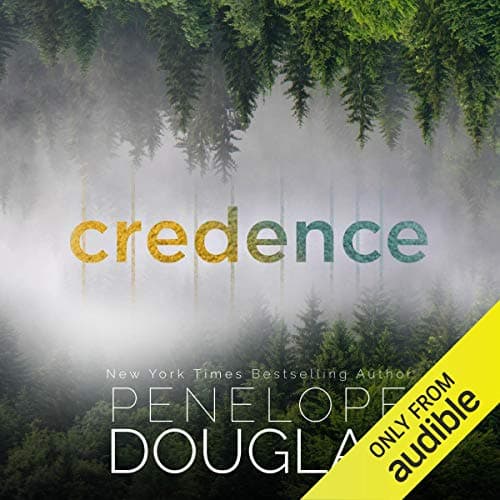

True winter isolation has physical weight. When heavy snowpack seals a high-country pass and the nearest plowed road is miles away, daily survival routines—splitting wood, tending the stove, preserving food, watching the tree line—become the only clock that matters. Penelope Douglas’s Credence, a BookTok-famous standalone set on a remote homestead high in the Colorado mountains, uses that environmental pressure not just as scenery, but as the vise that drives the entire plot.
To Douglas’s credit, the high-country claustrophobia is the most convincing part of the book. Two months shy of her eighteenth birthday, emotionally neglected Beverly Hills heiress Tiernan de Haas loses her parents and is sent to live with her father’s estranged stepbrother, Jake Van der Berg, and his two sons, Noah and Kaleb, on their remote mountain homestead before the winter blizzards seal the pass for months.
Off-Grid Realism vs. Taboo Dark Romance
Unlike city-set romances that treat a weekend snowstorm like a cozy hotel stay, Credence understands that living off the grid requires relentless physical labor and self-reliance. Watching Tiernan thaw out from decades of emotional neglect by learning to work with her hands, read the weather, and claim space inside a fiercely insular household gives the first half real atmospheric pull.
Of course, this is Penelope Douglas, which means the isolation is also a pressure cooker for an explicit 18+ taboo dynamic as Tiernan becomes entangled with Jake, Noah, and Kaleb—particularly mute, volatile Kaleb. Listeners who loved the psychological darkness Douglas unleashed in Kill Switch (where Jeremy York and Tatiana Sokolov handled the narration) will recognize her gift for pushing boundaries until the rules snap.
A Four-Narrator Cast Divided Against Itself
Where the seventeen-hour audiobook stumbles is in the booth. Despite billing four narrators—Sofia Willingham, Greg Tremblay, Carson Beck, and Michael Pauley—the overwhelming majority of the runtime sits on Willingham’s shoulders in Tiernan’s first-person chapters. While Willingham aimed for a numb, detached cadence to reflect Tiernan’s early depression, the delivery flattens out so much that it is frequently difficult to tell when Tiernan is thinking to herself versus speaking aloud to the men in the room. Having heard Willingham share the mic in Girl In Luv, the lack of tonal contrast here is frustrating over a nearly seventeen-hour haul, and bumping playback to 1.25x is practically mandatory to keep her chapters from droning.
When the perspective finally shifts to the male POVs later in the book—especially Greg Tremblay’s chapters—the audio suddenly wakes up with warmth, grit, and clear emotional phrasing. If you’re already curious about BookTok’s most debated cabin-fever romance, borrow or stream this one with your speed dial set to 1.25x.