
What if the reason you keep bombing interviews has nothing to do with your qualifications and everything to do with the questions you think you're answering?
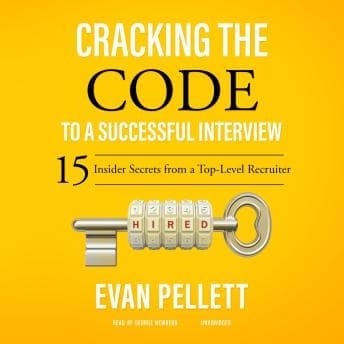
I was chopping onions for a chana masala at 9 PM on a Tuesday — the kind of elaborate solo cooking project my mother would call "unnecessary" but which I find meditative — when Evan Pellett's REAPRICH method started clicking into place in my earbuds. And I found myself asking: why does this framework actually work when so many interview books feel like warmed-over LinkedIn advice?
The Psychology Behind "Questions Behind the Questions"
Here's what caught my attention. Pellett's central premise — that interviewers are unconsciously asking deeper questions beneath their surface-level ones — is actually well-supported by what we know about cognitive heuristics and implicit evaluation. The research actually shows that hiring managers make gut decisions within minutes and then spend the rest of the interview confirming their bias. Pellett doesn't cite the academic literature (he's a recruiter, not a researcher), but his eight-step REAPRICH method essentially gives you a framework for hacking those unconscious evaluation patterns.
The "15 insider secrets" structure is both the book's strength and its limitation. Each secret functions like a discrete module — which makes this incredibly easy to digest at 2 hours and 16 minutes. You could listen to this on a single commute and walk into an interview the next day with actionable strategies. But — and this is where the researcher in me gets fidgety — the "scientific" and "groundbreaking" claims in the marketing copy oversell what is fundamentally practical wisdom from someone who's sat on the other side of the table thousands of times. It's good practical wisdom. It's not science. The gap between "practical wisdom" and actual science is something I kept bumping into in Think and Grow Rich too — big confident claims, real-world utility, and a marketing wrapper that oversells both.
What makes this book compelling is Pellett's specificity about what recruiters actually evaluate. He's not giving you "be confident" platitudes. He's telling you the mental checklist that's running in the interviewer's head, and then reverse-engineering your responses to check those boxes. The protagonist here — because yes, I analyze self-help authors like characters — exhibits classic expert-pattern-recognition. He's someone who's internalized thousands of hiring decisions and is trying to make that implicit knowledge explicit. That translation doesn't always land perfectly, but when it does, it's genuinely useful.
George Newbern Does the Heavy Lifting
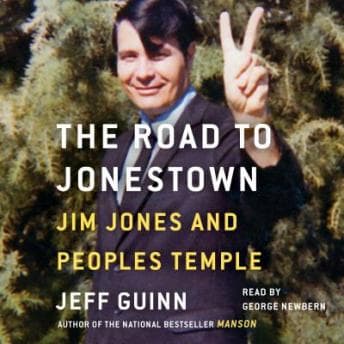
Newbern is an Earphones Award winner, and you can hear why. His narration style is clean, professional, and paced for retention — which matters enormously in a how-to book where you're trying to actually absorb frameworks. He reads Pellett's concrete examples with enough warmth that they don't sound like bullet points from a PowerPoint deck, which is a real skill when your source material is structured advice rather than narrative.
That said, this is a single-narrator business book at just over two hours. There's no dramatic range required here, no character voices, no emotional crescendos. Newbern does exactly what the material needs: he stays out of the way and lets the content breathe. It's the audio equivalent of a really clear whiteboard presentation. Not exciting. Effective.
Where It Loses Me (And Where That's Okay)
Psychologically, some of Pellett's framing doesn't track for me. The idea that there's a universal set of unconscious questions "every manager" needs answered is... reductive. Hiring is contextual. A startup founder interviewing for a scrappy first hire is operating on completely different heuristics than a Fortune 500 HR manager screening for cultural fit. Pellett's experience skews corporate and large-enterprise (his Oracle background is prominent), and the advice reflects that. If you're interviewing at a 12-person startup, some of this will feel misaligned.
Also — and this is a minor gripe — the book's brevity means certain secrets get surface-level treatment. I wanted him to go deeper on a few points, to give me the case study, the failed example, the "here's what happens when you do this wrong." The concrete examples that are there work well. I just wanted more of them.
But here's the thing: for someone actively job hunting who needs a quick, structured confidence boost before interviews, the 2-hour runtime is a feature, not a bug. This is a tactical manual, not a psychology textbook. And I need to stop grading it like one.
Who Should Press Play (And Who Should Keep Scrolling)
If you're actively interviewing and want a framework — not just vibes — this is worth your time. Especially if you're in corporate or mid-to-large company hiring pipelines where Pellett's experience is most directly applicable. Job seekers in their first or second career pivot will get the most out of this.
If you're a hiring manager hoping to understand your own biases? Read this too, but from the other direction. It's a fascinating case study in how candidates can learn to mirror back what interviewers want to hear — which should make you uncomfortable about your own evaluation process. (My therapist would have thoughts about that dynamic.)
If you want deep psychological insight into workplace dynamics, organizational behavior, or the philosophy of work — this isn't that book. It's a playbook. A pretty solid one.
My Clinical Assessment
Two hours, sixteen minutes. I finished the chana masala before I finished the book. Both were efficient, both did exactly what they promised, and neither pretended to be something they weren't. For a focused, no-fluff interview prep listen, Pellett and Newbern deliver. Just don't mistake tactical advice for the "groundbreaking science" the marketing suggests. It's a recruiter telling you what works. Sometimes that's enough.